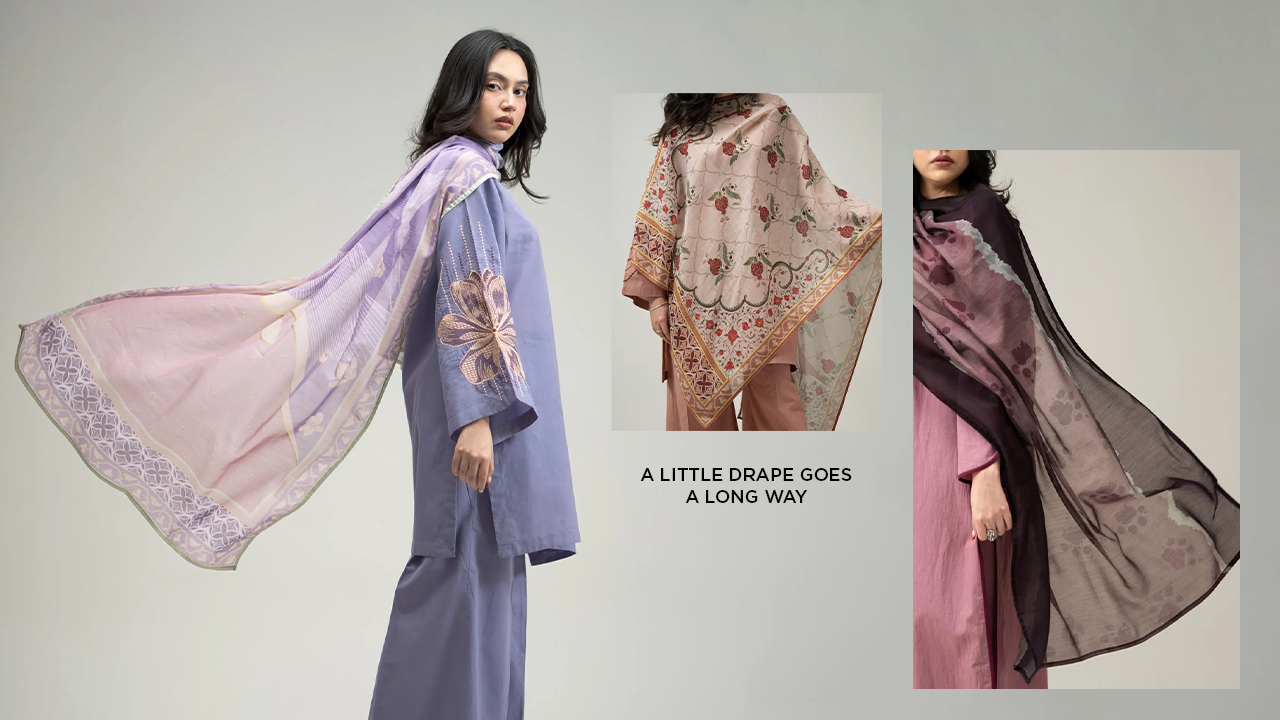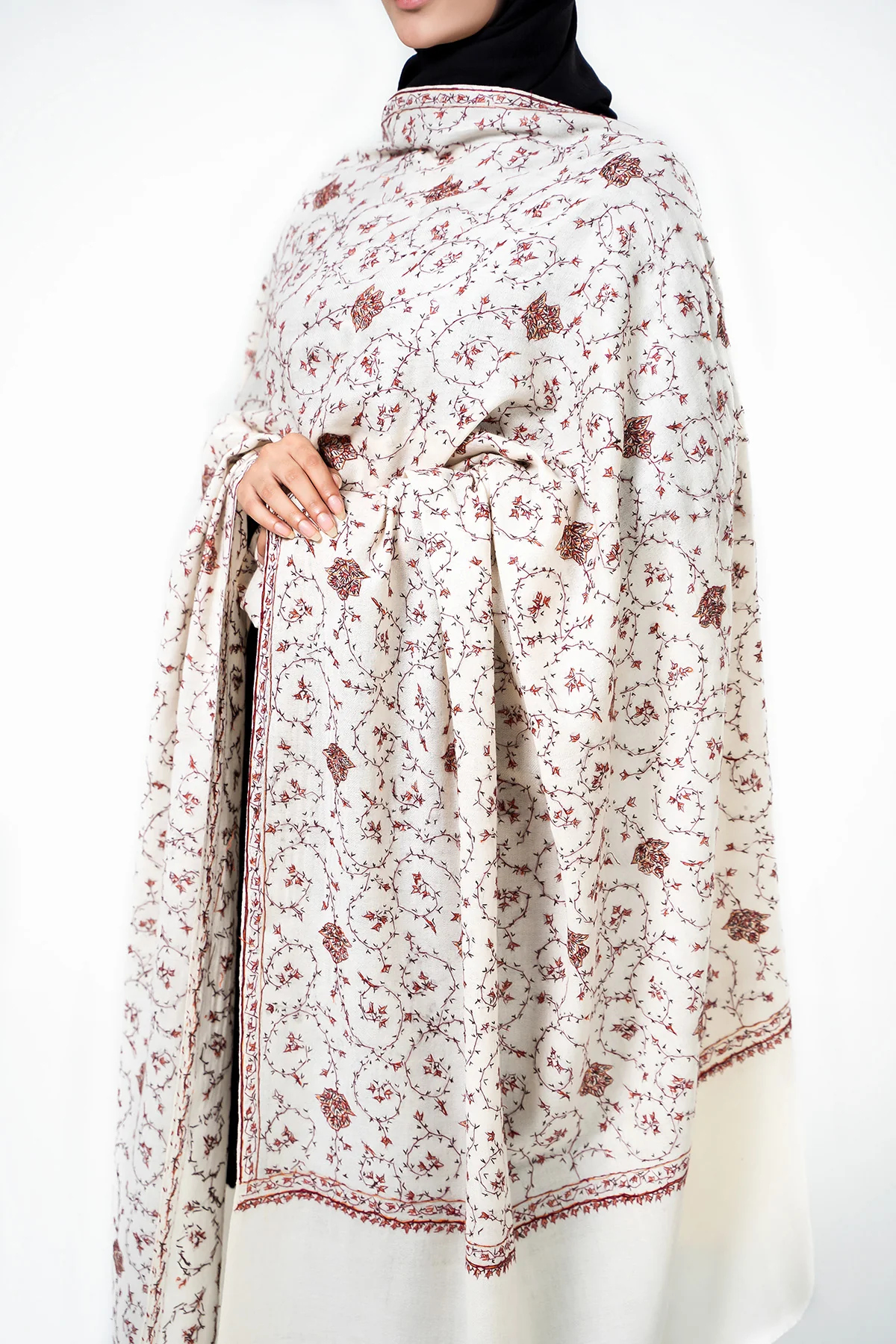
A recent Dawn report gives a very real picture of how demanding a working day can be for women in Pakistan. One woman interviewed in Karachi said she usually leaves her office at around 5 p.m., waits roughly 30 minutes for a bus, spends another 60 to 90 minutes travelling, and then walks for about 15 minutes before finally reaching home. By the time she finishes that journey, the office day may be over, but the physical demands of commuting are not.
This kind of routine shows why winter clothing for working women needs to be practical, not just attractive. A shawl may need to keep you warm during the morning commute, sit comfortably on your shoulders through office hours, fold away when the room becomes warmer, and then come back out again when you leave after sunset. In other words, the right shawl has to work with your whole day rather than just one part of it.
This matters to a large number of women. According to the Pakistan Bureau of Statistics Labour Force Survey 2024-25, around 17.8 million women were employed in Pakistan, and about 3.3 million women worked in shops, business offices, or industry. Their routines are not all the same, which is why their winter clothing needs are different too. A woman working in Karachi may prefer a lighter layer, while someone commuting in Islamabad, Rawalpindi, Lahore, Peshawar, or another colder city may need something warmer. A woman who travels by bus or rickshaw will also think differently about size, fabric, and drape than someone who drives directly to work.
That is why it helps to think of shawls by purpose rather than by colour alone. Instead of buying several beautiful pieces that all do the same job, it makes more sense to build a small winter wardrobe where every shawl has a clear use. For most working women, five carefully chosen styles can cover everyday office wear, cold commutes, meetings, after-work events, and formal winter occasions.
1. A Pure Wool Shawl for Cold Morning Commutes
If your working day starts early, a pure wool shawl should be one of the first pieces you consider because the morning commute is often when winter feels strongest. You may leave a warm room, step outside into cold air, walk to the gate or parking area, wait for a ride, or stand near a bus stop. If you travel by rickshaw or motorcycle, the cold reaches you even more directly.
A medium-weight wool shawl works well in this situation because it keeps the shoulders, arms, and upper body warm without forcing you to wear a heavy coat all day. That matters because office temperatures can be very different from outdoor temperatures, and a shawl gives you the freedom to adjust without changing your whole outfit.
For office use, simpler colours are usually more practical. Shades such as black, camel, charcoal, navy, brown, cream, and deep maroon can be worn with several outfits, which makes the shawl easier to repeat throughout the week. The same wool shawl can work over a plain shalwar kameez one day and a more structured winter outfit the next without looking out of place.
The main thing to avoid is excessive weight. A very thick wool shawl may feel perfect outdoors but become uncomfortable once you sit at your desk. Too much fabric can gather around your chair, cover your keyboard, get caught under your handbag, or simply make you feel too warm indoors. A good work shawl should make your routine easier, not give you one more thing to keep adjusting.
Size also matters for the same reason. You need enough fabric to cover your shoulders properly, but that does not mean you need an oversized shawl for daily office wear. A manageable size is easier to carry, easier to fold, and easier to put back on when you leave work in the evening. If warmth is your biggest winter concern, pure wool is the shawl that will probably earn the most use.
2. A Lightweight Toosh Shawl for Everyday Office Wear
The shawl you use most often may not be the warmest one in your wardrobe. For many working women, a lightweight toosh shawl can be more useful on normal office days because it gives you flexibility as temperatures change.
A typical winter workday may begin with a cold morning, move into a warmer afternoon, and end with another cool spell after sunset. If your office is indoors and well heated, a heavy shawl may quickly start to feel uncomfortable. A lightweight toosh, on the other hand, gives you enough coverage without making you feel wrapped up all day.
This makes it especially useful for women who move between different environments. You can wear it during the morning commute, place it over the back of your chair when the office becomes warm, and put it on again before heading home. It is also easier to fold into a work bag, which helps if you already carry a laptop, handbag, lunch box, or other daily essentials.
The current women’s shawl market in Pakistan also shows how widely toosh is used. The collection reviewed for this research currently includes 51 Toosh styles, including plain designs, borders, lightweight options, needlework, and zariwork. That range makes it easier to choose something suitable for work rather than something that feels too festive.
For everyday office use, simpler versions usually make more sense. A clean border or light needlework can give the shawl enough character without making it look too formal. It can be worn loosely over both shoulders, or one side can be brought across the body if you want a neater and more structured look.
The biggest advantage of a lightweight toosh is that it does not demand attention. You can keep it close throughout the day without feeling like you are carrying a heavy winter layer everywhere you go, which is exactly what makes it such a practical office option.
3. A Pashmina Shawl for Meetings and Important Workdays
Some workdays need a little more polish than others. You might have a client meeting, a presentation, a professional lunch, or a visit from senior management. On those days, your usual office shawl may feel too casual, while a heavily embroidered piece may feel too formal.
A pashmina shawl works well because it sits comfortably between those two extremes. It can make a simple outfit look more complete without making you look overdressed. The fabric tends to drape neatly, which also gives a cleaner look around the shoulders and works well with both eastern and more structured office clothing.
Solid or muted colours are usually the safest choice if you want to wear the shawl often. Cream, beige, grey, black, navy, burgundy, brown, and muted green can work with a large part of a winter wardrobe, which gives you more chances to repeat the shawl without it feeling tied to one outfit.
This is where it helps to stop looking at the shawl on its own and start thinking about the clothes you already own. If the shawl works with your black winter suit, beige kurta, cream outfit, and navy trousers, it is likely to become a regular part of your work wardrobe. If it only matches one specific dress, it may spend most of the season in your cupboard.
When comparing shawl ladies, it makes sense to think about how the fabric will fit into your actual working week. Ask yourself whether you could wear it to a morning meeting, keep it on for lunch, and still feel comfortable taking it to a professional dinner later in the day. If one shawl can move through all those settings easily, it is doing exactly what a working wardrobe needs.
4. An Embroidered Shawl for Office Events and After-Work Plans
Winter work schedules do not always end when office hours do. There are company dinners, conferences, school functions, university events, networking evenings, family gatherings, and weddings, and sometimes there is simply no time to go home and change before the next event begins.
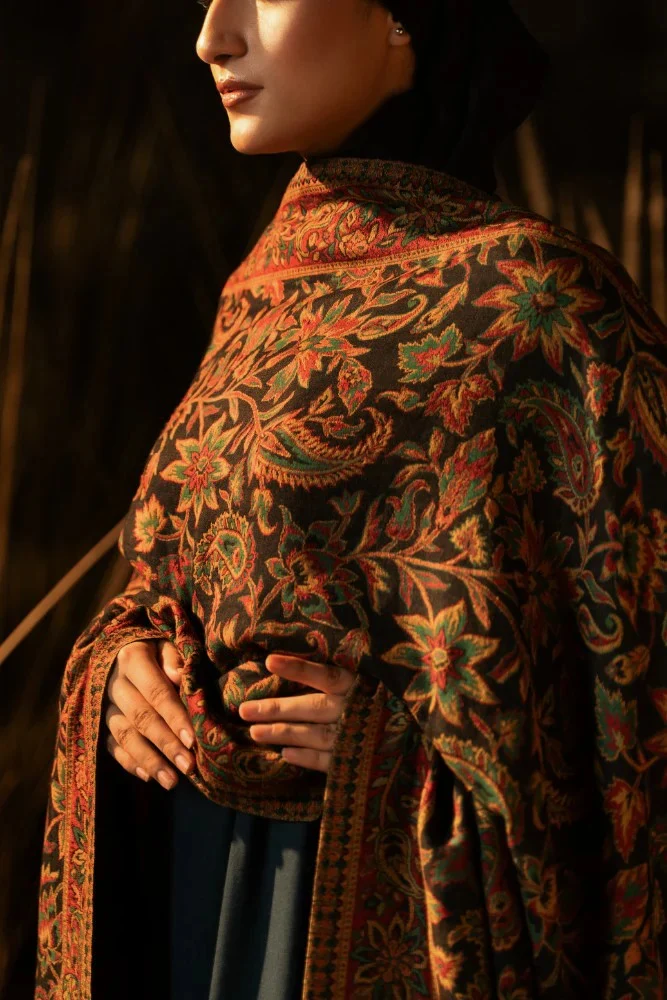
An embroidered shawl is useful because it can make a normal daytime outfit feel more suitable for the evening without requiring a complete change of clothes. For example, a plain black shalwar kameez may look perfectly professional during the day, but once you add a shawl with fine needlework or a detailed border, the same outfit can feel much more appropriate for a dinner or gathering.
The key is choosing embroidery that adds interest without making the shawl too formal for daytime use. Heavy embellishment across the entire fabric may look beautiful, but it can feel excessive at the office. A better option is controlled detailing around the borders, corners, or ends of the shawl.
Current Pakistani shawl ranges include styles such as needlework toosh, needlework pure wool, zariwork toosh, embroidered borders, and other traditional details. These work well for working women because they sit somewhere between everyday wear and full formal dressing.
Colour planning also makes a big difference here. A neutral base with a few complementary colours in the embroidery gives you more outfit combinations than a shawl designed around one very specific colour scheme. The best embroidered work shawl should feel special when you need it, but still be flexible enough to wear more than once or twice during the season.
5. A Velvet Shawl for Formal Winter Work Events
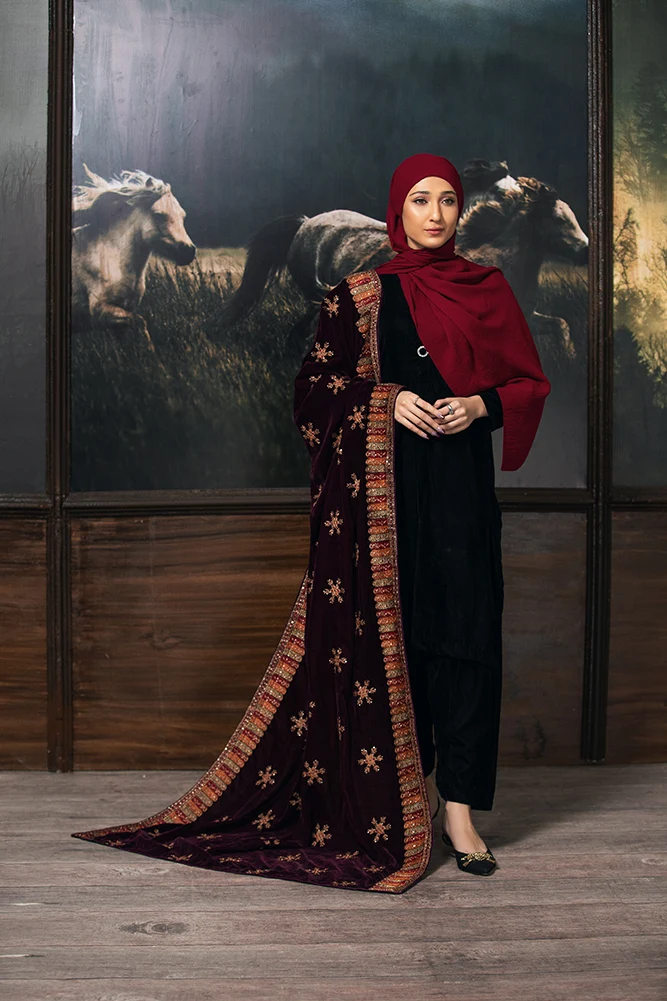
A velvet shawl has a different role from the other four because it is not meant for everyday office wear. Instead, it gives you a proper option for the occasional winter event where wool, toosh, or pashmina may feel too casual.
Formal company dinners, award ceremonies, evening receptions, and professional winter events often call for something with a little more visual weight. Velvet works well because the fabric itself already looks richer, which means you do not need a heavily decorated design to make the outfit feel more formal.
Darker shades such as black, deep maroon, navy, bottle green, and chocolate are usually easy to style for evening events. If the shawl includes zari, embroidery, or zardozi-style detailing, it is better to keep the rest of the outfit simple so that the overall look stays balanced.
The important thing is to be realistic about how often you will wear it. A velvet shawl may feel too heavy or formal for normal desk work, so there is no need to treat it like an everyday layer. Its value comes from being available when you suddenly have a formal event and do not want to buy something new at the last minute.
That is why it belongs in the five-shawl wardrobe. You may use it less often, but when the right occasion appears, it gives you an option that the other four shawls cannot fully replace.
Do Not Buy All Five Shawls in the Same Weight
One of the most common mistakes is buying several similar shawls just because you like a certain fabric or colour. You may end up with three or four heavy shawls that all look different but serve exactly the same purpose.
A better approach is to create variety in function.
Your pure wool shawl should handle your coldest days, while the toosh should be lighter and easier to carry. Your pashmina should feel polished enough for meetings, your embroidered shawl should help when work flows into an evening event, and your velvet shawl should cover formal occasions.
That difference is what gives a small wardrobe more value. Five shawls that solve five different problems are far more useful than ten shawls that all feel almost the same.
Let Your Commute Decide What Is Practical
A shawl can look perfect in a photograph and still be wrong for your daily routine. This is where the real-life experiences of working women matter.
The Dawn report from Karachi published in September 2026 described a woman whose journey home includes around 30 minutes of waiting, a 60 to 90 minute bus ride, and another 15 minute walk. For a commute like that, a shawl has to stay comfortable while you move, carry bags, wait outdoors, and travel through crowded spaces.
If you use buses, rickshaws, ride-hailing services, or motorcycles, a shawl that constantly slips from your shoulders can become frustrating very quickly. A delicate fabric may also be difficult to manage if you are carrying a laptop bag or moving through busy areas.
If you drive directly from home to your office, you have more freedom to wear something larger, softer, or more decorative because you are not managing the shawl through the same kind of commute.
The point is not that one type is better than another. The right shawl is the one that fits your routine, and that is why your commute should influence your decision before trends do.
Choose Colours Around Your Existing Work Clothes
Colour is another area where it is easy to make an emotional purchase. A shawl looks beautiful in the shop, so you buy it, but once you get home, you realise it matches almost nothing you wear to work.
A more practical approach is to start with the colours already in your wardrobe. If you wear a lot of black, cream, beige, grey, navy, and brown, then richer shawl colours such as maroon, deep green, rust, blue, or muted purple can add interest without making your wardrobe difficult to coordinate.
If your Pakistani suits already contain prints, embroidery, and stronger colours, neutral shawls may be more useful. Black, beige, camel, cream, and grey can help balance a busier outfit and give you more combinations throughout the week.
The easiest rule is simple. Every shawl should work with more than one outfit. That one habit prevents a lot of unnecessary buying and makes it easier to get dressed on busy mornings.
Pay Attention to Size, Drape, and Care
Fabric gets most of the attention, but the way a shawl behaves is just as important. Before buying one for work, check how easily it stays on your shoulders while you walk, sit, and carry a handbag.
A shawl may feel comfortable when you stand in front of a mirror but become annoying once you start moving. If it keeps slipping, bunching, or falling forward, you will probably stop wearing it no matter how good it looks.
The amount of fabric matters too. If you are petite or spend most of your day at a desk, an extremely large shawl can feel difficult to manage. For professional wear, a cleaner drape usually works better because the fabric falls neatly around the shoulders without creating unnecessary bulk.
Care should also be part of the buying decision. A working shawl is exposed to perfume, makeup, travel dust, office chairs, frequent folding, and repeated use. Wool, pashmina, embroidery, and velvet all need slightly different care, so following the specific instructions for the fabric will help the shawl keep its shape, texture, and finish for longer.
FAQs About Ladies’ Shawls for Working Women
Which shawl is best for daily office wear in Pakistan?
A lightweight toosh or medium-weight wool shawl is usually the most practical choice. The better option depends on how cold your commute is and how warm your office remains during the day.
Is pure wool suitable for office use?
Yes, as long as the shawl is not excessively thick. A medium-weight wool shawl can keep you comfortable during colder commutes while still being manageable once you are sitting at your desk.
How many shawls does a working woman need for winter?
There is no fixed number, but five different types can cover most situations. What matters most is having a mix of weights and levels of formality rather than several shawls that all serve the same purpose.
Which shawl works best when going directly from work to an event?
An embroidered wool or toosh shawl is usually the most flexible option because it can still look appropriate during the day while adding enough detail for an evening dinner or gathering.
Build Your Winter Shawl Wardrobe Around Your Working Week
The most useful winter wardrobe is not the one with the most clothes. It is the one that makes everyday decisions easier and works with the way you actually live.
A working woman may begin her day in the cold, spend several hours in a warm office, attend a meeting in the afternoon, step outside again in the evening, and still have a long commute before reaching home. That is why each shawl should solve a different part of that routine.
A pure wool shawl gives you dependable warmth on colder mornings, while a lightweight toosh works better for regular office days. A pashmina gives you a more polished option for meetings, an embroidered shawl helps when work leads directly into an evening event, and a velvet shawl gives you something appropriate for formal winter occasions.
You do not need to buy all five at once. Start with the shawl that solves your biggest problem, then build around it based on your city, commute, office environment, and existing wardrobe.
When every shawl has a clear purpose, getting dressed for work becomes much simpler, and that is exactly what a good winter wardrobe should do.