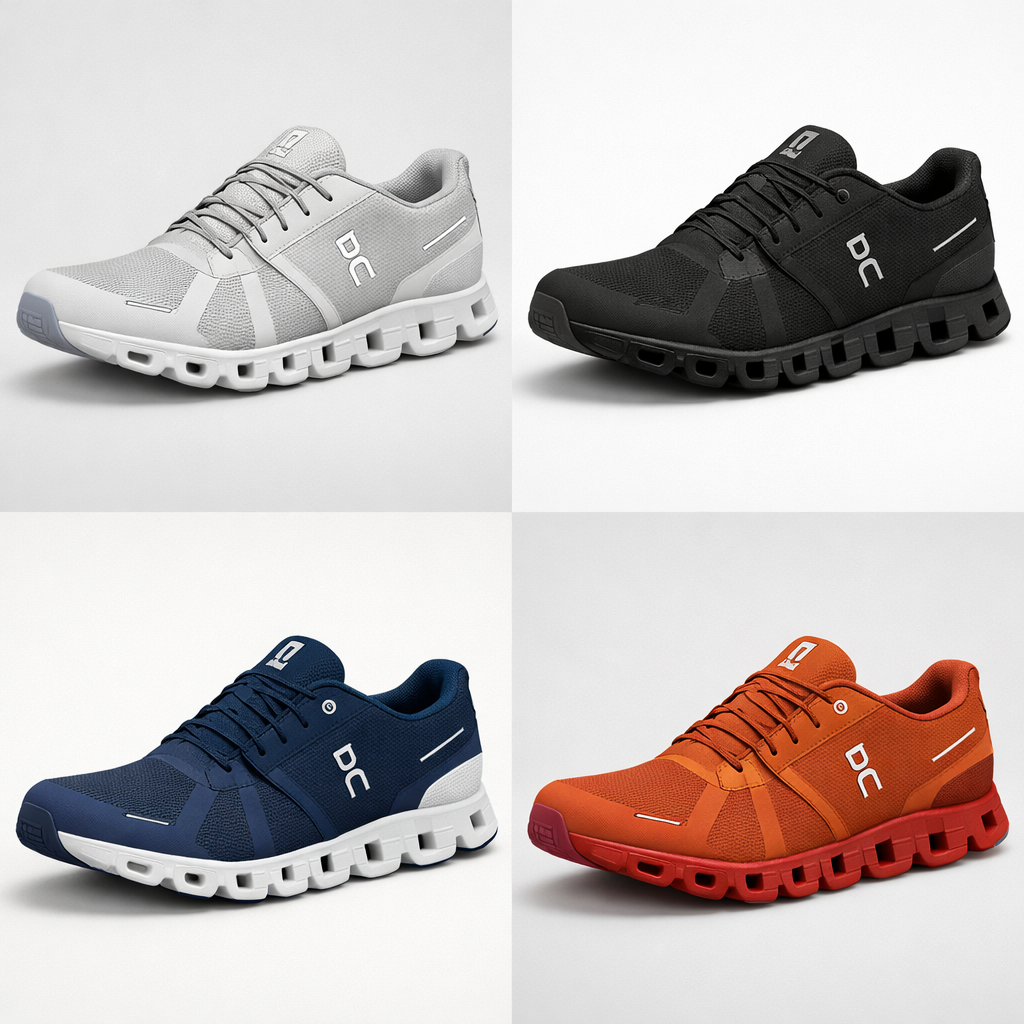
You’ve seen them at the airport. At the coffee shop. On your neighbor who suddenly runs five miles before breakfast. Those Swiss-designed, pod-shaped sole sneakers that look like something between a running prototype and a fashion statement. They’re called on cloud shoes, and if you’ve only glanced at them from a distance, you’re missing the quiet revolution happening underfoot.
Let’s be honest. Most athletic shoes ask you to choose: cushion or response? Soft or stable? Stylish or functional? The brand built around on clouds decided to stop asking. Instead, they engineered a sole that feels like landing on—well—exactly what the name promises.
But hype is cheap. What actually happens the first time you slip into a pair of on Cloud sneakers? And more importantly, why are these shoes converting people who used to swear by the other big names?
Let’s walk through it. Literally.
The Hollow Sole That Changed Everything
Look at the bottom of any pair of on cloud shoes. You’ll see a series of hollow tubes running from heel to toe. At first glance, it looks like a design gimmick. It’s not. Those tubes are called CloudTec®—and they work like miniature suspension systems.
Here’s what happens when your foot strikes the ground:
- Each tube compresses horizontally, not vertically.
- That horizontal movement absorbs impact like a tiny spring.
- Then the tubes lock together to create a solid, stable platform for push-off.
So you get soft landing + firm takeoff. Most shoes give you one or the other. On clouds give you both in the same stride. That’s the magic people don’t believe until they actually run a mile or stand eight hours in them.
Wait—Are On Clouds for Running or Walking?
Short answer: yes.
Longer answer: The brand originally built on clouds for road runners. But something unexpected happened. Nurses started wearing them. Restaurant workers. Photographers who stand twelve hours at weddings. Office commuters who walk two miles from the train station. Why? Because the same cushioning that protects a runner’s knees also saves a cashier’s lower back.
The real difference comes down to which model you choose.
- Cloudswift – Built for city pavement and daily walking. Extra padding around the heel collar. Feels like a hug.
- Cloudrunner – More structure. More support. Ideal for overpronators or people with flat feet.
- Cloudmonster – Maximum cushion. If you want the softest possible on Cloud experience, this is it.
- Cloud X – Lighter, lower to the ground. Best for gym workouts, cross-training, or short runs.
If you’re standing all day, skip the racing models and go for Cloudrunner or Cloudswift. Your lower back will send you a thank‑you note.
Three Ways On Clouds Beat the Competition
I’ve tested Hokas. I’ve tested Nikes. I’ve tested the ultra‑plush New Balance foams. On clouds win in three specific areas that matter for real life, not just marketing brochures.
1. They Don’t Go Soggy After Two Months
That super‑soft foam in other brands? It compresses permanently after about 200–300 miles. Then you’re walking on flattened cardboard disguised as a sneaker. On clouds use those hollow tubes, not solid foam. The tubes rebound consistently because they have space to move. People routinely get 500+ miles out of a single pair without losing that initial bounce.
2. You Can Wash Them Like a Normal Person
Here’s a confession: most athletic shoes get destroyed in a washing machine. The foam breaks down. The glue loosens. On clouds handle a gentle cold wash and air dry surprisingly well. Remove the insoles, toss them in a mesh bag, and they come out looking 80% fresher. Try that with a pair of Ultraboosts.
3. They Work with Jeans (Seriously)
Most performance sneakers scream “I just came from the gym.” On clouds have a sleeker silhouette. The muted colorways—all black, all white, grey, navy—blend into casual outfits without looking like orthopedic devices. You can wear them to brunch, to the office on casual Friday, and then to a 5K after work. That versatility is rare.
The One Complaint You’ll Hear (And Whether It’s Fair)
Critics of on clouds point to one thing: small rocks. Yes, pebbles can get lodged in those hollow tubes. It happens. You walk on gravel, and suddenly you hear a tiny click click click with every step.
Here’s the honest take: It’s annoying. But it’s also rare for most people’s daily routes (sidewalks, pavement, treadmills, office floors). And when it does happen, you just poke the pebble out with a key or a stick. Two seconds.
The brand has also redesigned newer models (like the Cloudmonster 2 and Cloudsurfer) with tighter tube openings to reduce this issue. So it’s becoming less common every year.
If you mostly run on trails? Get trail‑specific on cloud like the Cloudvista, which has a rock guard. Problem solved.
How to Spot a Fake Pair (Because They’re Everywhere)
On cloud shoes are so popular that counterfeits flood online marketplaces. Here’s how to protect yourself:
- Price too good? Never below $110 new. Legit pairs rarely go on deep discount outside official sales.
- Logo check. The “On” logo should be crisp, not fuzzy. Speedboard (the plastic plate under the arch) should flex slightly, not be rock hard.
- Weight. A real men’s size 9 Cloudswift weighs about 9 ounces. Fakes are heavier.
- Buy from authorized sellers only. On’s website, Zappos, REI, Running Warehouse. Avoid random Amazon third‑party sellers.
A fake pair won’t have working CloudTec. You’ll just get hard plastic tubes that hurt your feet. Not worth the $40 savings.
Final Verdict: Are On Clouds Worth the Price?
Retail runs $140–$180. That’s not cheap. But here’s what you’re paying for:
- A genuine Swiss‑engineered sole that absorbs shock differently than anything else on the market.
- Durability that outlasts softer foam shoes by hundreds of miles.
- A hybrid design that transitions from workout to weekend without looking ridiculous.
Are on cloud shoes the right choice for elite marathoners chasing a 2:30 finish? Probably not. Those runners want carbon plates and ultra‑light race day spikes.
Are they the right choice for everyone else—the daily walker, the casual runner, the nurse, the traveler, the person whose feet ache by 3 PM? Absolutely.
Try a pair for 30 days. Walk in them. Stand in them. Jog to catch a bus. Then try to go back to your old sneakers. You’ll feel the difference immediately.
Your feet have been tolerating your current shoes. It’s time they started looking forward to every single step.