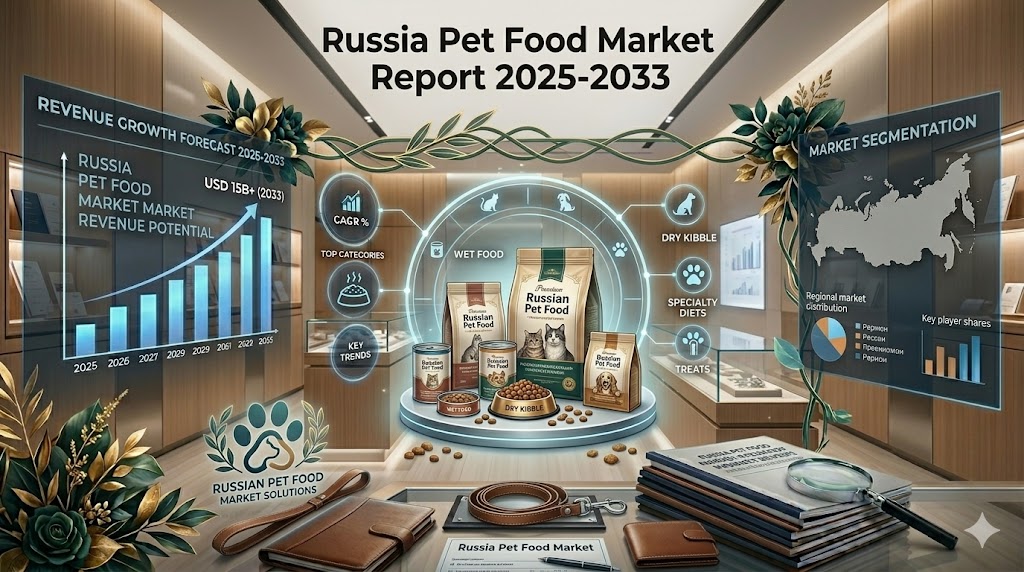
The Russia pet food market is defined as the national industry involved in the manufacturing, distribution, and retail of nutritional products specifically formulated for domesticated animals, including dogs, cats, birds, and other small pets. These products encompass a variety of formats, such as dry kibble, wet canned food, and specialized treats, designed to provide balanced minerals, vitamins, and proteins essential for animal health. In 2024, the market reached a valuation of USD 5.09 Billion, and it is projected to grow to USD 12.71 Billion by 2033, expanding at a robust CAGR of 10.27% during the forecast period of 2025-2033.
What is the Current Size and Forecasted Growth of the Russia Pet Food Market?
The Russia pet food market is currently undergoing a period of rapid financial acceleration. As of 2024, the market was valued at USD 5.09 Billion. Driven by the premiumization of animal nutrition and a surge in pet ownership, the industry is expected to more than double, reaching USD 12.71 Billion by 2033.
This growth represents a Compound Annual Growth Rate (CAGR) of 10.27%. The expansion is primarily fueled by a shift in consumer mindset where pets are increasingly viewed as family members, leading to higher expenditures on high-quality, specialized diets that promote longevity and well-being.
Which Key Drivers are Propelling the Demand for Pet Food in Russia?
Several macroeconomic and social factors are converging to accelerate the growth of the Russian pet food sector:
- Pet Humanization: A dominant trend where pet parents treat animals as family members, opting for human-grade ingredients and premium formulations.
- Rising Health Awareness: Increased focus on functional nutrition, such as grain-free, organic, and protein-dense options that support digestion and joint health.
- E-commerce Expansion: The rapid growth of online retail – which saw a 28% increase in Russia in 2023 – has made diverse pet food brands more accessible to urban and remote populations alike.
- Aging Demographics: An increasing number of seniors are adopting pets for companionship, often investing in high-quality food to ensure their pets remain healthy and active.
How is the Russia Pet Food Market Segmented by Pet Type?
The market is categorized by the specific dietary needs of different animals, with dogs and cats holding the majority of the market share:
| Pet Type | Market Dynamics and Drivers |
| Dog Food | The dominant segment due to high adoption rates. Demand is focused on breed-specific and life-stage-specific nutrition. |
| Cat Food | Growing rapidly as cats appeal to urban dwellers with busy lifestyles; demand is high for specialized wet and grain-free formulas. |
| Others | Includes specialized food for rabbits, birds, and small rodents, reflecting a diversifying pet landscape in Russia. |
What are the Primary Product Types and Pricing Strategies in the Market?
To meet various financial and nutritional needs, the Russia pet food market offers several product formats and pricing tiers:
By Product Type:
- Dry Pet Food: The most popular type due to its convenience, long shelf life, and cost-effectiveness. It also aids in dental health by reducing tartar.
- Wet and Canned Pet Food: Preferred for its high moisture content and palatability, especially for fussy eaters or pets with specific health issues like urinary tract sensitivity.
- Snacks and Treats: An essential growth area driven by the “reward” culture, with a focus on functional benefits like dental care or weight management.
Sample Request For Your Business
By Pricing Type:
- Mass Products: Cater to price-sensitive consumers and are widely available in supermarkets and discount stores.
- Premium Products: Aimed at health-conscious pet parents willing to pay more for organic, natural, and ethically sourced ingredients.
What Role does Ingredient Type and Sourcing Play in Consumer Choice?
Ingredient transparency has become a top priority for Russian pet parents. The market is segmented into two primary sources:
- Animal Derived: Remains the leading segment as dogs and cats require high-protein diets for muscle development and coat health.
- Plant Derived: Gaining traction among eco-conscious and ethical consumers. Ingredients like sweet potatoes, lentils, and peas are used as healthy, grain-free alternatives.
Which Regional Districts are Leading the Pet Food Market in Russia?
Regional demand is heavily influenced by urbanization and disposable income levels across the Russian Federation:
| Region | Strategic Importance |
| Central District | The largest market, centered around Moscow; home to an affluent customer base that prioritizes premium and specialized pet food. |
| Northwestern District | Influenced by St. Petersburg; shows a high preference for international brands and premium health-conscious products. |
| Volga District | A mix of urban and rural demand, where Kazan and Nizhny Novgorod drive a rising trend in pet adoption. |
| Urals District | An industrial hub seeing a shift toward premium products as disposable incomes rise in cities like Yekaterinburg. |
| Siberian District | Focuses on immunity-boosting food designed to help pets maintain health during harsh winter months. |
What Recent News and Innovations are Shaping the Russia Pet Food Market?
The industry is seeing significant investment in technology and local manufacturing to ensure supply chain stability:
- Anti-Aging Innovations: In October 2024, researchers at the Izhevsk State Medical Academy developed the world’s first anti-aging pet food containing geroprotective compounds like curcumin and resveratrol.
- Strategic Acquisitions: In January 2025, Balchug Capital acquired Raduga LLC, a major manufacturer with a capacity of 50,000 tons, signaling strong investor confidence in the real economy.
- Mandatory Labeling: As of late 2024, Russia introduced mandatory labeling (Chestny ZNAK) for pet food to combat counterfeit products, which previously accounted for 25% of sales in some segments.
- Unique Products: Innovation has reached niche levels, such as the successful labeling of the first batch of alcohol-free “dog beer” in April 2024.
Who are the Major Companies and Brands Operating in the Market?
The competitive landscape of the Russia pet food market includes global giants and rising domestic players:
- Global Leaders: Mars and Nestlé continue to maintain significant market share through extensive distribution and well-known premium brands.
- Local Powerhouses: Companies like ПЕТКОРМ, TiTBiT, and FORSAGE are expanding their local production facilities to offer high-quality, affordable alternatives to imported goods.
Conclusion:
The Russia pet food market is positioned for a transformative decade, with its valuation expected to reach USD 12.71 Billion by 2033. This growth is underpinned by the deep-seated trend of pet humanization, a rapid shift toward e-commerce, and pioneering innovations like anti-aging formulas. While mass-market products provide a stable foundation, the premium and functional segments are the true engines of growth. As domestic production capacity increases and mandatory labeling ensures product integrity, Russia remains one of the most dynamic and lucrative markets for animal nutrition globally.