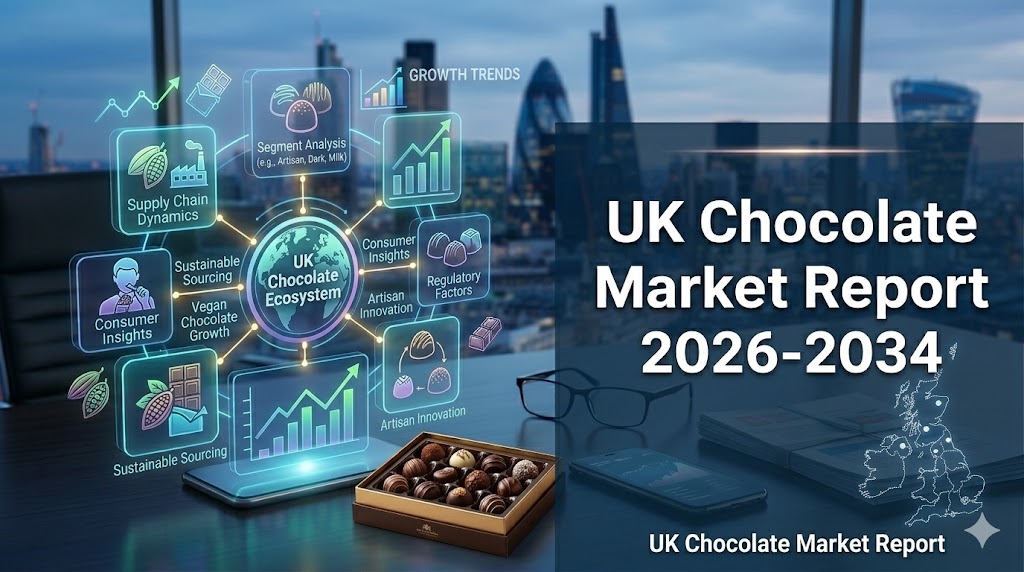
The UK chocolate market refers to the comprehensive ecosystem of production, distribution, and consumption of chocolate-based products within the United Kingdom. This market encompasses various categories, including white chocolate, milk chocolate, and dark chocolate, which are sold in forms such as molded bars, countlines, and truffles. It is a sector defined by a balance between mass-market indulgence and a growing demand for premium, ethically sourced, and functional confectionery.
In terms of economic scale, the UK chocolate market size reached USD 5,779.7 Million in 2025. As one of the world’s most enthusiastic consumers of cocoa products – ranking 7th globally and 4th in Europe in 2022 – the UK continues to be a powerhouse for confectionery innovation. Driven by the “premiumization” of treats and a shift toward sustainable consumption, the market is projected to grow to USD 8,733.0 Million by 2034, expanding at a steady CAGR of 4.55% between 2026 and 2034.
How Big is the UK Chocolate Market Forecast for 2026-2034?
The financial outlook for the British chocolate industry suggests a period of robust expansion as consumers transition from basic snacks to high-quality, artisanal experiences.
The UK chocolate market is valued at USD 5.77 billion in 2025 and is forecasted to reach USD 8.73 billion by 2034. Growing at a 4.55% CAGR, the industry is benefiting from a “less but better” consumption trend, where shoppers prioritize premium ingredients and distinctive flavor profiles over volume.
Market Projections and Key Statistics
| Report Attribute | Key Statistics |
| Base Year | 2025 |
| Market Size (2025) | USD 5,779.7 Million |
| Market Forecast (2034) | USD 8,733.0 Million |
| Growth Rate (CAGR) | 4.55% (2026-2034) |
| Global Consumption Rank | 7th Worldwide (2022 Data) |
What are the Main Drivers Fueling UK Chocolate Market Growth?
Several socio-economic and lifestyle factors are converging to push the British cocoa sector toward higher valuations and more diversified product ranges.
Growth in the UK chocolate market is primarily driven by the rising demand for premium and artisanal chocolates, increasing consumer concern for ethical and sustainable sourcing, and rapid innovation in product flavors and formats. Additionally, the growth of e-commerce and seasonal gifting cultures are significant revenue contributors.
1. Shift Toward Premium and Artisanal Options
British consumers are increasingly seeking “luxury indulgence.” This trend, often referred to as premiumization, involves a preference for higher cocoa content, single-origin beans, and unique flavor combinations. In 2024, brands like Fox’s Burton’s Companies (FBC UK) tapped into this by launching products like “Half Coated Dark Chocolate Cookies,” catering to the sophisticated palate.
2. Ethical and Sustainable Sourcing
Modern shoppers are highly conscious of the social and environmental impact of their treats. Manufacturers are now securing certifications to ensure fair compensation and job security for cocoa farmers. Transparent supply chains have moved from being a corporate social responsibility (CSR) goal to a primary driver of consumer loyalty and market share.
3. Health and Wellness Integration
Despite being an indulgence, chocolate is being repositioned as a functional food. Dark chocolate, rich in antioxidants, is gaining traction among health-conscious adults. Furthermore, the rise of veganism has led to a surge in dairy-free and gluten-free chocolate alternatives, ensuring the market remains inclusive of all dietary needs.
Sample Request For Your Business
Which Product Types and Pricing Segments Lead the UK Market?
The market is highly segmented, allowing brands to target specific consumer needs ranging from daily snacks to luxury gifts.
The UK chocolate market is segmented by type into milk, dark, and white chocolate, and by pricing into everyday, premium, and seasonal categories. Milk chocolate remains a traditional favorite, while dark chocolate is the fastest-growing health segment. Seasonal and premium chocolates drive the highest margins during peak holiday periods like Christmas and Easter.
Market Segmentation Breakdown
| Segment Category | Key Components |
| Product Type | Milk Chocolate (Dominant), Dark Chocolate, White Chocolate |
| Product Form | Molded Bars, Countlines (Snack bars), and Others |
| Pricing | Everyday Chocolate, Premium Chocolate, Seasonal Chocolate |
| Application | Bakery Products, Desserts, Beverages, Sugar Confectionery |
Product Form and Application
- Molded Bars: The classic format for both everyday and premium consumption.
- Countlines: Driven by the “on-the-go” snacking culture prevalent in UK cities.
- Bakery and Desserts: Chocolate is a primary ingredient in the UK’s thriving bakery sector, used extensively in cookies, cakes, and artisanal pastries.
How is E-Commerce Reshaping UK Chocolate Distribution?
The way Brits buy their favorite confectionery is undergoing a digital transformation, moving beyond the supermarket checkout aisle.
E-commerce has become a dominant force in the UK chocolate market due to advancements in digital technology and changing shopping habits. Online platforms allow for personalized gifting, subscription models, and access to independent chocolatiers that lack physical retail space. This digital shift is a key driver for the 2025–2034 market outlook.
While Supermarkets and Hypermarkets still hold a significant share due to convenience and “click-and-collect” services, Direct-to-Consumer (B2C) online stores are flourishing. These platforms offer specialized products – such as organic or limited-edition collections – that appeal to a more discerning digital consumer base.
Which Regions in the UK are Leading Chocolate Consumption?
While the love for chocolate is nationwide, certain regional hubs act as the primary engines for retail sales and artisanal production.
London is the leading region for chocolate consumption in the UK, followed by the South East and North West. London’s dominance is attributed to a high density of luxury chocolate boutiques, a large professional workforce with higher disposable income, and a strong tourist market seeking premium British confectionery gifts.
Regional Market Share Insights
- London: The hub for high-end “Seasonal” and “Premium” segments.
- South East & North West: High population centers with a strong demand for “Everyday” and “Countline” products.
- Scotland & West Midlands: Growing markets for artisanal local brands and ethically sourced varieties.
What Recent News and Innovations are Impacting the UK Chocolate Industry?
The market is currently seeing a wave of acquisitions and viral-trend-driven product launches that are keeping consumer interest high.
Recent industry highlights include Mars successfully acquiring the premium brand Hotel Chocolat in 2024 and Aldi launching the UK’s first “Dubai Chocolate Ice Cream” in 2025 to capitalize on viral social media trends. Additionally, legacy brands like Cadbury are reviving classic products like the “Top Deck” bar to celebrate significant anniversaries.
- Mars Acquisition (January 2024): The acquisition of Hotel Chocolat significantly strengthened Mars’ position in the UK premium sector, allowing for global expansion of high-end British chocolate.
- Viral Trends (April 2025): Aldi tapped into the “Dubai Chocolate” craze by launching a pistachio and chocolate ice cream, proving that agility in product development is vital in the social media age.
- Manufacturing Investment (March 2023): Whitakers Chocolates invested heavily in new printing and flow-wrapping technology to expand its private-label production capabilities.
Conclusion: A Sweet Future for the British Palate
The UK chocolate market is entering a transformative era where the “joy of eating” is being enhanced by technological innovation, ethical integrity, and premium quality. For the British consumer, this means a future filled with more diverse flavor profiles, “smarter” healthy alternatives, and a greater connection to the origin of their cocoa.
With the market set to reach USD 8,733.0 Million by 2034, the focus remains on the “flexitarian” indulgence – where consumers are willing to spend more on a single piece of high-quality, sustainably sourced dark chocolate than a bag of mass-produced sweets. Whether it is through a viral ice cream trend or a premium subscription box, the UK’s love affair with chocolate is only set to grow richer and more sophisticated in the decade to reach.