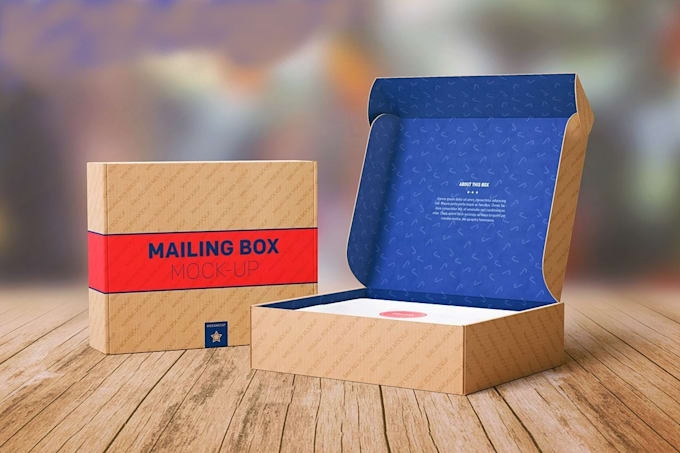
Let’s cut to the chase: your mailer box size can make or break your shipping cost, your unboxing experience, and your return rate. If your box is too big, you’re paying to ship air. If it’s too tight, you’re asking for crushed corners and angry reviews. The sweet spot is the Goldilocks fit—not too big, not too small, just right.
In this guide, I’m going to walk you through the best mailer box dimensions for common eCommerce products, the sizing formula that saves money, and the “do this, not that” mistakes that quietly drain profit.
If you want to jump straight to custom options, start here: Mailer Boxes.
Why mailer box dimensions matter (more than you think)
A mailer box is not just a container. It’s doing three jobs at once:
- Protection (reduce damage + returns)
- Cost control (dimensional weight can raise billable weight)
- Branding (unboxing that feels premium, not sloppy)
Carriers often charge based on dimensional weight (space a package takes) or actual weight—whichever is greater. FedEx explains DIM weight as the space a package occupies relative to its actual weight and that pricing can be based on DIM vs. actual. If you oversize the box, you may pay more even if your product is lightweight.
The #1 rule: Inside dimensions vs. outside dimensions
Here’s where many brands get burned: they order a “10 x 8 x 4” and assume the product will fit… then realize those were outside dimensions.
Use inside dimensions to choose fit.
Outside dimensions matter for shipping math, storage, and carton counts—but fit is inside.
Rule of thumb:
- If you ship delicate products, give yourself room for inserts.
- If you ship soft goods, don’t overbuild the box—right-size it and move on.
The right-sizing formula (simple, practical, and profitable)
Don’t guess. Don’t eyeball. Measure twice, ship once.
Step 1: Measure your “packed product,” not your product
Your packed product = product + any retail box + wrap + insert + void fill.
Step 2: Add clearance (the smart allowance)
- Non-fragile items: add about 0.25″–0.5″ clearance per side
- Fragile items (glass/candles/electronics): add 0.5″–1″ per side (for cushioning)
Step 3: Pick a depth strategy (where brands waste money)
Depth is the silent budget-killer. Too deep = DIM weight risk. Too shallow = damage risk.
If you remember only one line, remember this:
Don’t bring a suitcase for a weekend trip.
Best mailer box sizes for common eCommerce products
These are the sizes most DTC brands lean on because they cover a wide range of SKUs without creating a warehouse nightmare.
The “Core 5” mailer box lineup (covers most DTC stores)
- 6 x 4 x 2 (small accessories / samples)
- 8 x 6 x 2 (small cosmetics / phone accessories)
- 9 x 6 x 3 (beauty sets / small bundles)
- 10 x 8 x 4 (top all-around DTC size)
- 12 x 9 x 4 (apparel / kits / books + protection)
Now let’s match sizes to product types, so you’re not playing a guessing game.
Recommended mailer box dimensions by product category
| eCommerce product type | Best mailer box sizes (inside) | Notes (so it fits right) |
| Jewelry, small accessories, sample kits | 6 x 4 x 2 | Add tissue + small insert so it doesn’t rattle |
| Phone cases, small gadgets, skincare | 8 x 6 x 2 | Great “starter” size; clean, compact shipping |
| Cosmetics bundles, vitamins, small apparel | 9 x 6 x 3 | Good depth for padding + branded insert card |
| T-shirt orders, small subscription kits | 10 x 8 x 4 | DTC workhorse; balances fit + presentation |
| Hoodies, larger kits, boxed bundles | 12 x 9 x 4 | Safer for bulkier packs without over-sizing |
| Thick apparel bundles / premium kits | 12 x 9 x 6 | Use only if needed—depth can trigger higher DIM |
Pro move: If you sell multiple items, build a “box fit map” for your top 20 SKUs. Fewer box sizes = faster packing + fewer mistakes.
Dimensional weight: the shipping rule that punishes oversized boxes
DIM weight pricing exists because big boxes take up more space—even if they’re light. USPS and UPS both publish clear DIM guidance:
- USPS Ground Advantage: DIM weight applies when your package is larger than 1 cubic foot (1,728 cubic inches), and they instruct: multiply L×W×H and divide by 166.
- UPS: DIM weight is calculated as (L×W×H) ÷ divisor, and UPS notes the divisor can vary by rate type (commonly 139 for Daily Rates and 166 for Retail Rates).
What this means for you:
- If you’re shipping USPS Ground Advantage often, keep your mailer box volume under 1,728 in³ when possible.
- If you’re shipping UPS, oversized boxes can raise your billable weight quickly because DIM may apply even when the item is light.
Don’t be penny-wise and pound-foolish. A slightly smaller box can save real money every single shipment.
The most common sizing mistakes (and how to avoid them)
Mistake 1: “One big box for everything”
Convenient? Yes. Profitable? Usually not.
This is how brands end up paying higher DIM weight and still getting damage.
Mistake 2: Not planning for inserts / void fill
If you sell fragile items, your box needs space for protection. Otherwise, it’s a square peg, round hole situation.
Mistake 3: Choosing depth “just in case”
“Just in case” is expensive. Make sizing decisions based on your packed product, not anxiety.
Mailer box sizing checklist (pack like a pro)
Before you place a bulk order, run through this quick checklist:
- Measure packed product dimensions (not just the product)
- Decide your clearance (0.25″–1″ depending on fragility)
- Confirm your box is inside dimensions
- Avoid unnecessary depth (depth triggers DIM weight risk)
- Standardize to 3–5 core sizes first
- Add inserts where needed (better protection, better unboxing)
Want the most direct route to custom sizing? Go here: Mailer Boxes.
Inserts and void fill: the secret weapon for fewer returns
Your mailer box size is step one. Step two is controlling movement inside the box.
Best options for eCommerce mailers:
- Paper crinkle / kraft paper (eco-friendly, premium look)
- Custom inserts (best for cosmetics, kits, electronics)
- Bubble / foam (high protection; use where necessary)
If your product can shake inside the box, it can break. And damage returns are not just a refund—they’re lost trust.
Final Verdict:
Here’s the truth: the best mailer box size is the one that fits your packed product—not your guess. When you right-size your packaging, you stop shipping air, you reduce damage, you improve unboxing, and you keep your shipping rates from creeping up.
If you want a simple rule to live by, use this:
- Small box for heavy stuff
- Right depth for protection
- Minimal empty space
- Standardize 3–5 core sizes
- Use inserts so products don’t rattle
Because in eCommerce, the box isn’t just packaging—it’s your first physical impression. Make it count.
Ready to choose your perfect mailer box dimensions?
If you want mailer boxes that fit like a glove and look premium, explore your custom options here: Customize Mailer BoxesAnd if you share your top 5 products (packed size + weight + fragile/non-fragile), We can recommend a tight 3–5 box size lineup that reduces shipping cost and boosts presentation.