Mumbai’s housing market rarely acts like a conventional real estate story. Here, property decisions are not led by size alone or even by luxury features in isolation. They are shaped, more than anything else, by one daily reality: the commute.
Across the city, the time spent travelling between home and work often defines lifestyle quality. A difference of even 20–30 minutes can influence productivity, stress levels, and long-term satisfaction with a home. This is why micro-markets such as Thane, especially along Ghodbunder Road, continue to gain steady attention from buyers evaluating 2 BHK Apartments In Thane.
Commute as the real pricing factor in Mumbai homes
In most global cities, distance is measured in kilometres. In Mumbai, it is measured in time. Whether someone is considering a 2 BHK flat in Thane, or comparing options across suburbs, the first instinct is to map travel routes—Eastern Express Highway, Western Express Highway, and upcoming metro connectivity.
This shift has made location-linked infrastructure more influential than carpet area. A well-connected 2 BHK in a slightly smaller configuration is often preferred over a larger home that adds 45–60 minutes to a daily commute.
This is particularly visible in Ghodbunder Road, where planned infrastructure upgrades are gradually reshaping demand patterns for 2 BHK Flats In Ghodbunder Road.
Why Thane is becoming a commuter-led residential hub
Thane’s growth is not accidental. It is the outcome of infrastructure catching up with housing demand. The proposed metro corridor, proximity to arterial highways, and improved social infrastructure have made it a practical alternative for working professionals.
For many buyers exploring the best project in Thane, the decision is no longer about “central vs suburban.” It is about “time saved vs space gained.” Thane increasingly offers a balance where both factors meet in the middle.
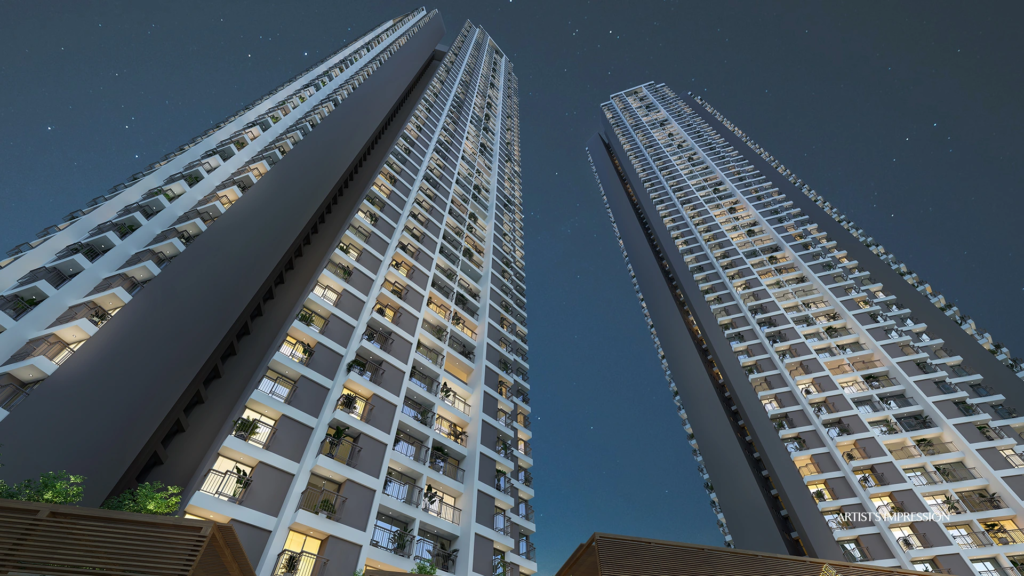
Projects like Parkwoods on Ghodbunder Road reflect this shift clearly. The location offers:
- Close access to proposed metro connectivity
- Quick links to Eastern and Western Express Highways
- Proximity to business districts in Thane and Mumbai suburbs
This combination reduces friction in daily commuting patterns, which is often the deciding factor for homebuyers comparing multiple micro-locations.
The Psychology Behind Commuting Stress and Home Selection
There is a behavioural pattern that consistently appears in Mumbai’s housing decisions. Buyers often start with aspiration-based searches but end with practicality-based decisions.
A home that reduces uncertainty in travel time tends to feel more “livable,” even if it is not the largest option available. This is why demand for 2 BHK in Thane continues to remain stable even during price fluctuations.
Developments along Ghodbunder Road are benefiting from this behavioural shift. The presence of open greens, emerging retail corridors, and upcoming infrastructure adds to the perception of long-term convenience rather than short-term compromise.
Parkwoods and the Evolving Definition of Connectivity
Parkwoods by Dynamix Group is positioned within this evolving context. Located strategically off Ghodbunder Road, it benefits directly from proposed and existing connectivity networks.
The proposed metro station being just a short distance away changes the commuting equation significantly. It shifts travel dependency away from road congestion and creates more predictable daily movement patterns.
Along with this, surrounding social infrastructure such as retail outlets, educational institutions, and healthcare facilities adds another layer of practicality. For many evaluating 2 BHK Apartments In Thane, these factors matter as much as the apartment itself.
Why Commute Will Continue To Define Mumbai’s Real Estate Decisions
Mumbai is expanding outward, but its economic core remains concentrated. This imbalance ensures that commute will remain a critical filter in home buying decisions.
Submarkets like Thane are not simply alternatives—they are becoming strategic residential zones where infrastructure is catching up with demand. As metro lines expand and highway upgrades continue, the importance of commute time is expected to increase further in shaping housing preferences.
In that sense, properties aligned with connectivity corridors—such as those along Ghodbunder Road—are likely to remain central to buyer attention in the coming years.
Conclusion
In Mumbai, home buying is less about choosing space and more about choosing time. The daily commute silently dictates what feels practical, sustainable, and worth investing in.
As infrastructure evolves, locations like Thane are no longer viewed as distant alternatives. They are becoming well-integrated residential choices where connectivity, convenience, and liveability intersect in a measurable way.