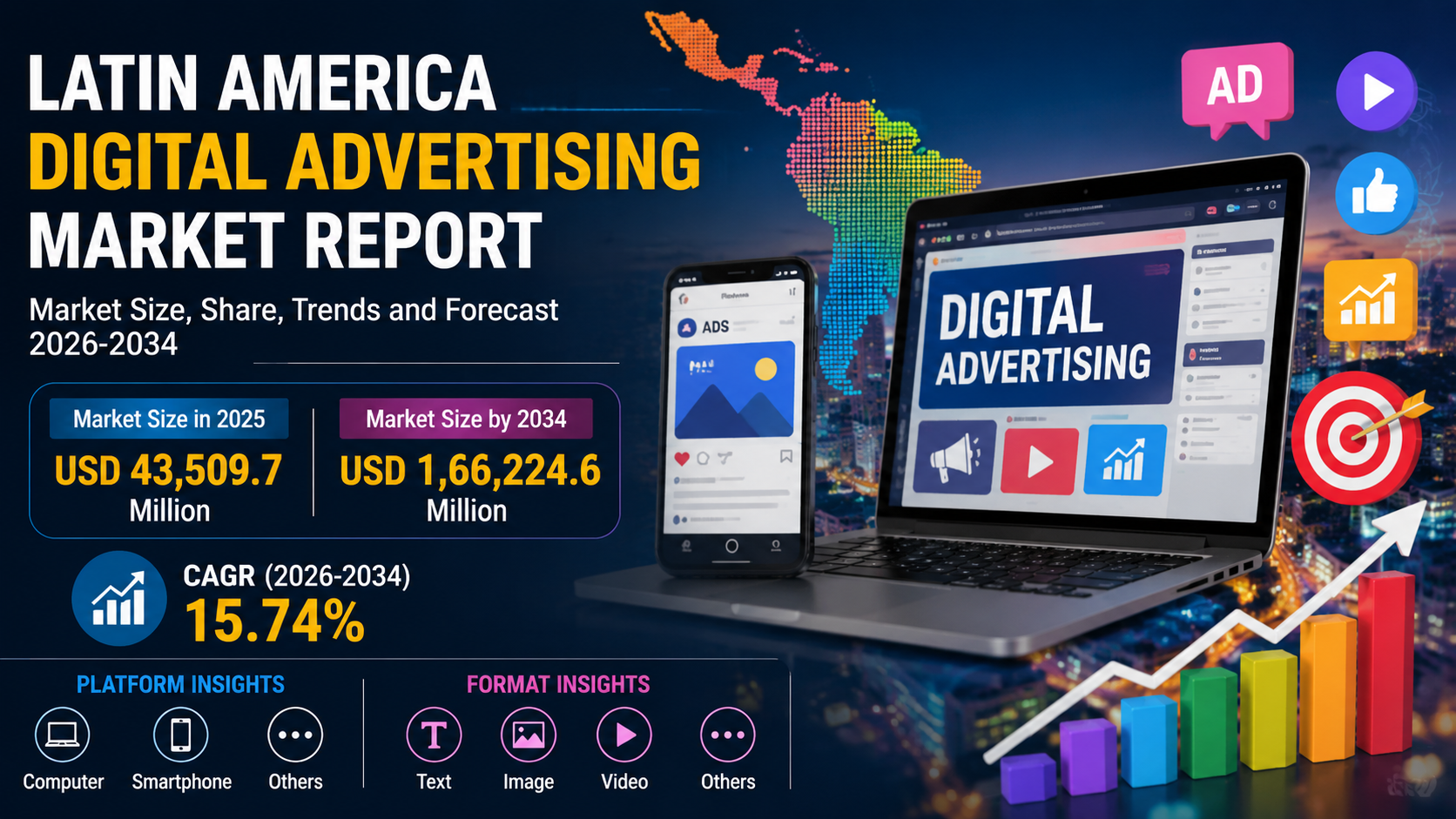
The Latin America Digital Advertising Market refers to the collective industry encompassing the strategy, placement, and optimization of promotional content across digital platforms within the Central and South American regions. This ecosystem involves the use of internet-based channels, such as social media, search engines, mobile apps, and websites – to deliver targeted messages to specific audiences. Driven by high smartphone penetration and rapid e-commerce expansion, the market was valued at USD 43,509.7 Million in 2025. Looking forward, it is projected to reach a staggering USD 1,66,224.6 Million by 2034, exhibiting a robust compound annual growth rate (CAGR) of 15.74%. This evolution represents a fundamental transition from traditional media to a data-driven, mobile-first advertising landscape.
Why is the Latin America Digital Advertising Market Experiencing Rapid Growth?
The explosive growth of the Latin America Digital Advertising Market is primarily fueled by the region’s massive digital leap. Unlike other mature markets, Latin America is currently seeing a surge in internet access and smartphone ownership, which has created a fertile ground for advertisers.
- Smartphone Penetration: Mobile devices have become the primary gateway to the internet for millions of users in the region. This has shifted the focus toward mobile-first advertising strategies.
- Internet Accessibility: Increased investments in telecommunications infrastructure have brought more rural and suburban populations online, expanding the potential reach for digital campaigns.
- Social Media Engagement: Latin Americans are among the most active social media users globally. This high level of engagement on platforms like Instagram and TikTok allows brands to connect with consumers through immersive storytelling.
How is E-commerce Expansion Transforming Regional Ad Spending?
E-commerce is the single most powerful catalyst for digital advertising in Latin America. The post-pandemic era saw a permanent shift in consumer behavior, with millions opting for the convenience of online shopping. In Brazil alone, the e-commerce sector is growing at 14.3% and is expected to exceed USD 200 billion by 2026.
As consumers flock to digital marketplaces like Mercado Libre and Amazon, brands are reallocating their budgets toward product placement and targeted search ads within these platforms. Interestingly, social media has become a “discovery engine” for products; approximately 67% of Brazilian consumers use Instagram to search for products, while 51% use YouTube. This integration of social media and shopping is creating a seamless path from discovery to purchase.
What is the Significance of In-Game Advertising in Modern Campaigns?
A major trend currently taking the Latin America Digital Advertising Market by storm is in-game advertising. This involves embedding promotional materials – such as branded billboards in racing games or virtual goods in simulations – directly into the gameplay experience.
This method is highly effective because:
- Non-Disruptive Nature: Unlike traditional pop-up ads, in-game ads provide an immersive experience that doesn’t interrupt the user’s flow.
- High Engagement: Gamers tend to be highly focused, leading to better brand recall.
- Strategic Partnerships: In June 2024, companies like Stagwell and Anzu partnered to develop advanced in-game ad formats, aiming to capitalize on the region’s massive and growing gaming fraternity through authentic and immersive placements.
Which Platforms and Formats are Leading the Digital Ad Charge?
The Latin America Digital Advertising Market is segmented by various platforms and formats, each serving a unique purpose in the consumer journey:
- Platforms: While computers are still used for professional and high-intent research, Smartphones dominate the market. Mobile advertising allows for location-based targeting and real-time interaction.
- Formats: Video is currently the king of formats. With the rise of short-form video content, advertisers are finding more success with video ads than with traditional text or static images.
- Ad Types: Search advertising and social media advertising remain the top two spending categories. However, Native Advertising – which mimics the look and feel of the surrounding content – and Interstitial Advertising (full-screen ads) are gaining traction for their high visibility.
How is Programmatic DOOH Revolutionizing Outdoor Advertising?
Even traditional outdoor advertising is going digital. The introduction of Programmatic Digital Out-of-Home (DOOH) advertising is a significant development in the region. In April 2024, Vistar Media partnered with PRODOOH to bring these capabilities to Mexico and Brazil.
This technology allows advertisers to buy outdoor ad space (like digital billboards) using automated, data-driven systems. This ensures that the right audience sees the ad at the right time based on real-world triggers, providing enhanced audience targeting and evidence-based measurement that was previously impossible with static billboards.
Which End-User Industries are Investing Most in Digital Ads?
The demand for digital advertising is widespread, but certain sectors are leading the investment in the Latin America Digital Advertising Market:
- Retail: As mentioned, the e-commerce boom makes retail the top spender.
- BFSI (Banking, Financial Services, and Insurance): The rise of “Fintech” in Latin America has led to aggressive digital campaigns to acquire new users for digital banking apps.
- Media and Entertainment: Streaming services and gaming companies use digital ads to drive subscriptions and user engagement.
- Consumer Electronics and IT: These sectors rely on digital platforms to showcase product features and drive technical conversions.
Sample Request For Your Business
Which Countries are the Main Hubs for Digital Ad Growth?
While the entire region is growing, specific countries serve as the primary engines for the Latin America Digital Advertising Market:
- Brazil: The largest market in the region, characterized by high tech adoption and a massive consumer base.
- Mexico: A strategic hub for North American brands looking to expand south, with a rapidly maturing digital ecosystem.
- Argentina: Despite economic fluctuations, Argentina remains a powerhouse for creative and digital talent, evidenced by Publicis acquiring Practia in 2023 to support digital transformation.
- Colombia, Chile, and Peru: These markets are seeing steady growth as internet penetration reaches peak levels and local businesses digitize their operations.
What are the Key Challenges Facing Advertisers in Latin America?
Despite the optimistic forecast, the Latin America Digital Advertising Market does face hurdles:
- Infrastructure Gaps: While urban areas are highly connected, rural connectivity can still be inconsistent.
- Ad Blocking: As users become more tech-savvy, the use of ad-blocking software is increasing, forcing brands to be more creative with non-intrusive formats like native or in-game ads.
- Data Privacy Regulations: Much like the GDPR in Europe, Latin American countries are tightening data privacy laws, requiring advertisers to be more transparent about how they collect and use consumer data.
Conclusion:
The Latin America Digital Advertising Market is during a historic expansion. With a projected value of USD 1,66,224.6 Million by 2034, the sector is moving away from generic broadcasting toward highly personalized, mobile-centric, and immersive experiences. By leveraging innovative trends like in-game advertising and programmatic DOOH, and tapping into the booming e-commerce landscape, brands can unlock unprecedented growth in one of the world’s most vibrant and digitally active regions.