
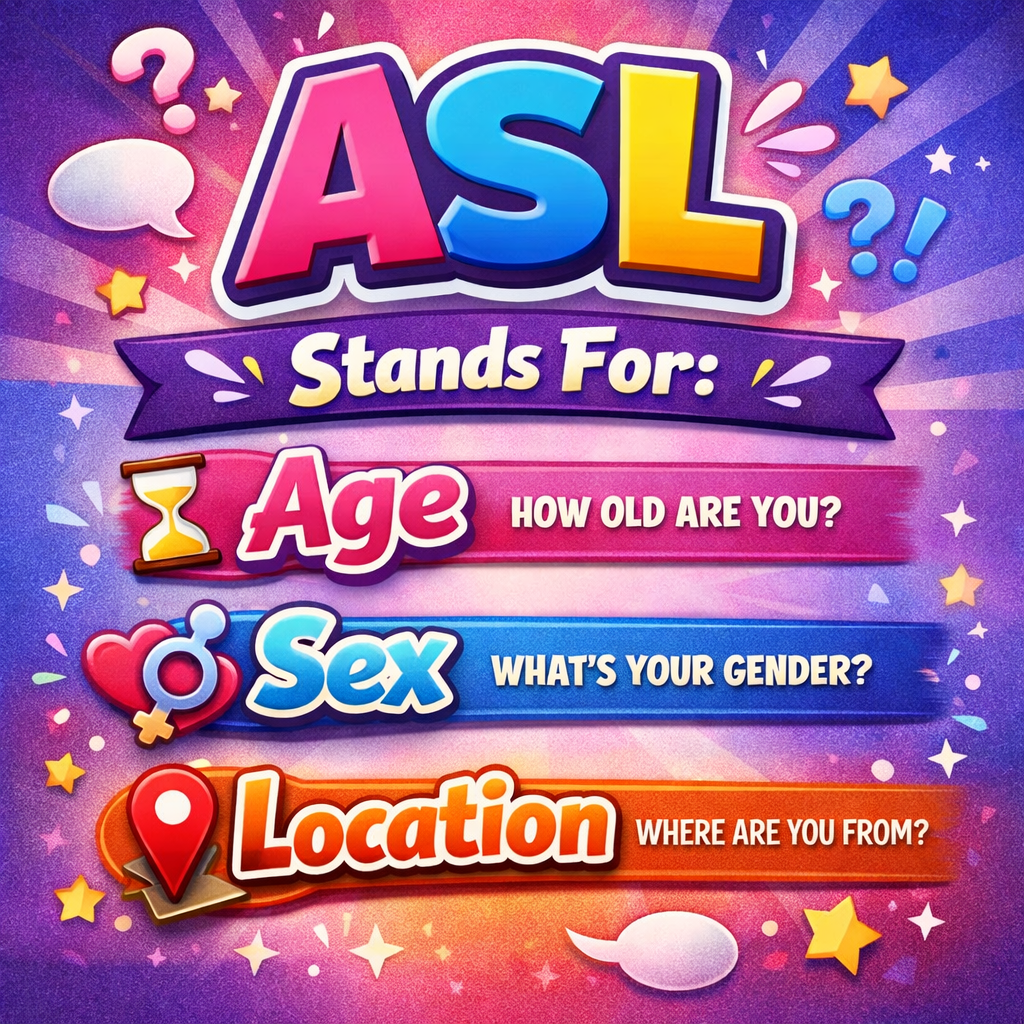
ASL is not a very uncommon abbreviation, as this term has been used to refer to the ‘American Sign Language’ for a long time; however, you will be surprised to know that the meaning of this term has evolved with the changes in internet language. The term is no longer simply restricted to the American Sign Language, as there is a different meaning of the term these days.
So, if you have also come across this abbreviation on social media, then use this guide to learn what does ASL mean and how it has evolved in the modern world.
Understanding the meaning of the term ASL
The language of acronyms, abbreviations, and slang terms dominates social media these days. In the same way, ASL is also used by people for two different meanings. Earlier, ASL was used by people as a shorthand for ‘age/sex/location’ to get to know the other user. If you are making a new friend, then this abbreviation allows people to take the conversation forward.
However, now ASL is used as a shortform for ‘as hell’, which is basically a slang term that is used to emphasise something. If you want to say that your exam was quite tough, then you can say “the paper was difficult ASL”, which basically highlights the difficulty level of the paper.
Where is the abbreviation “ASL” used?
There are different situations where this term is used by people. From social media to online communities, ASL will appear everywhere, conveying different meanings.
- Social media – Here, the term is used to learn more about a social media user, about their age, gender, and their place of residence.
- Instant messaging platforms – The abbreviation is used in casual conversations between friends to focus on anything that they want to divert attention to.
- Gaming communities – Additionally, the term is also used in online gaming communities between gamers to learn about their fellow players.
Is ASL a safe abbreviation to use?
ASL has confusing aspects that create safety issues when people attempt to use it. The term originally described “age/sex/location” for chatroom use, but people now use it to mean “as hell.” The dual meanings of this term create misunderstanding about your intention. Its use should be avoided in professional, academic, and formal environments. The context of your conversation should determine when you can use it during informal discussions; however, it is mainly used only in colloquial conversations.
Source: Saferloop