Medically reviewed by Dr. Mohammad Sameer Alsalih
Introduction
Hair thinning, excessive shedding and reduced hair density can affect the appearance of your hair and your confidence. Modern hair restoration approaches offer different ways to support healthier-looking hair, and Platelet-Rich Plasma (PRP) therapy has become a popular option. The Best PRP Hair Treatment in Abu Dhabi focuses on using the body’s own platelet-rich plasma to support hair follicle activity and improve the appearance of hair thickness. Understanding how PRP works, its potential benefits and what influences its effectiveness can help you make an informed decision about hair restoration.
What Is PRP Hair Treatment?
Platelet-Rich Plasma (PRP) hair treatment is a non-surgical hair restoration approach that uses a concentrated portion of a person’s own blood, containing platelets and naturally occurring growth factors. These components are used to support the environment around hair follicles and encourage healthier-looking hair growth.
Platelets are best known for their role in the body’s natural healing processes. They also contain growth factors that participate in cellular communication and tissue maintenance. PRP therapy uses these properties as part of an approach designed to support hair follicle function.
The treatment is commonly explored by individuals experiencing hair thinning, reduced hair density or changes in their hair’s overall appearance.
Key points to understand:
- PRP stands for Platelet-Rich Plasma.
- It uses platelets obtained from the individual’s own blood.
- Platelets contain naturally occurring growth factors.
- The treatment aims to support hair follicle activity.
- It is a non-surgical approach to hair restoration.
- It focuses on improving the appearance of hair thickness and density.
How Does PRP Hair Treatment Work?
PRP hair treatment works by concentrating platelets from a blood sample and using the resulting plasma as part of a hair restoration procedure. The concentrated platelets contain growth factors that play a role in cellular activity and tissue maintenance.
These growth factors are associated with several biological processes that may contribute to a healthier environment around hair follicles.
1. Blood Sample Preparation
The process begins with collecting a small blood sample. This sample provides the material needed to separate the platelet-rich portion from other blood components.
2. Platelet Separation
A centrifugation process is commonly used to separate the different components of blood. This helps concentrate the platelets within a smaller volume of plasma.
3. Preparation of Platelet-Rich Plasma
The separated plasma is prepared for application. The objective is to obtain a concentrated platelet solution containing naturally occurring growth factors.
4. Application to the Scalp
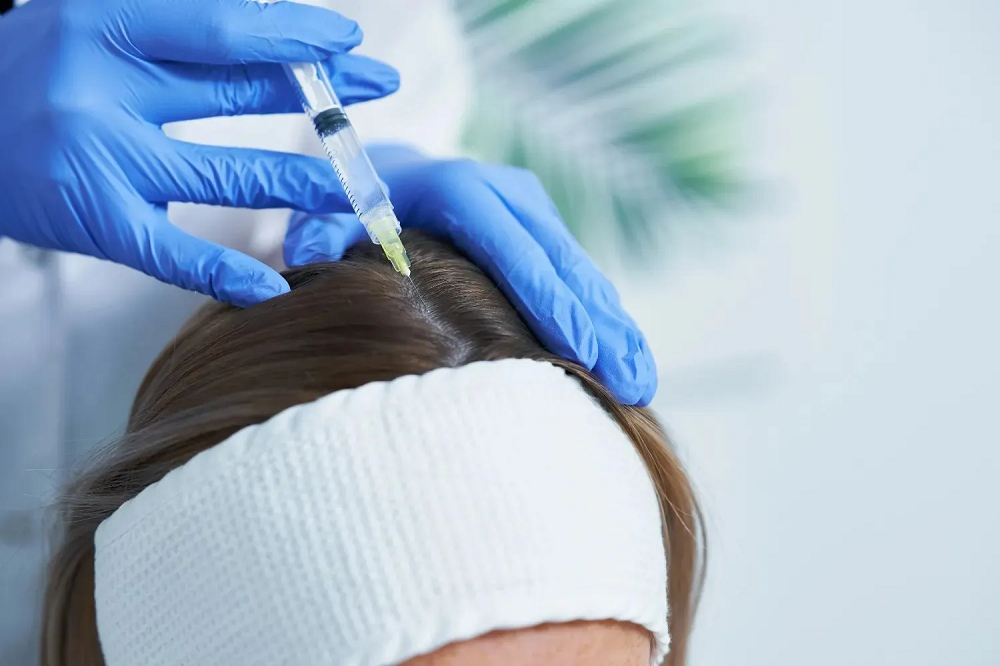
The prepared PRP is introduced into selected areas of the scalp as part of the treatment process. These areas are generally chosen according to the pattern of hair thinning and the intended treatment goals.
5. Support for Hair Follicle Activity
The growth factors present in PRP are intended to support cellular communication around hair follicles. This may help create an environment that supports healthier-looking hair growth and improved hair density over time.
How Effective Is PRP Hair Treatment?
The effectiveness of PRP hair treatment depends on several factors, including the individual’s hair condition, existing follicle activity, treatment approach and consistency.
PRP is particularly discussed as an option for individuals experiencing early-stage hair thinning, where existing hair follicles may still be active. Its purpose is to support the appearance and quality of existing hair rather than create entirely new follicles.
Results can vary between individuals, and the treatment does not produce identical outcomes for everyone.
Factors That Influence PRP Effectiveness
Several factors can influence how an individual responds to PRP hair treatment.
1. Existing Hair Follicle Activity
The condition of existing hair follicles is an important consideration. PRP is generally intended to support follicles that are still present and capable of producing hair.
2. Stage of Hair Thinning
The stage and pattern of hair thinning can influence treatment outcomes. Individuals with early changes in hair density may have different expectations from those experiencing more advanced hair loss.
3. Individual Hair Characteristics
Hair thickness, density, growth patterns and follicle characteristics differ from person to person. These differences can influence the appearance of results.
4. PRP Preparation Method
The concentration and quality of the prepared platelet-rich plasma can influence the treatment approach. Preparation methods are important when considering the overall consistency of PRP therapy.
5. Treatment Consistency
PRP hair restoration is often approached through a planned series of sessions rather than a single application. Following an appropriate treatment schedule helps maintain consistency throughout the process.
6. Individual Response
Every person’s hair growth cycle and biological response are different. Consequently, the degree of improvement and the time required to notice visible changes can vary.
What Are the Benefits of PRP Hair Treatment?
PRP hair treatment is recognised for its use of naturally occurring platelet components as part of a hair restoration approach. It is explored by people looking to improve their hair’s appearance without undergoing a surgical hair restoration procedure.
Some commonly discussed benefits include the following.
1. Supports Healthier-Looking Hair Growth
PRP contains growth factors that participate in cellular activity. These components are used to support the environment surrounding existing hair follicles, potentially contributing to healthier-looking hair growth.
2. Helps Improve Hair Thickness
One of the main goals of PRP hair treatment is to improve the appearance of hair thickness. Supporting existing follicles may contribute to fuller-looking hair in areas affected by thinning.
3. Supports Hair Density
Hair density refers to the amount of hair covering a particular area of the scalp. PRP is explored as an approach to supporting existing hair and improving the overall appearance of density.
4. Uses the Body’s Own Platelets
PRP is prepared using blood obtained from the individual receiving treatment. This makes it different from approaches that rely on externally manufactured growth-factor products.
5. Non-Surgical Hair Restoration Approach
PRP does not involve surgical hair transplantation. It is an alternative approach for people interested in supporting their existing hair rather than undergoing a hair restoration operation.
6. Can Be Incorporated into Hair Care Plans
PRP may be considered as part of a broader hair care strategy. Depending on individual requirements, it can be discussed alongside other approaches designed to support hair quality and density.
Who May Consider PRP Hair Treatment?
PRP hair treatment is generally explored by individuals who want to address changes in their hair’s thickness, density or overall appearance.
It may be considered by people experiencing different patterns of hair thinning.
Individuals Experiencing Early Hair Thinning
People noticing that their hair is gradually becoming thinner may explore PRP as an option for supporting existing follicles and maintaining a fuller-looking appearance.
People Experiencing Reduced Hair Density
Changes in hair density can make the scalp more visible, particularly around the crown and other areas. PRP is sometimes considered to support the appearance of fuller hair.
Individuals Concerned About Hair Quality
Hair that appears less dense or thinner than before can influence overall appearance. PRP is explored by individuals interested in improving the look of their existing hair.
People Exploring Non-Surgical Hair Restoration
Individuals who prefer non-surgical approaches may consider PRP as one of several available hair restoration options.
What Areas of the Scalp Can PRP Hair Treatment Address?
PRP hair treatment can be incorporated into plans targeting different areas of the scalp, depending on the individual’s hair concerns and treatment objectives.
Commonly considered areas include:
1. Crown Area
The crown is located towards the back and upper portion of the scalp. Hair thinning in this area can gradually make the scalp more visible. PRP may be explored to support existing hair follicles and improve the appearance of coverage.
2. Hairline
The hairline frames the face and plays an important role in overall appearance. Changes in hair density around this area can influence facial framing. PRP may be considered when existing follicles are present.
3. Top of the Scalp
The upper scalp is another area where hair thinning may become noticeable. Treatment plans may focus on supporting existing hair and improving the appearance of density.
4. Mid-Scalp
The mid-scalp connects the frontal and crown regions. Reduced density in this area can affect the overall appearance of hair coverage, making it another area that may be considered during hair restoration planning.
What Is the Difference Between PRP Hair Treatment and Hair Transplantation?
PRP hair treatment and hair transplantation are two different approaches to hair restoration. Although both are associated with improving hair appearance, they work through different methods and have different objectives.
| Feature | PRP Hair Treatment | Hair Transplantation |
|---|---|---|
| Approach | Non-surgical | Surgical |
| Main purpose | Supports existing follicles | Relocates hair follicles |
| Main component | Platelet-rich plasma | Individual hair follicles |
| Application | PRP is introduced into selected scalp areas | Hair follicles are transferred to targeted areas |
| Main focus | Hair quality and density | Hair coverage |
| Treatment objective | Support existing hair | Restore hair in areas with reduced coverage |
PRP focuses on supporting existing hair follicles, whereas transplantation involves moving follicles from one area to another.
The appropriate approach depends on individual hair characteristics and restoration goals.
How Long Does It Take to Notice PRP Hair Treatment Results?
Hair growth follows a natural cycle, so changes in hair appearance do not usually happen immediately. PRP hair treatment is intended to support processes associated with existing hair follicles, meaning visible changes may develop gradually.
The time required to notice changes varies between individuals.
Understanding the Hair Growth Cycle
Hair naturally passes through different stages:
- Anagen phase: The active growth stage, during which hair follicles produce new hair.
- Catagen phase: A transitional stage when active hair growth slows.
- Telogen phase: The resting stage, during which hair remains in the follicle before shedding.
- Exogen phase: The shedding stage, when existing hair is released.
These stages help explain why improvements in hair appearance may take time. Hair follicles do not all follow the same growth cycle simultaneously.
What Changes May Become Noticeable?
Depending on individual response, people may observe changes such as:
- Improved appearance of hair thickness.
- Fuller-looking hair in selected areas.
- Changes in the appearance of hair density.
- Better overall hair coverage.
- Improvements in the appearance of existing hair.
It is important to understand that individual outcomes and timelines differ.
How Can You Support Healthy Hair After PRP Treatment?
Maintaining healthy hair habits can complement an overall hair care routine. Although daily habits do not guarantee specific PRP outcomes, they can help support general hair health.
1. Maintain a Balanced Diet
A balanced diet provides nutrients that contribute to normal hair structure and growth.
Include foods containing:
- Protein for normal hair structure.
- Iron for healthy bodily functions.
- Zinc for normal cellular processes.
- Vitamin D for general health.
- Vitamin B12 for normal cell function.
- Healthy fats as part of a balanced diet.
2. Follow a Consistent Hair Care Routine
A consistent hair care routine can help maintain the appearance and condition of existing hair.
Consider these habits:
- Use hair products suited to your hair type.
- Avoid excessive heat styling.
- Choose gentle cleansing products.
- Minimise unnecessary chemical treatments.
- Handle wet hair carefully.
- Keep the scalp clean.
3. Maintain Healthy Lifestyle Habits
Everyday lifestyle choices contribute to general well-being and can support a healthy hair care routine.
Helpful habits include:
- Getting sufficient sleep.
- Maintaining a balanced eating pattern.
- Staying physically active.
- Drinking adequate water.
- Managing everyday stress.
- Maintaining regular personal care habits.
4. Pay Attention to Changes in Hair Appearance
Observing changes in hair texture, thickness and density can help you understand your hair’s overall condition. Maintaining consistent hair care habits also makes it easier to recognise changes over time.
Frequently Asked Questions
1. Is PRP Hair Treatment Effective for Hair Thinning?
PRP hair treatment may help support existing hair follicles and improve the appearance of hair thickness and density. Its effectiveness varies according to individual hair characteristics, follicle activity and other contributing factors.
2. Can PRP Hair Treatment Make Hair Look Thicker?
PRP is designed to support existing hair follicles through the growth factors found in concentrated platelets. Some individuals may notice fuller-looking hair and improvements in apparent thickness over time.
3. How Many PRP Hair Treatment Sessions Are Needed?
The number of sessions depends on individual hair conditions and treatment objectives. PRP is commonly approached through an initial series of sessions, with the schedule determined according to individual requirements.
4. Does PRP Hair Treatment Work for All Types of Hair Loss?
PRP may be considered for certain types of hair thinning, particularly when existing follicles remain active. However, its suitability and effectiveness differ according to the underlying cause and pattern of hair loss.
Conclusion
PRP hair treatment is a non-surgical approach that uses concentrated platelets and naturally occurring growth factors to support existing hair follicles. Its main objectives include improving the appearance of hair thickness, supporting hair density and encouraging healthier-looking hair growth.
The effectiveness of PRP depends on several factors, including existing follicle activity, the stage of hair thinning, individual biological responses and treatment consistency. Understanding these factors helps establish realistic expectations about potential outcomes.