
Digital marketing is changing as businesses adopt AI tools, automation and data-driven strategies. Many individuals just starting in digital marketing find it difficult to know which skills to acquire first, how to use marketing tools and where to get experience. Online digital marketing training can guide learners through this process by providing them with structured learning and hands-on experience. By 2027, combining marketing skills and knowledge, with some creativity and AI expertise, will be important.
Why Do Beginners Need Online Digital Marketing Training in 2027?
Watching tutorials or using AI tools can help beginners understand individual marketing activities, but it may not provide a complete picture of how digital campaigns work. Learners also need to understand audience behaviour, marketing objectives, content planning and performance measurement.
A structured digital marketing training programme can help beginners connect these activities and understand how different marketing channels contribute to business goals.
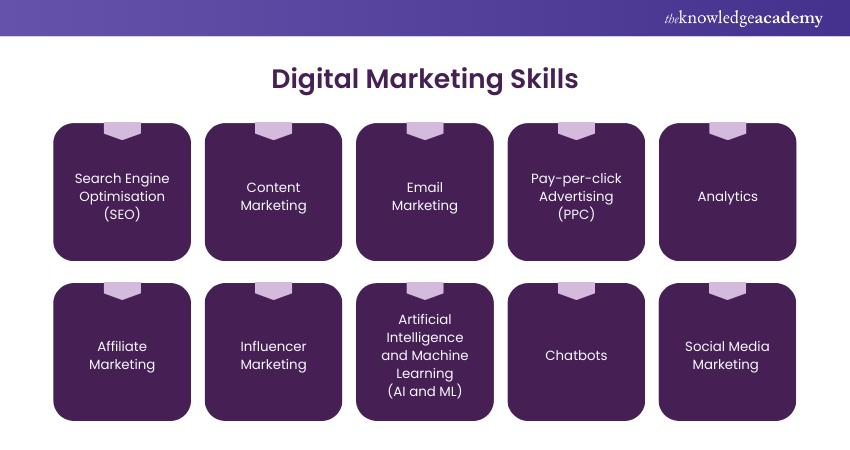
Here are 10 essential skills beginners should focus on developing.
10 Essential Skills Beginners Can Learn Through Online Digital Marketing Training
1. Search Engine Optimisation (SEO)
SEO helps businesses improve their visibility in organic search results. Beginners should understand keyword research, search intent, on-page optimisation, technical SEO basics and link-building practices.
They should also learn how to use tools such as Google Search Console to monitor search performance and identify optimisation opportunities.
Problem solved: Beginners often create website content without understanding how people search. SEO knowledge helps them develop content around relevant search queries and user needs.
2. Social Media Marketing and Content Planning
Businesses use platforms such as Instagram, Facebook and LinkedIn to communicate with audiences and build brand awareness. Beginners need to learn platform selection, audience research, content calendars, engagement management and performance analysis.
They should also understand how short-form videos, educational posts and creator collaborations fit into a social media strategy.
Problem solved: Random posting does not create a consistent marketing strategy. Content planning helps beginners organise posts around business objectives and audience interests.
3. Google Ads and Paid Advertising
Paid advertising helps businesses reach specific audiences through search and display campaigns. Beginners should learn campaign objectives, keyword targeting, ad copywriting, budget management and conversion tracking.
Understanding Google Ads is particularly useful for learners interested in performance marketing and paid campaign management.
Problem solved: Beginners may spend advertising budgets without knowing whether campaigns are generating meaningful results. Learning targeting and performance measurement helps them make more informed decisions.
4. AI-Powered Content Creation
AI tools can support content ideation, headline development, caption writing, content outlines and creative brainstorming. However, beginners must learn to review AI-generated information, improve originality and maintain a consistent brand voice.
In 2027, understanding how to combine AI assistance with human creativity and editorial judgement will be an important marketing skill.
Problem solved: Depending entirely on AI can produce repetitive or inaccurate content. Learning how to review and improve AI outputs helps marketers create more useful material.
5. Content Marketing and Copywriting
Content marketing involves creating useful information that attracts and informs potential customers. Beginners should learn blog writing, website content, email copywriting, product descriptions and persuasive calls to action.
They should also understand how to structure content around search intent and the questions audiences commonly ask.
Problem solved: Businesses often struggle to communicate their value clearly. Good copywriting helps marketers explain products, services and solutions in a way that connects with readers.
6. Email Marketing and Marketing Automation
Email marketing helps businesses communicate with subscribers, share updates and nurture potential customers. Beginners should understand email campaign planning, subject lines, audience segmentation and basic automation workflows.
They can also learn how automated emails support activities such as welcome messages, follow-ups and customer engagement.
Problem solved: Manually communicating with every lead can become difficult as a business grows. Email marketing and automation help organise communication more efficiently.
7. Web Analytics and Performance Tracking
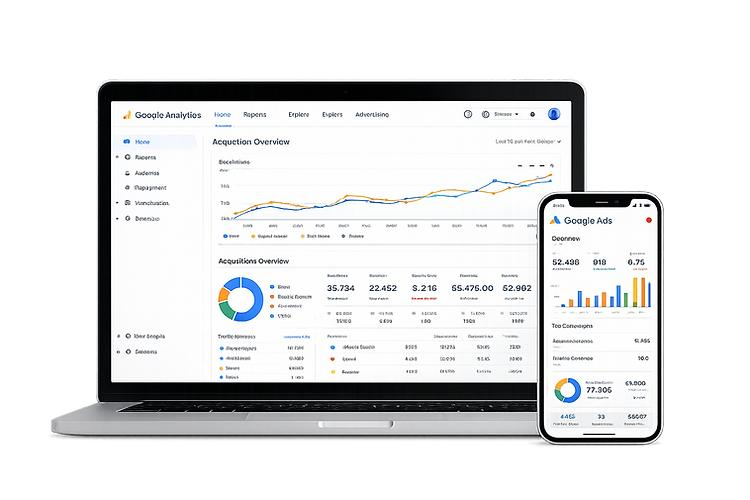
Digital marketers need to understand whether their campaigns are achieving their objectives. Beginners should learn essential metrics such as website traffic, engagement, conversions, click-through rate and campaign performance.
Tools such as Google Analytics 4 and Google Search Console can help learners understand how users interact with websites and search results.
Problem solved: Looking only at likes, impressions or clicks does not explain overall campaign performance. Analytics helps marketers identify what is working and where improvements are needed.
8. Local SEO and Google Business Profile Management
Local SEO helps businesses become more visible to people searching for products and services in specific locations. Beginners should understand Google Business Profile optimisation, local keyword research, business information consistency and review management.
These skills are useful for working with local businesses that want to improve their online presence.
Problem solved: Local businesses may have websites and social profiles but still struggle to reach nearby customers. Local SEO helps marketers improve their visibility for relevant location-based searches.
9. Marketing Strategy and Audience Research
Successful digital campaigns begin with understanding the audience. Beginners should learn how to identify target customers, research competitors, define campaign objectives and select suitable marketing channels.
They should also understand how SEO, social media, paid advertising and content marketing can work together.
Problem solved: Using every marketing channel without a clear objective can waste time and resources. Strategic planning helps marketers select activities based on business requirements.
10. Practical Project Management and Portfolio Development
Learning marketing concepts is important, but beginners also need to demonstrate how they apply them. They can develop sample projects such as an SEO audit, social media content calendar, mock Google Ads campaign, blog optimisation plan or monthly performance report.
A portfolio helps learners present their research, planning and analytical skills when applying for entry-level opportunities.
Problem solved: Freshers often lack professional experience to demonstrate their abilities. Well-organised sample projects provide evidence of their learning and practical understanding.
How to Choose the Right Online Digital Marketing Training
Before selecting a programme, beginners should check whether it covers essential marketing channels, current tools, AI-assisted workflows and practical assignments. The learning structure should explain both marketing concepts and their real-world applications.
Compare the course syllabus, learning format, trainer guidance and opportunities to practise. Avoid choosing a course based only on promotional claims or job guarantees.
A well-structured online digital marketing course should help learners build skills progressively rather than introduce tools without explaining their purpose.
Build Your Digital Marketing Skills with DigiDir Academy
Developing digital marketing skills requires consistent learning and practice. DigiDir Academy is a digital marketing learning platform offering courses covering SEO, Social Media Marketing, Google Ads, video creation and AI-powered digital marketing.
Beginners exploring digital marketing learning options can visit DigiDir Academy’s digital marketing courses to learn more about its course offerings and find a suitable starting point.
Final Thoughts
Digital marketing in 2027 will require more than knowing how to use individual tools. Beginners need to understand SEO, social media, paid advertising, content creation, analytics and AI-assisted workflows. Choosing structured online digital marketing training and practising through sample projects can help learners build a stronger foundation for future marketing opportunities.
Frequently Asked Questions
Q1. Can beginners learn digital marketing online?
Yes. Beginners can start with SEO, content marketing, social media, Google Ads and analytics through structured online learning and practical exercises.
Q2. Which digital marketing skills will be useful in 2027?
SEO, AI-assisted content creation, social media marketing, paid advertising, analytics, marketing automation and audience research will remain important areas to understand.
Q3. Do I need coding knowledge to learn digital marketing?
No. Most digital marketing fundamentals do not require coding. Basic website knowledge can be helpful, especially when learning technical SEO and website analytics.
Q4. How can freshers gain practical digital marketing experience?
Freshers can practise by creating sample campaigns, writing blog content, preparing SEO audits, building social media calendars and analysing sample marketing data.
Q5. Is online digital marketing training suitable for working professionals?
Yes. Online learning can offer flexibility for working professionals who want to develop marketing knowledge alongside their existing schedules.