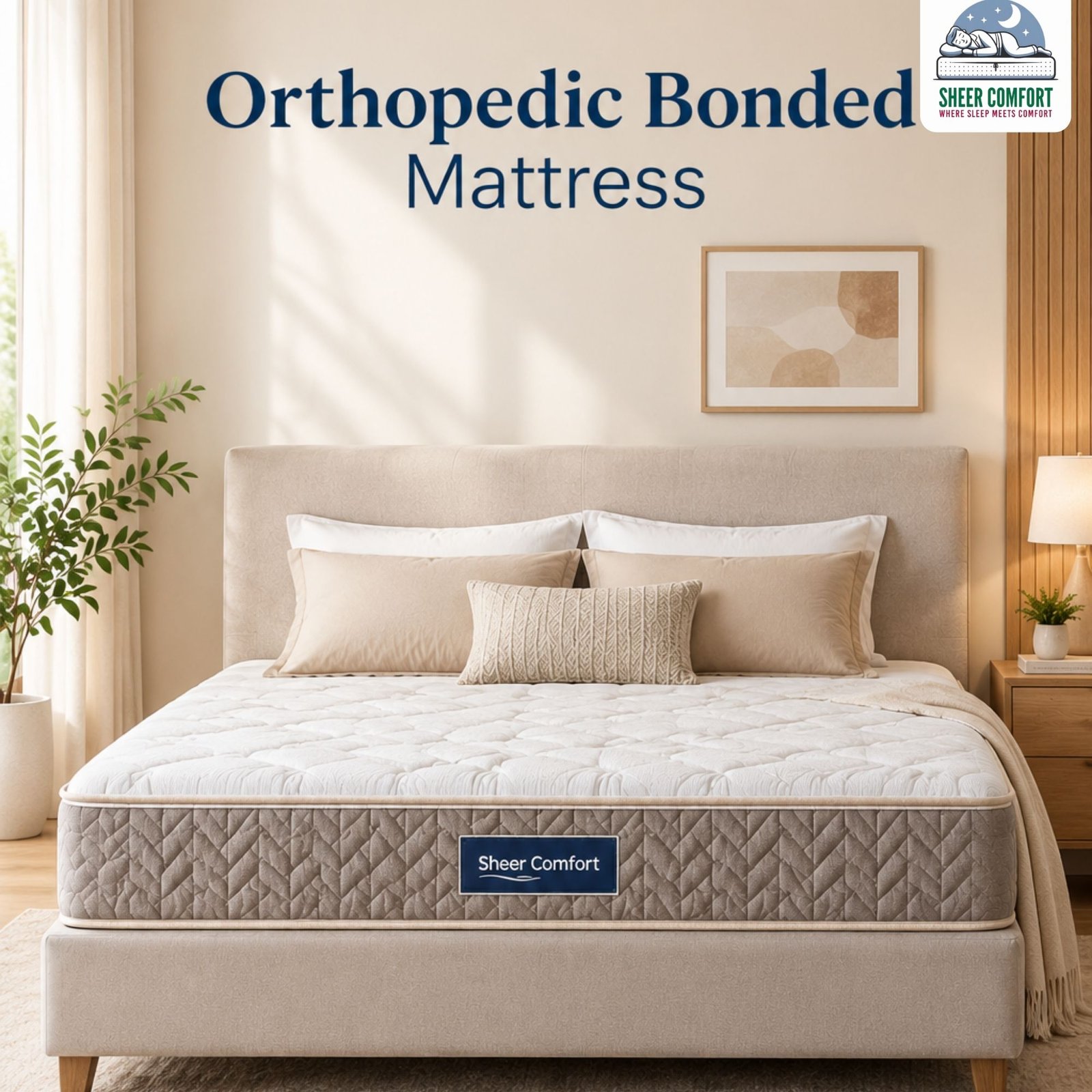
Choosing an orthopedic mattress for back pain requires more than selecting a firm sleeping surface. The right choice depends on your sleeping position, preferred firmness, body support requirements, and mattress construction. Before purchasing, compare bonded foam, memory foam, and latex options to find a mattress that feels comfortable and suits your everyday sleeping preferences.
Back discomfort can have different causes, and a mattress is not a medical treatment. However, an unsuitable sleeping surface may affect how comfortable you feel during rest. If you are planning to buy an orthopedic mattress in India, understanding its materials, support layers, and product specifications can help you make a more informed decision.
Which Orthopedic Mattress Is Suitable for Back Pain?
An orthopedic mattress for back pain should offer a comfortable balance of cushioning and support based on your sleeping position and personal preference. Compare firmness, foam construction, pressure distribution, mattress size, and warranty before buying. Bonded foam, memory foam, and latex mattresses offer different sleeping experiences, so review their specifications before choosing.
1. Choose the Right Mattress Firmness
Firmness is one of the first things to consider when selecting an orthopedic mattress for back pain. A mattress that feels too hard may create uncomfortable pressure, while one that feels too soft may not provide the support you prefer.
Consider these general comfort options:
- Soft to medium: Offers more cushioning and may suit people who prefer a softer surface.
- Medium-firm: Provides a balance between cushioning and a supportive feel.
- Firm: Offers a more solid sleeping surface for people who prefer less cushioning.
There is no single firmness level that works for everyone. Your body weight, sleeping position, and personal comfort preference should guide your choice.
2. Understand the Mattress Foam Construction
The material used inside a mattress influences its feel, responsiveness, and overall comfort. Before purchasing, understand the difference between common mattress materials.
Bonded Foam Mattress
Bonded foam is manufactured by compressing foam pieces into a dense layer. It is commonly used in mattresses designed to provide a firmer sleeping surface.
An orthopedic bonded mattress may suit buyers who prefer a more solid base with additional cushioning layers.
Memory Foam Mattress
Memory foam responds to body heat and pressure, gradually adapting to the body’s shape. It offers a contouring feel and can help minimise motion transfer, making it worth considering for couples.
Latex Mattress
Latex offers a naturally responsive and bouncy feel. It generally provides less of the sinking sensation associated with memory foam and can be a suitable option for buyers who prefer a more responsive surface.
Compare these materials based on your preferred comfort rather than assuming one is universally better for back discomfort.
3. Consider Your Sleeping Position
Your sleeping position can influence which mattress feels comfortable.
- Back sleepers: Compare mattresses that provide a balanced combination of cushioning and support.
- Side sleepers: Look for enough cushioning around the shoulders and hips to avoid an excessively hard surface.
- Stomach sleepers: Consider a firmer-feeling mattress if it helps you avoid excessive sinking.
- Combination sleepers: A responsive mattress or reversible design may offer greater flexibility when changing positions.
When choosing the best orthopedic mattress in India for your requirements, consider how comfortable you feel in your usual sleeping position.
4. Check Support and Pressure Distribution
A mattress should provide a stable and comfortable surface without creating excessive sinking or uncomfortable pressure.
Look for:
- A supportive base layer.
- Comfort layers that suit your body.
- Even surface support.
- Construction that maintains its shape under normal use.
- A suitable combination of cushioning and firmness.
Remember that mattress support and pressure distribution depend on the complete construction, not simply the word orthopedic in the product name.
If you experience persistent or severe back pain, consult a qualified healthcare professional rather than relying on a mattress change as treatment.
5. Compare Comfort Layers and Reversible Designs
Some mattresses combine a firm support base with a softer top layer. Others offer reversible construction, allowing you to use either side depending on your comfort preference.
For example, Sheer Comfort’s Posture Sense Orthopedic Bonded Mattress features:
- A high-density bonded foam base.
- A high-density soft foam top layer.
- A reversible dual-comfort design.
- A premium quilted finish.
- A five-year warranty listed on its product page.
This design gives buyers the option of choosing between two different surface feels by flipping the mattress.
You can explore the Posture Sense Orthopedic Bonded Mattress to review its specifications and available options.
6. Select the Correct Mattress Size and Thickness
A mattress should fit your bed frame properly and provide enough sleeping space.
Before ordering, check:
- Length and width of your bed frame.
- Required mattress thickness.
- Single, double, queen, or king size.
- Custom-size availability.
- Compatibility with your existing bed base.
Sheer Comfort offers multiple size options, including single, double, queen, king, and custom sizes on selected mattress models.
Do not select a mattress based only on its displayed starting price. Confirm the price and dimensions for your required size and thickness.
7. Review Warranty, Price and Return Conditions
The final step is to compare the overall value of the mattress. A lower price does not necessarily mean better value if the construction, warranty, or product specifications do not meet your expectations.
Before purchasing, review:
- Mattress materials and layer construction.
- Available firmness options.
- Warranty duration and coverage conditions.
- Current product price for your selected size.
- Delivery timelines and service availability.
- Return or replacement eligibility.
For Sheer Comfort’s Posture Sense Orthopedic Bonded Mattress, the official product page lists a five-year warranty. Its warranty terms should be reviewed before ordering, including the registration requirements and exclusions.
Which Sheer Comfort Mattress Options Can You Compare?
If you are researching an orthopedic mattress for back pain, comparing different constructions can help you identify your preferred sleeping feel.
Here are three Sheer Comfort options worth exploring:
1. Posture Sense Orthopedic Bonded Mattress
This mattress combines a high-density bonded foam base with a soft foam top layer. Its reversible construction offers two comfort settings.
Consider it if: You prefer a bonded foam base and want the flexibility of a dual-comfort design.
Explore Orthopedic Bonded Mattress
2. Posture Sense Orthopedic Luxury Latex Mattress
This model features a high-density natural latex top layer and an HR foam base. The product page describes its feel as semi-firm and highlights its natural bounce and motion isolation. It also lists a 10-year warranty.
Consider it if: You prefer a responsive, naturally bouncy surface.
Explore Orthopedic Latex Mattress
3. Duo Flexi Comfort Mattress
This mattress features two foam layers and a reversible design, offering soft and firm comfort options. Its product page lists a 10-year warranty.
Consider it if: You want to compare two different comfort settings in one mattress.
Explore Duo Flexi Comfort Mattress
Explore the Sheer Comfort mattress collection to compare available models, sizes, and current prices.
Conclusion
Choosing an orthopedic mattress for back pain requires careful consideration of firmness, foam construction, sleeping position, comfort layers, size, and warranty. Bonded foam, memory foam, and latex each offer different sleeping experiences, so the right choice depends on your individual comfort requirements.
If you are planning to buy the best orthopedic mattress in India for your needs, compare actual product specifications instead of relying only on marketing descriptions.
Explore Sheer Comfort’s orthopedic bonded, latex, and reversible mattress options to find a construction and comfort level that suits your preferences.