When you move abroad, ship items that are expensive to replace, sentimental, or essential to daily life. Store items you’ll want back if you return. Sell or donate anything bulky, cheap to rebuy, or incompatible with your destination (voltage, plugs, size). Overseas shipping is priced by volume and weight, so every bulky item you keep adds to the bill.
Moving abroad forces you to decide what your life is made of. Most people pack too much, pay to ship things they’ll replace within a month, and sell things they later wish they’d stored.
This guide goes room by room and gives you a clear rule for each item. If you’d rather have a specialist plan the whole move, Pikkol’s international relocation services cover packing, shipping, customs documentation and delivery. Pikkol is a relocation company based in Bengaluru, with more than a decade of moving experience and services to 180+ countries.

The 3-bucket rule: store, ship or sell
Ask these questions for every item:
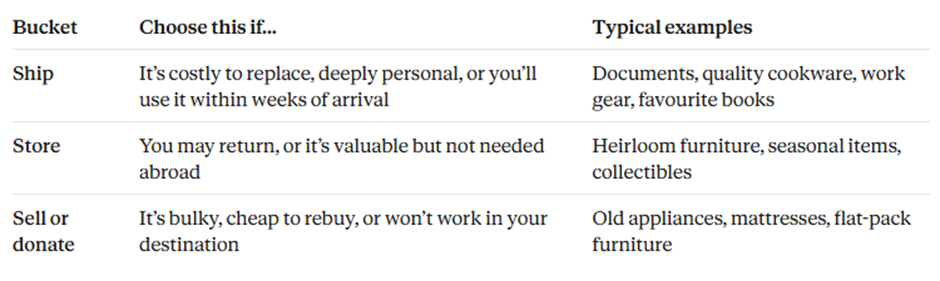
Cost check: If shipping an item costs more than half its replacement price, sell it. If it holds sentimental value and you’d regret losing it, ship or store it.
Living room
- Ship: Artwork, a favourite lamp, books you’ll reread, good-quality throws and cushions.
- Store: A solid-wood sofa or dining set if you plan to return within a few years. Large furniture is expensive to ship and easy to protect in a secure storage facility.
- Sell: Old TVs, flat-pack shelves, worn sofas and rugs.
Tip: Measure your new home before shipping furniture. Many overseas apartments have narrower doors and lifts.
Kitchen
- Ship: Quality knives, a favourite pan, spices in sealed jars (check import rules), and any cookware you use daily.
- Store: Rarely used specialty items and formal dinnerware you’d want back.
- Sell: Large appliances such as refrigerators, washing machines and microwaves. Voltage and plug standards differ by country, and most rentals come with them.
Tip: Food and liquids are often restricted by customs. Check destination rules before packing anything edible.
Bedroom
- Ship: Bedding you love, personal items and clothing suited to your new climate.
- Store: Out-of-season clothing, formalwear and keepsakes.
- Sell or donate: Mattresses and bed frames. They are heavy, bulky and cheap to replace in most countries.
Tip: Vacuum-seal clothing to cut volume, which lowers shipping cost.
Kids’ rooms
- Ship: Comfort toys, favourite books, school items and anything that helps children settle in.
- Store: Outgrown items you plan to keep for younger siblings.
- Sell or donate: Bulky play equipment, cots and prams you can rebuy easily abroad.
Home office
- Ship: Laptops, monitors you rely on, important files and work essentials. Carry the most valuable devices in your hand luggage.
- Store: Backup equipment or older devices you may want later.
- Sell: Printers, bulky desks and old chairs.
Tip: Keep originals of passports, degrees, contracts and medical records with you, not in the shipment. For smaller items like documents, gifts and personal papers, an international parcel service can be cheaper than adding them to a full shipment.
Bathroom and storage areas
- Ship: Towels and toiletries you can’t easily buy abroad.
- Sell or discard: Most other bathroom items. Liquids are bulky, restricted in some shipments, and easy to replace.
Garage, balcony and outdoors
- Ship: Specialist sports equipment you use regularly.
- Store: Tools, seasonal decor and equipment you’ll want if you return.
- Sell: Garden furniture, large tools and heavy equipment.
- Vehicles: Importing a car or bike is often costly and heavily regulated. Compare the import cost with buying locally, and if you decide to ship, look at vehicle shifting options.
Pets
Pets aren’t belongings, but they need planning just as early. Vet checks, travel documents and airline rules take time, so start well before your move date. Pet relocation services can handle the paperwork and travel arrangements for you.
Sentimental and high-value items
- Ship or carry: Jewellery, family photos, important documents and irreplaceable keepsakes.
- Store: Heirlooms and collections that you want protected but won’t use abroad.
- Insure: High-value items during transit, and confirm what your policy covers.
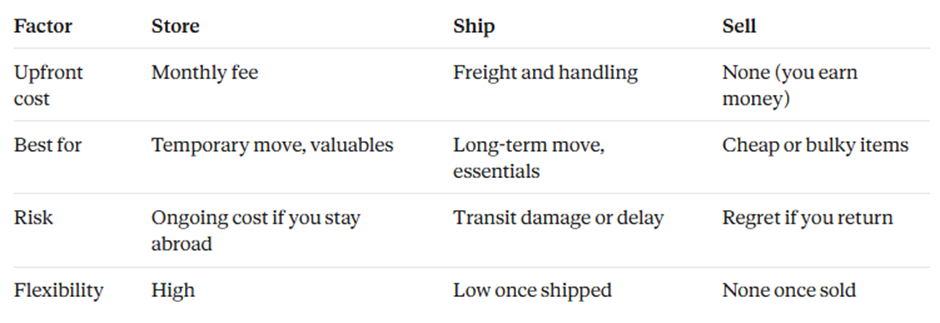
Quick comparison: store vs ship vs sell
How to decide when you’re unsure
- Set a shipping budget for your volume, then fill it with high-value essentials first.
- Decide your timeline. Moving for 6 to 12 months favours storing. Moving permanently favours selling.
- Check customs and import rules for your destination country before packing.
- Get an itemised quote so you can see what each box costs. You can request a quote from Pikkol.
- Start early. Selling and sorting take longer than people expect, so begin six to eight weeks before the move.
Common mistakes to avoid
- Shipping low-value bulky items that cost more to move than to replace
- Forgetting voltage and plug differences for electronics and appliances
- Packing documents in the shipment instead of carrying them
- Skipping insurance on valuables
- Leaving the decision to the last week
Frequently asked questions
What should I ship when moving abroad?
Ship valuables, documents, sentimental items, quality essentials and anything costly or hard to replace at your destination.
What should I sell before moving abroad?
Sell bulky furniture, large appliances, mattresses and anything cheap to rebuy. Items that won’t work with your destination’s voltage or plug type should go too.
Is it cheaper to ship or replace furniture abroad?
For most standard furniture, replacing is cheaper. Ship only high-quality or sentimental pieces, since international freight is priced by volume.
How long can I store belongings while living abroad?
Storage plans are usually flexible, from short-term to long-term. See Pikkol’s storage facility options for what’s available.
How early should I start planning an international move?
Start 8 to 12 weeks ahead. That gives you time to sort, sell, arrange shipping and prepare customs paperwork.
Can I take a car or bike abroad?
Often yes, but import duties and rules vary widely. Compare the import cost against buying locally before you decide.
Do I need insurance for an international move?
It’s strongly recommended, especially for high-value items. Check what coverage applies in transit and in storage.
Final thoughts
The best international move is a lighter one. Ship what you’ll use and love, store what you might want back, and sell the rest. If you’d like help planning the whole thing, talk to the Pikkol team or explore all Pikkol services.