
Introduction
A payment team prepares a cross-border settlement for a French supplier, but payment generation stops because the payee bank branch record has a country and no city. Tech Leads IT uses this moment in Oracle Fusion Financials Training to show why copying the supplier’s city is a shortcut, not a fix.
In an Oracle Fusion Financials Online Training session, learners identify every party whose address feeds the instruction, repair gaps at the governing record, and rerun validation. A good Oracle Fusion Financials Course also teaches them to keep evidence that the released payment carries accurate details, not values typed in.
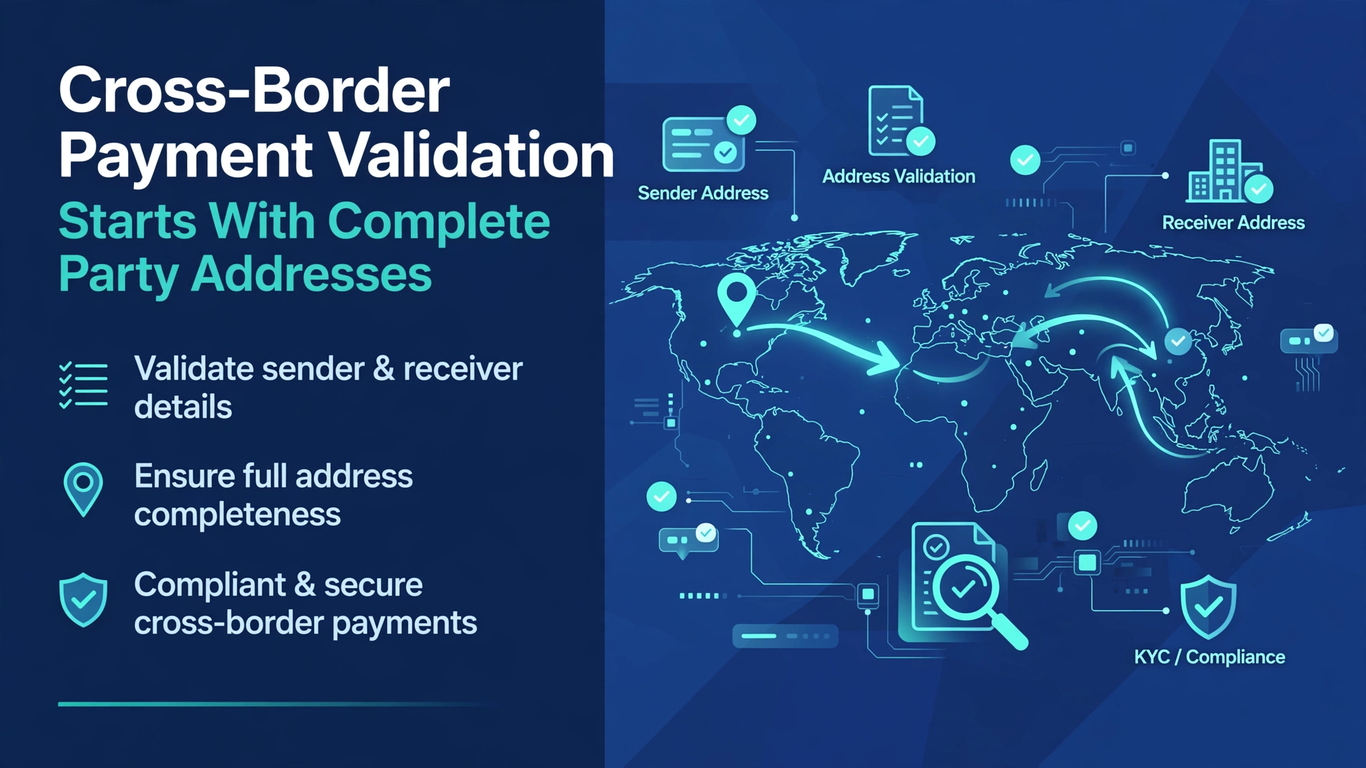
Oracle Fusion Financials Training Starts With Mapping the Payment Chain
Start with the whole route, not just the supplier. Depending on the setup, a payment can involve a payer, a payee, an ultimate payer, an ultimate payee, an intermediary bank, a payer bank branch and a payee bank branch. Some payments touch only a few of these. Others pick up extra parties through treasury structure or correspondent banking. Build a route record from the payment setup and the instruction data, then note which record is the authority for each address. A supplier site may own the payee address, while a separate bank or branch record owns the financial institution details. Two records can share a street or a city and still not be interchangeable.
For the French supplier, trace the path from the paying legal entity and disbursement account through to the supplier and its bank branch. Mark which parties are domestic and which sit across the border, and list which address components are filled in today. Done early, this exercise shows the blank branch city well before anyone builds a live payment request.
A quick rule of thumb helps here: if you can’t name the person or team who can correct a given address field, the route record isn’t finished. Every populated field should map to an owner, and every blank one should map to a next step.
Keep it a data-readiness check, though. Collect only the fields the payment process needs, and protect any export under your normal policy, so you don’t end up with a loose spreadsheet full of sensitive payment-party details.
What the Validation Actually Checks
Cross-border payment formats lean more and more on structured postal information. For the parties that apply, the town or city and the country code need attention, and the payee bank branch city is required on cross-border payments. Having a value is only the first test. The country code should follow the expected standard, the city should belong to the right party, and the record should reflect verified business information.
Country codes deserve special attention. A free-text country name that looks right to a human can still fail a rule that expects a standard code, so check the stored value, not just the displayed label.
It also helps to be clear about what the check does not do. It does not promise that an address is deliverable, current or free of other defects. It tests defined conditions during payment generation, and people still need to judge whether the data is genuine and fits the context.
Oracle’s guidance on postal address validation for cross-border payments says the checks run automatically when payments are generated, and a failing payment cannot move forward until the missing information is supplied. That is useful, because incomplete instructions are stopped before they reach the bank. The flip side is that a late discovery can put a cutoff at risk. Run a readiness report ahead of payment day for active foreign suppliers, bank branches and other applicable parties, and sort the findings by data owner. Payables or treasury staff may see an error without having the authority, or the evidence, to correct the master record underneath it.
Repair the Authoritative Record Instead of the Symptom
When the branch city is blank, pause the payment and confirm the branch identity from approved documentation or a controlled verification channel. Then update the bank branch record through your governed maintenance process, with maker-checker review where it is required. Don’t borrow the supplier’s city. Don’t guess a location from the bank’s name, and don’t paste in whatever a web search suggests. A bank can serve a supplier through a branch in another city or even another country.
The strongest fix ties the value to evidence, records who changed it and when, and keeps full bank instructions and confidential correspondence out of free-text comments. A reviewer reading the history later should be able to see where the city came from without taking anyone’s word for it.
The pressure is real, and it is fair to feel it. But a placeholder that passes today can turn into a returned payment, a bank query or a compliance question next week. Going to the data owner early is almost always faster than cleaning up afterwards.
Oracle Fusion Financials Online Training Should Cover Profiles, Formats, and Templates
Clean data is not enough if the payment configuration points to an older or customized route that doesn’t apply the intended artifacts. For integrated business-to-business bank partners, the delivered CBPR+ validation relies on new predefined payment process profiles. Setups that still use earlier profiles or customized templates need a review across payment process request templates, profiles, formats and templates. List every cross-border payment route and write down which combination it uses. Don’t swap out a customized profile blindly. Find out why it was customized, compare the output requirements, and test the equivalent change before promoting it. Configuration lineage deserves the same care as party-data lineage, since a perfect record sent down the wrong route can still fail.
Then build a test matrix around realistic routes: a standard foreign supplier payment, one with an intermediary bank, one with an ultimate payee, and a domestic payment that should not be misclassified. For each case, predict the applicable parties and required values, generate the payment, and check both the validation behavior and the structured output through approved tools. A case passes only when valid records go through and invalid ones stop for the expected reason. If everything passes, remove one required city and one country code on purpose. Negative tests show the validation is really active, rather than proving only that clean sample data can flow.
Treat the Review Stop as a Work Queue
When Stop Payments for Review is selected, address failures show up on the Resolve Payment Validation Errors page along with their errors. Treat that page as an exception queue and not a place to improvise data. Give each item an owner, record the failed party and attribute, and link the repair to its approved master-data request. The payment should stay put until the source is corrected and validation has run again.
A good reviewer also tells apart several payments blocked by one shared bank branch and several unrelated defects. Fixing the common record may clear the whole group, but every payment still needs its own successful validation result. Counting on one fix to cover everything is how a stray exception slips through.
Keep the notes short and factual. Write down the party, the attribute, the owner and the request reference, and leave out account numbers and long explanations. Someone picking up the queue the next morning should understand each line at a glance.
Retry Carefully and Reconcile Before Cutoff
Plan retries around the payment process request. Before rerunning, check whether the failed attempt created any instruction, output or bank transmission. Use payment identifiers and process status, and don’t assume an error message means nothing happened. Rerun only the intended population, and reconcile counts and values before release. In the scenario, the repaired branch record should let the held French supplier payment advance exactly once, while an intentionally incomplete intermediary-bank case stays stopped. That proves the remediation is selective, and a broad retry will not release other exceptions or duplicate payments that already succeeded.
Keep proportionate evidence of the configuration testing, the data correction approval, the failed validation, the successful rerun, the release and the bank acknowledgment. Limit access to it and avoid copying full account details into logs. At closeout, reconcile the approved payment population against generated instructions and transmitted totals.
An address correction changes master data, while a release moves cash. Those two events should carry separate authorization, even if the same team coordinates both. A clean trail shows who established the correct city, who approved the payment, which validation result cleared it and which instruction finally reached the bank.
Finally, hold a short review after each cutoff cycle. Which errors repeated, which owners were slow to respond, and which records keep coming back? Those answers show where to improve the master data before the next run.
Conclusion: What an Oracle Fusion Financials Course Should Leave You With
Reliable cross-border processing begins with an address chain that reflects the real parties and institutions. Map the route, verify city and country data at the right source, line up payment profiles and formats, and treat validation failures as controlled work, not obstacles to get around. Rerun only after confirming both the repair and the earlier process state, then reconcile the released instruction to the bank acknowledgment.
A good Oracle Fusion Financials Course exercise makes one missing branch city visible under cutoff pressure, because the safe answer is never a plausible placeholder. It is verified data, accountable remediation and one demonstrably valid payment. If a team keeps one habit from the exercise, let it be this: when validation fails, ask who owns the truth, not who can make the message disappear.