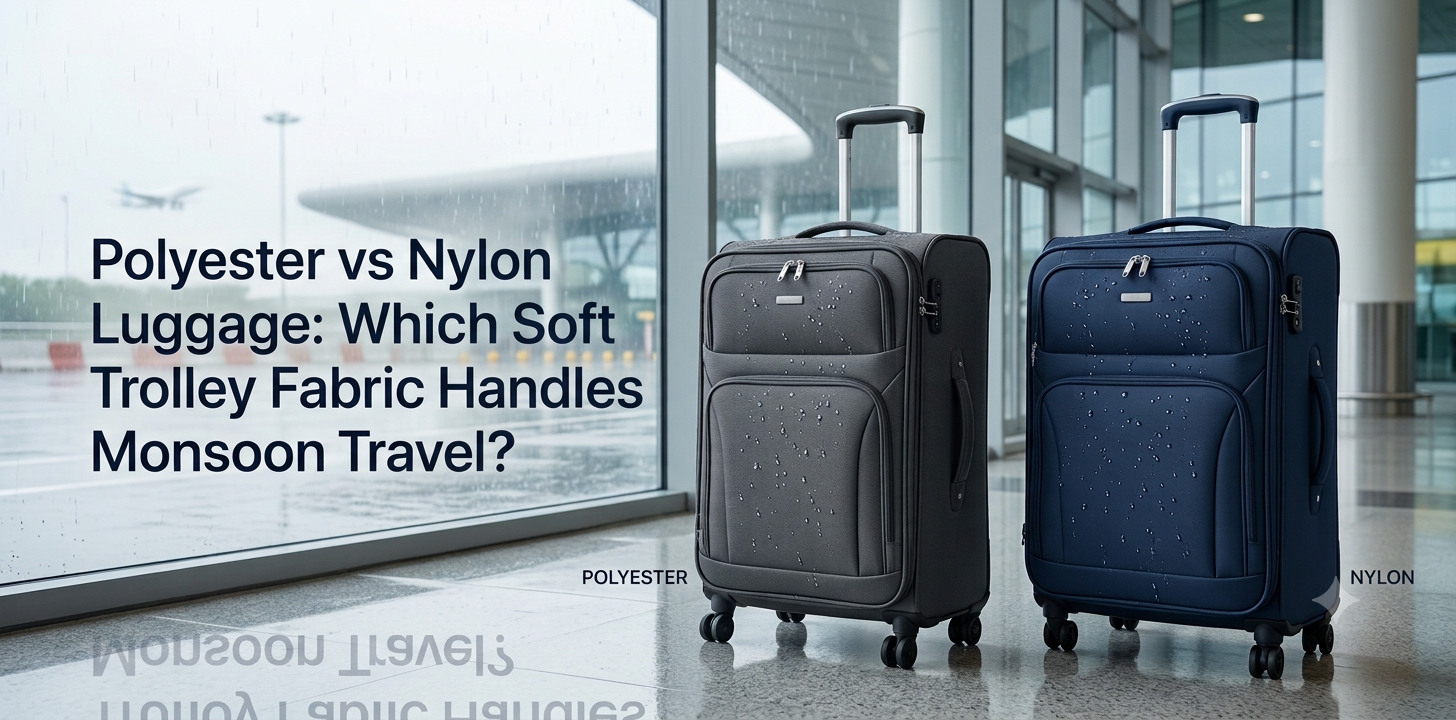
Quick answer: For monsoon travel in India, both fabrics work, but for different reasons. Nylon is stronger and tougher against scrapes and tears. Polyester dries faster, holds its colour better and is usually cheaper. What keeps your clothes dry is not the fibre itself but the coating on the fabric, the quality of the zips and seams, and how you pack. If you travel by train or on rough roads, nylon with a water-resistant coating is a safer pick. For occasional trips on a budget, coated polyester does the job well.
If you have ever pulled a suitcase off a wet railway platform in July, you know the worry. Is the water going to get in? Will everything smell damp when you reach your hotel?
Most soft trolley bags are made of either polyester or nylon, and the product label rarely explains the difference. This guide does, in plain terms, with a focus on Indian rain.
What is the main difference between polyester and nylon luggage?
The main difference is strength versus drying speed. Nylon is stronger and more resistant to abrasion and tearing. Polyester absorbs less water, dries faster and resists fading and mildew better.
Here is a simple side-by-side view:
| Feature | Nylon | Polyester |
|---|---|---|
| Strength and tear resistance | Higher | Good |
| Scuff and abrasion resistance | Very good | Good |
| Water absorption | Absorbs a little more | Absorbs very little |
| Drying time | Slower | Faster |
| Resistance to mildew | Moderate | Better |
| Colour fading in sun | More likely over time | Holds colour well |
| Typical price | Mid to high | Low to mid |
Neither fabric is truly waterproof on its own. Both are made of tightly woven synthetic threads, and what really decides how they behave in rain is the coating applied on top.
Is polyester or nylon better for monsoon travel?
It depends on how you travel.
Choose nylon if your bag is going to be dragged, stacked and thrown around. Think of long train journeys, shared taxis and crowded bus stands. It handles rough use well, and a good water-resistant coating helps it shrug off a heavy shower.
Choose polyester if you want a lighter, lower-priced bag that dries quickly after getting wet. It works well for flights, hotel stays and shorter trips where the bag is handled gently.
There is no clear winner. A well-made polyester bag with a good coating can beat a cheap nylon one, which is why the build matters as much as the fabric name.
What does “water-resistant” really mean on a luggage label?
“Water-resistant” means the fabric can hold off light rain and splashes for a short time. It does not mean the bag is safe in a downpour or if it is dropped in a puddle.
Most soft luggage gets this from a coating, such as polyurethane (PU) or a water-repellent finish, applied to the fabric. That coating wears down with time, so an older bag will usually leak more easily than a new one.
Two other things matter just as much as the fabric:
- Zips. Standard zips let water seep through the teeth. Zips with a protective flap or a rubber-like coating do better.
- Seams. Stitched seams have tiny holes along the thread line. Seams that are taped or sealed leak less.
If a bag says “water-resistant” but has plain zips and open seams, expect damp corners in heavy rain.
Which fabric lasts longer in humid weather?
Humidity is the quiet problem during monsoon, and it is where polyester has an edge. Because it absorbs very little moisture, it is less likely to hold dampness and develop that musty smell. Nylon can take in slightly more moisture, so it should be dried properly before you store it.
That said, mould mostly comes from storing a bag while it is still damp, whatever the fabric. A bag that is fully dried and kept in a ventilated spot should stay fresh either way.
How can you spot a good soft trolley bag before buying?
Use this quick checklist in a shop, or read it off the product page:
- Check the fabric and lining. Look for a clear mention of the outer material and whether it is coated. Some bags combine a water-resistant nylon outer with a polyester lining, which gives you both strength and quick drying.
- Look at the denier number. Denier (written as D) shows how thick the threads are. Higher numbers, such as 600D or above, generally feel tougher.
- Inspect the zips. They should run smoothly and feel solid, not flimsy.
- Look for seam taping or a rain flap. These are small details that make a real difference.
- Test the wheels. 360-degree wheels move easily on wet platforms, but they should feel firm and not wobble.
- Check the handle. Pull it out fully and wiggle it. Too much play usually means trouble later.
- Ask about the warranty. It tells you how much the maker trusts the build.
You can compare these details across fabrics in the soft trolley bags range, where listings state whether a bag is polyester or water-resistant nylon.
How do you protect your luggage during the monsoon?
Even a good bag benefits from a few simple habits:
- Use a rain cover. A cheap, fitted cover is the single best protection for any soft bag.
- Line the inside. Put clothes in zip-lock bags or packing pouches, and keep electronics in a separate waterproof pouch.
- Pack heavy items at the bottom. Keep the base of the bag free of anything that must stay dry.
- Avoid wet floors. Lift the bag at stations and bus stands rather than dragging it through puddles.
- Dry it completely after the trip. Open every pocket, wipe the inside with a dry cloth and air it in shade before storing. Strong direct sun can damage coatings.
- Add silica gel. A few packets inside the bag help control moisture during storage.
Soft trolley or hard trolley in the monsoon?
Hard shells block water better because there are fewer gaps, though the zip line is still a weak spot. Soft bags are lighter, easier to squeeze into tight spaces and more forgiving of bumps. If you travel mostly by train or on short hops, a coated soft bag with a rain cover usually works well. For flights with fragile items, a hard shell is often the safer option.
Frequently asked questions
Is nylon waterproof? No. Nylon is naturally water-resistant at best. A coating gives it more protection, but heavy or long exposure to rain can still get through zips and seams.
Does polyester dry faster than nylon? Yes. Polyester absorbs very little water, so it generally dries faster than nylon.
Which is stronger, nylon or polyester? Nylon is stronger and more resistant to tearing and scuffing. Polyester is still durable for everyday travel.
Is a polyester trolley bag good for Indian monsoon travel? Yes, if it has a water-resistant coating and decent zips. It dries quickly and does not hold dampness easily.
How do I stop my trolley bag from smelling damp? Dry it fully before storing, keep it in a ventilated place and use silica gel packets inside.
What price range should I expect? Many soft trolley bags in India sell between about ₹2,000 and ₹6,000, with larger sets and premium builds costing more.
The bottom line
Nylon gives you strength. Polyester gives you quick drying and a lower price. Whichever you pick, the coating, zips and seams decide how the bag copes in the rain, and a rain cover plus a little careful packing matters more than the name on the fabric tag.
If you want to compare sizes and builds before you decide, you can also browse the wider luggage collection and read the material details on each page.