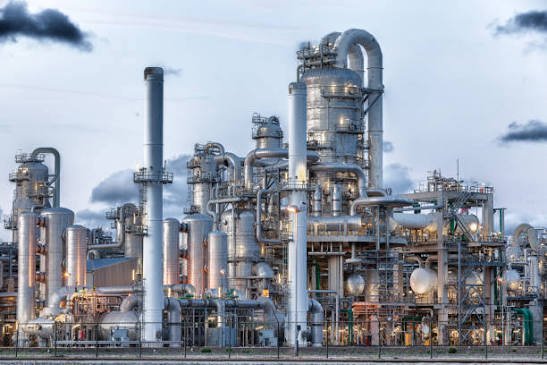
The UAE is strengthening its industrial base through manufacturing expansion, economic diversification, food production, healthcare development, and energy-related activities. These developments are increasing the importance of industrial gases as supporting inputs for production, preservation, processing, safety, and specialized industrial operations. Their role extends across multiple sectors, making reliable gas supply an important part of industrial infrastructure.
The industrial gas supply landscape in the UAE covers gases such as nitrogen, oxygen, carbon dioxide, hydrogen, argon, and acetylene, supplied through packaged cylinders, bulk delivery, onsite production, and pipelines. The sector supports applications ranging from chemical processing and metallurgy to healthcare, food and beverage, electronics, oil and gas, and energy operations.
Markntel Advisor identifies industrial expansion and the increasing use of gases across manufacturing activities as important factors shaping demand. The development of new industrial facilities is particularly relevant because many production processes require gases with controlled purity and dependable availability. As the UAE continues diversifying economic activity beyond traditional energy dependence, industrial gas applications are becoming increasingly connected with a broader manufacturing ecosystem.
Chemical Manufacturing Supports Industrial Gas Demand
Chemical production represents an important area of industrial gas consumption because gases are used during different stages of manufacturing and processing. Chemical facilities can require specific gases for controlled reactions, handling, purification, and other production requirements. The expansion of chemical manufacturing in the UAE therefore creates additional applications for industrial gas suppliers across different production environments.
The relationship between chemical manufacturing and industrial gases also reflects the wider diversification of the UAE’s industrial economy. Pharmaceutical production, consumer-related manufacturing, and oil and gas activities depend on chemical processes in different forms. As industrial facilities become more specialized, requirements for appropriate gas quality, storage, transportation, and delivery systems can become more important to operational continuity.
Food Production Creates Applications for Nitrogen
Food and beverage manufacturing is another significant application area. Nitrogen can be used in food packaging and preservation because its properties can help create suitable conditions for extending product shelf life. The growth of domestic food production and packaged food processing consequently creates applications for industrial gases within manufacturing and packaging operations.
The UAE’s reliance on imported food products has also encouraged greater attention toward domestic food production and food-security initiatives. Expanding local processing capabilities can increase the need for supporting infrastructure, including controlled-atmosphere technologies and gas supply systems. This creates a connection between food manufacturing development and demand for gases used during processing, packaging, and preservation.
Carbon Dioxide Has Multiple Industrial Applications
Carbon dioxide has applications across several areas of the UAE economy because it can be used in solid, liquid, and gaseous forms. Its uses include refrigeration, food and beverage processing, chemical applications, metal-related activities, electronics environments, data centers, and agricultural greenhouse operations. This diversity gives carbon dioxide a broad role within the country’s industrial ecosystem.
In chemical processing, carbon dioxide can function as an inert gas and feedstock for selected processes. Within metallurgy, its characteristics can support particular casting applications, while controlled carbon dioxide environments can also contribute to greenhouse cultivation. These varied uses demonstrate why industrial gas demand is influenced by developments across several unrelated industries rather than by a single end-use sector.
Oil and Gas Remains an Important End User
Oil and gas operations require industrial gases for applications associated with production, pressure management, safety, processing, and enhanced recovery. Nitrogen is used in selected oilfield applications, while carbon dioxide can support enhanced oil recovery processes. Consequently, the established energy infrastructure of the UAE continues to provide an important application base for industrial gas suppliers.
At the same time, the country’s industrial diversification is creating opportunities beyond traditional energy activities. Healthcare, electronics, food processing, chemicals, metallurgy, and energy-related projects each have distinct gas requirements. This diversification can make demand patterns more varied and increase the importance of flexible supply models capable of serving different operational requirements.
Supply Methods Influence Industrial Operations
Industrial gases can reach customers through packaged cylinders, bulk delivery, onsite production, or pipeline systems. The appropriate supply method depends on factors such as consumption requirements, production scale, facility configuration, gas characteristics, and continuity needs. High-volume industrial facilities may require different arrangements from smaller users that rely on packaged cylinders for intermittent applications.
Storage and distribution are also important considerations because industrial gases require appropriate handling conditions to preserve quality and maintain workplace safety. The UAE’s industrial environment therefore creates demand not only for gases themselves but also for cylinders, tanks, production equipment, transportation systems, and specialized storage infrastructure.
Production Costs Present Operational Challenges
Higher production and distribution costs can create challenges for industrial gas suppliers and users. The cost of cylinders, bulk tanks, equipment, and related materials can affect the economics of gas distribution. Specialized storage requirements can add further operational expenses because facilities need suitable conditions for maintaining gas quality and supporting safe handling.
These cost pressures can influence purchasing decisions, particularly among industrial users with significant recurring consumption. Suppliers must balance reliable availability with infrastructure and logistics requirements, while end users need to consider the most suitable delivery model for their production processes. Such considerations make supply efficiency an important component of the UAE’s industrial gas ecosystem.
Electronics Expansion Opens Specialized Applications
The development of electronics and semiconductor-related activities represents another area with potential relevance for industrial gases. Nitrogen and oxygen can be used during semiconductor manufacturing processes, where controlled environments and precise material conditions are important. As electronics manufacturing capabilities develop, demand for gases suitable for specialized production environments can become more prominent.
Overall, the UAE industrial gas landscape is shaped by the interaction of manufacturing expansion, food production, chemical processing, energy operations, healthcare requirements, electronics development, and infrastructure investment. The diversity of applications means that future industry developments will depend on both sector-specific demand and the ability of suppliers to provide reliable, appropriately managed gas solutions across different operating environments.