
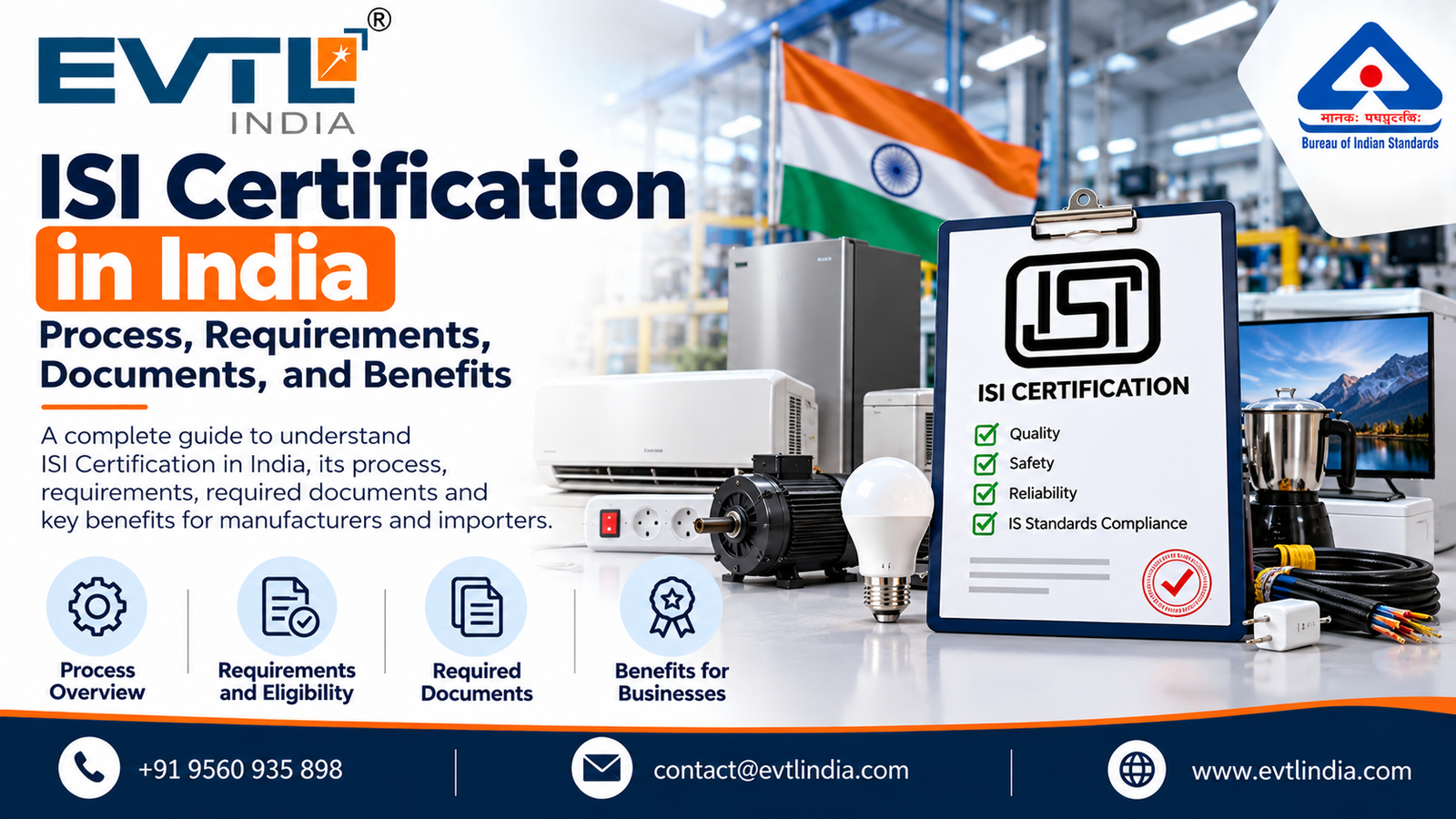
What Is ISI Certification?
ISI Certification is a product certification scheme administered by the Bureau of Indian Standards (BIS). It confirms that a product covered under the applicable certification requirements meets the relevant Indian Standard for quality, safety, and performance. The ISI Mark is widely recognised in India and helps consumers identify products that have been assessed against specified standards.
For manufacturers, ISI Mark Certification is an important step towards demonstrating product compliance and meeting applicable regulatory requirements. Depending on the product category, certification may be voluntary or mandatory under a Quality Control Order (QCO) or another applicable government notification.
The BIS ISI Mark Certification process generally involves identifying the correct Indian Standard, arranging product testing, submitting the required documents, and completing the applicable BIS assessment. Manufacturers should verify the current requirements for their specific product before applying.
Why Is ISI Mark Certification Important?
ISI Mark Certification helps manufacturers demonstrate that their products comply with the relevant Indian Standard. It also supports consumer confidence by providing a recognised indication of conformity.
The major benefits of BIS ISI Certification include:
- Product compliance: Helps manufacturers meet applicable Indian product standards and mandatory certification requirements.
- Consumer confidence: Gives customers greater confidence in the quality and safety of certified products.
- Market access: Helps businesses meet certification requirements for products covered by mandatory QCOs.
- Quality assurance: Encourages manufacturers to maintain consistent production quality and follow prescribed testing requirements.
- Business credibility: Strengthens a manufacturer’s reputation among distributors, retailers, and customers.
However, certification does not automatically guarantee that every product is defect-free. Manufacturers must continue to follow the applicable standard and BIS certification conditions.
Which Products Require ISI Certification?
ISI Certification applies to a wide range of products covered by relevant Indian Standards and BIS certification schemes. The exact requirements depend on the product, its intended use, and the applicable government notifications.
Common product categories that may fall under ISI certification requirements include:
- Electrical appliances and equipment
- Cement and construction materials
- Steel products and structural components
- Household and commercial products
- Chemicals and industrial materials
- Pressure cookers and selected kitchen appliances
- Certain automotive components and engineering products
Not every product in these categories necessarily requires mandatory certification. Manufacturers should check the official BIS product certification information and relevant QCO notifications to confirm whether their particular product is covered.
BIS ISI Certification Process
Obtaining BIS ISI Mark Certification requires manufacturers to follow the applicable certification procedure. The process may vary depending on the product category, the relevant Indian Standard, and whether the manufacturing facility is located in India or abroad.
1. Identify the Applicable Indian Standard
The first step is to identify the correct Indian Standard (IS code) for the product. The standard specifies the relevant technical requirements, testing parameters, and product specifications.
Manufacturers should also verify whether a QCO makes certification mandatory and check the applicable implementation date.
2. Prepare the Required Documents
Applicants generally need to prepare documents related to the manufacturing unit, product specifications, manufacturing processes, quality control arrangements, and testing facilities. The exact list depends on the applicable BIS scheme and product requirements.
3. Submit the BIS Application
The manufacturer submits the application through the applicable BIS process and provides the required information and supporting documents. Any prescribed application fees must be paid according to the current requirements.
4. Complete Product Testing
Product samples must undergo testing in accordance with the applicable Indian Standard. Depending on the scheme, testing may be conducted at a BIS-recognised laboratory or through another procedure permitted by BIS.
The product must satisfy the relevant technical requirements before certification can be granted.
5. Factory Assessment, Where Applicable
BIS may assess the manufacturing facility to review production arrangements, quality control procedures, testing capabilities, and the manufacturer’s ability to maintain consistent product quality.
6. Grant of Licence
After the applicable evaluation is completed and the requirements are satisfied, BIS may grant a licence to use the ISI Mark under the relevant scheme. Manufacturers must follow the licence conditions and marking requirements.
Documents Required for ISI Mark Certification
The documents required for BIS ISI Certification vary according to the product and applicable scheme. Commonly required documents may include:
- Business registration and manufacturing unit details
- Factory address and contact information
- Product specifications and technical details
- Details of machinery and manufacturing processes
- Quality control and testing arrangements
- Test reports, where applicable
- Details of authorised representatives
- Applicable declarations and application forms
Foreign manufacturers may need additional documents and must follow the requirements applicable to their manufacturing location and certification scheme.
How Long Does BIS ISI Certification Take?
The time required to obtain ISI Certification depends on the product category, testing requirements, completeness of the application, factory readiness, and the time needed to address any non-compliance issues.
Delays can occur when documents are incomplete, samples fail testing, or the manufacturing facility needs improvements. Manufacturers should therefore prepare their documents and production arrangements before submitting an application. No fixed approval timeline should be assumed without checking the requirements of the relevant BIS scheme.
Conclusion
ISI Certification plays an important role in demonstrating product conformity with applicable Indian Standards. For manufacturers dealing with regulated products, obtaining BIS ISI Mark Certification can help meet mandatory compliance requirements, improve market confidence, and establish consistent quality control practices.
Before applying for BIS ISI Certification, manufacturers should confirm the applicable IS code, review the relevant QCO, prepare the required documents, and ensure that their products and manufacturing facilities meet the prescribed requirements. EVTL India can help businesses understand the applicable certification requirements and navigate the ISI certification process.