Introduction
Imagine a customer is owed a partial refund on their credit card, but someone enters the full unapplied receipt amount by mistake. At Soft Online Training, we teach this scenario in our Oracle Fusion Financials Training in Hyderabad because one simple question settles the whole correction: has the negative miscellaneous receipt that Fusion generated been approved and remitted yet?
If it hasn’t, you fix the refund application itself. If it has, you first check whether the money actually reached the customer’s card. When the funds arrive, you raise a debit memo to recover the excess, and when they don’t, you reverse the negative receipt.
Start With the Original Receipt, Not the Refund
A manual credit card refund sends all or part of a previously remitted card receipt back to the customer’s card. So begin with that original receipt. Confirm how much of it is still unapplied, then compare that figure with what was actually refunded.
This tells you what kind of mistake you’re dealing with: a refund nobody wanted, a refund that’s too large, or something else tied to the same card payment.
Applying the refund against the unapplied amount creates a negative miscellaneous receipt. Create Automatic Remittances then picks that receipt up so funds can travel from your bank account to the customer’s card. The receipt application and the negative receipt are two halves of one flow, and the remittance step is where the options change.
What Oracle Fusion Financials Training in Hyderabad Should Cover About Refund Setup
Good Oracle Fusion Financials Training in Hyderabad doesn’t stop at the correction steps. It also shows learners how the setup shapes them.
The funds-capture setup lives in Payments. A Credit Card Refund receivables activity points to the general ledger clearing account, and lookup values supply the refund reasons. The original card transactions use a receipt class with an Automatic creation method and a Standard remittance method, and the negative miscellaneous receipt inherits that remittance method from the original receipt.
One detail trips people up: refunds don’t need authorization to move funds back to the card the way card payments do. If your organization wants an approval step, it has to build that into its own process. So when something goes wrong, don’t assume approval happened. Check what was actually recorded: is the negative receipt unapproved and unremitted, or approved and remitted?
Before Remittance: Remove the Refund or Resize It
If the negative receipt hasn’t been approved and remitted, you have two straightforward fixes.
To cancel the refund entirely, unapply the credit card refund application line from the original receipt. Receivables reverses the negative miscellaneous receipt and creates the journal entries that go with it. Nothing continues from that application.
To keep the refund but change its size, edit the amount applied on the credit card refund application. Receivables don’t simply overwrite the old figure. It reverses the original negative receipt and creates a new one for the corrected amount, and that new receipt is what moves on toward remittance.
For our partial-refund mistake, the choice is simple. If the customer is owed nothing, unapply the line. If they’re owed a smaller amount, change the applied amount. Both routes reverse the existing negative receipt, but only the amount change produces a replacement. Check that replacement against the refund you meant to give before it reaches remittance.
After Remittance: Check Whether the Money Arrived
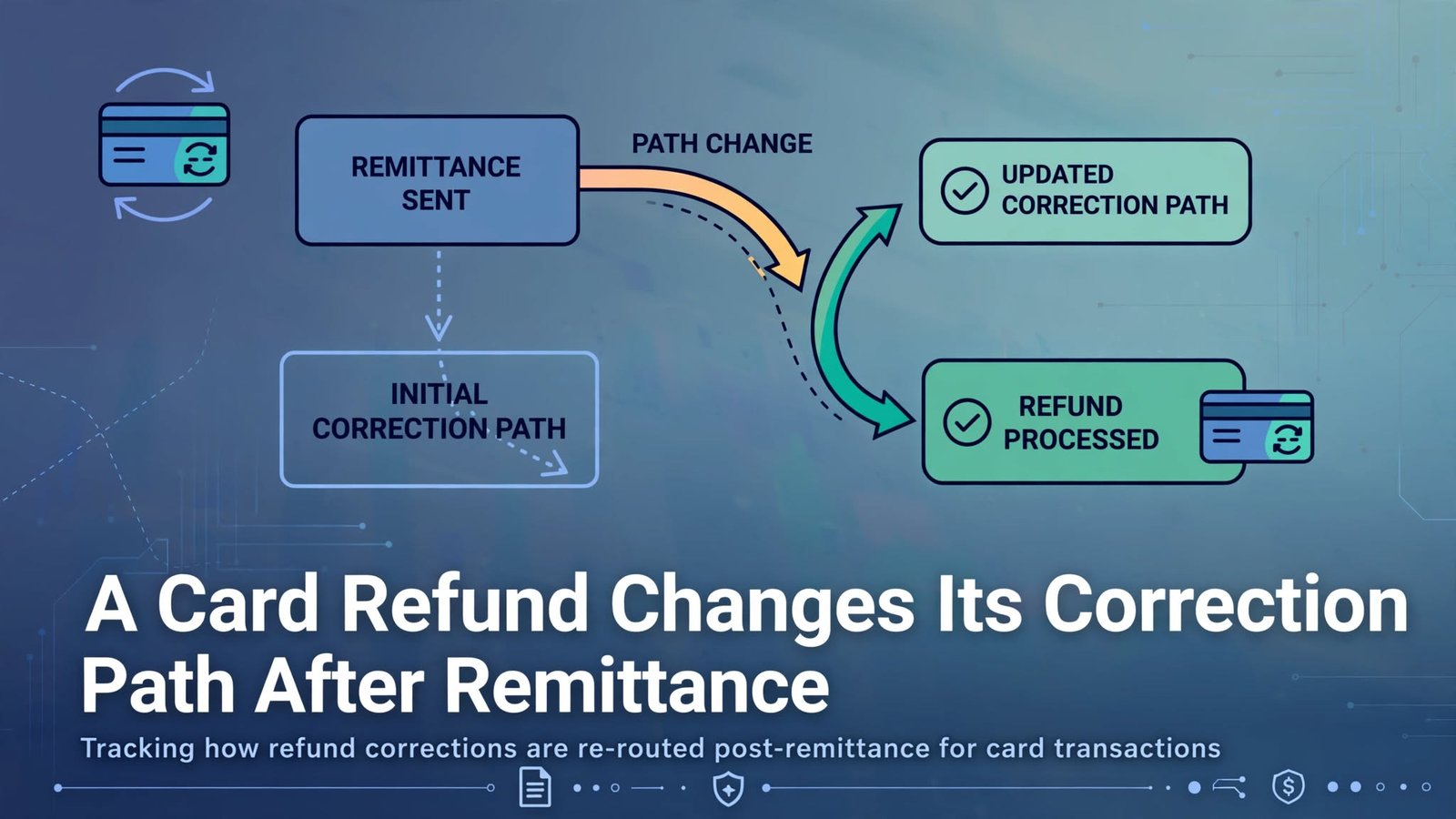
Once the negative receipt has been approved and remitted, the original application is no longer the only thing that matters. Remittance is a checkpoint, but it doesn’t prove delivery. Use the processor or bank result to see whether the transfer actually completed.
That one fact splits the path in two. A completed transfer means recovery through a debit memo. A failed transfer means reversing the negative receipt.
Delivered Funds Call for a Debit Memo
When the funds reach the customer’s account, reversing an internal record won’t get the excess back, because the money has already left your organization. Create a debit memo to bill the customer for the balance due.
For an excessive partial refund, bill only the amount that was over-delivered. That keeps a clear line between what the bank confirmed and the receivable you created afterward.
When the Transfer Failed, Reverse and Reapply
If the funds never reached the customer, reverse the negative miscellaneous receipt. The reversal unapplies the refund from the original payment. If the customer is still owed a valid refund, apply a new refund application to the original payment for the right amount.
This puts things back where they started before you try again, and you don’t bill the customer for money they never received.
An expired card is a good example. Payments can still attempt a refund to an expired card, since cards are often reissued with new dates. If the card expires without being reissued, the issuer declines the transaction and Payments reverses the refund. The rule stays the same: no transfer, so reverse, and reapply if a valid refund is still due.
Practicing the Four Cases in Oracle Fusion Financials Training in Hyderabad
The easiest way to make this stick is to run four short cases, each changing one decisive fact. This kind of drill works well in Oracle Fusion Financials Training in Hyderabad because learners can see the action follow the state, not the size of the error.
- Before remittance, refund unwanted: unapply the application line.
- Before remittance, refund too large but still valid: change the applied amount and let Receivables generate the corrected negative receipt.
- After remittance, transfer succeeded: raise a debit memo for the excess.
- After remittance, transfer failed: reverse the negative receipt and, if needed, create a new application.
Then check the records at each endpoint. A withdrawn refund should show the negative receipt reversed. A resized refund should show that reversal plus a new negative receipt at the corrected amount. The delivered-funds case should carry a debit memo for the balance due. The failed-transfer case should show the negative receipt reversed and the refund unapplied from the original payment, with any corrected refund starting as a fresh application.
Conclusion
Card-refund correction comes down to one checkpoint. Before approval and remittance, unapply an unwanted refund or change the application amount, and Receivables reverses and replaces the negative receipt as needed. After remittance, confirm delivery first: money that arrived needs a debit memo, and money that didn’t need a reversal and, where appropriate, a new refund application. An Oracle Fusion Financials Training in Hyderabad helps this stay with you by tying each action to the exact state and transfer result that calls for it.