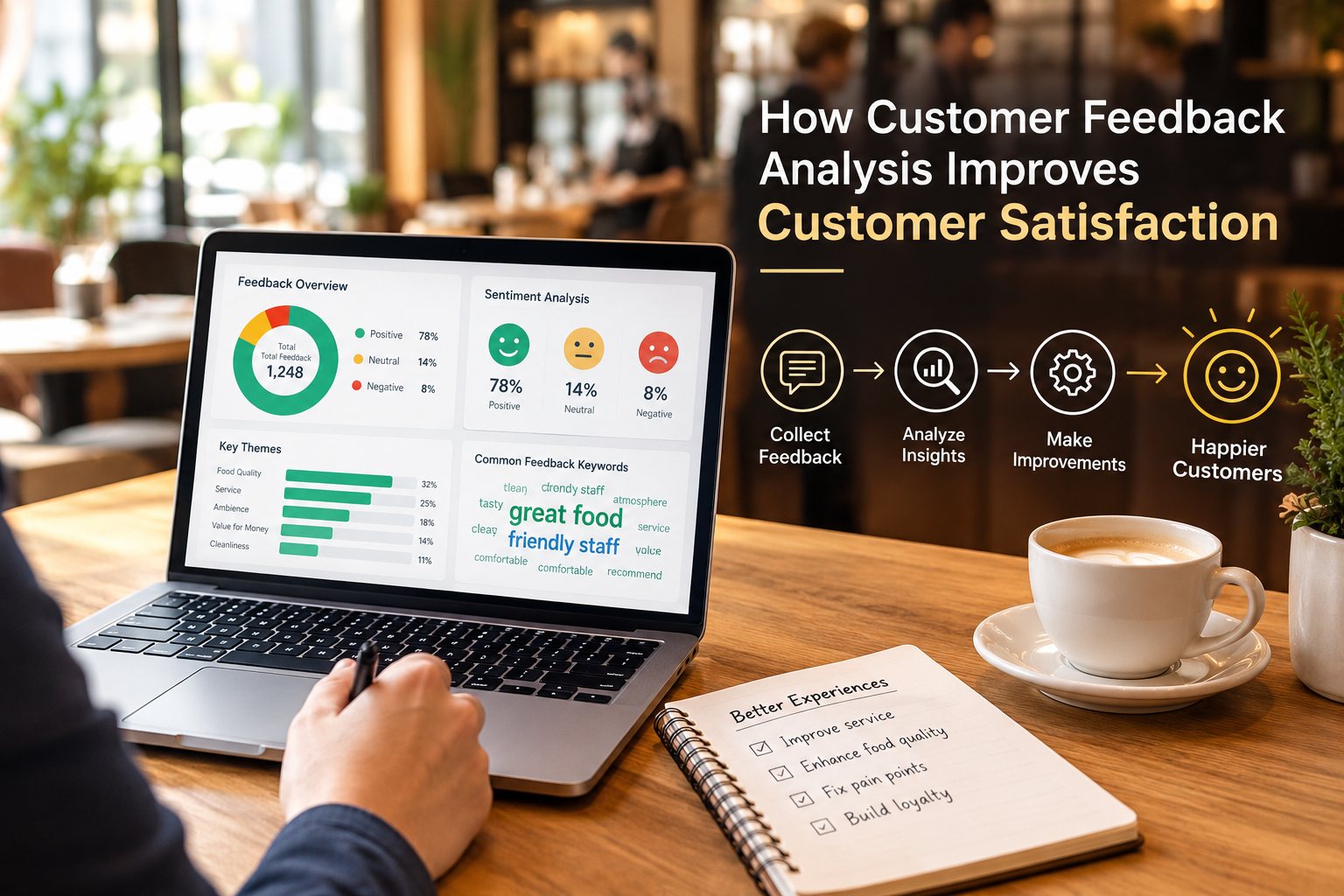
A low customer rating can show that something went wrong, but it rarely explains why. The real reason may be hidden in a simple comment, such as I had to explain my problem twice.
This is where customer feedback analysis becomes valuable. Feedback may be easy to collect, but understanding the reasons behind customer opinions requires a closer look at common issues, emotions, and patterns. These insights help businesses identify what needs attention and improve the overall customer experience.
For businesses focused on CX improvement, CX insight and analytics services can help turn scattered customer feedback into clear, actionable insights.
What Customer Feedback Really Tells You
Customer feedback analysis means reviewing and understanding what customers say about a product, service, or experience. It helps turn customer comments and ratings into useful patterns that businesses can act on.
It goes beyond counting positive and negative reviews. A useful analysis looks at what customers are repeatedly saying and why those points matter to their experience.
For example, businesses can look at:
- Issues customers mention repeatedly
- Features or services they appreciate most
- Common complaints and frustrations
- Language and tone used in reviews
- Gaps between customer expectations and experience
When these points are reviewed together, businesses get a clearer voice-of-customer analysis. It shows what customers are experiencing in real situations instead of relying only on internal assumptions.
Why Customer Sentiment Says More Than a Star Rating
A star rating does not always show the full customer experience. A 4-star and a 2-star review may both point to the same issue. Even a 5-star review can include a comment about something that needs attention.
This is where customer sentiment analysis becomes useful. It looks at the feelings and meaning behind customer comments, not just the rating.
What Customer Comments Reveal
For example, a customer may say, “The staff tried their best, but the wait was too long.” The staff may not be the problem. The real issue could be a slow process or poor service flow.
Sentiment analysis helps businesses understand this difference. Instead of only looking at ratings, they can identify what is causing customer frustration and focus on the right area.
How to Analyse Customer Feedback Effectively
Once feedback is collected, the next step is to find what it is really showing. Look for repeated issues, common themes, and changes in customer opinions over time.
1. Collect Feedback From Different Channels
Reviews, emails, support tickets, social media, and post-service surveys can all provide useful customer feedback data. Looking at only one source can leave important issues unnoticed.
2. Group Feedback by Common Themes
Sort comments into themes such as delivery speed, staff behaviour, pricing, or product quality. This makes customer review analysis more useful because teams can see which issues appear most often.
3. Track Trends Over Time
One negative review may not show a bigger problem. But if several customers mention the same delay within a month, it could point to a clear issue. Tracking customer feedback trends helps businesses spot these patterns early, understand what is getting worse, and act before the issue affects more customers.
4. Choose Clear Customer Feedback Metrics
Numbers can help teams measure progress. Useful metrics include response rate, resolution time, repeat complaint rate, and sentiment score. These customer feedback metrics give teams clear information instead of relying only on opinions.
5. Take Action and Check the Results
Analysis has little value if nothing changes afterward. Businesses should use the findings to fix specific problems and, where possible, follow up with customers. The same metrics can then be checked again to see whether the changes made a difference.
Tools for Analysing Customer Feedback
Manual review can work when a business has a small amount of feedback. But when comments come from different channels, tools can make the work faster and easier.
Common tool categories include:
- Survey and NPS platforms: collect structured feedback at scale
- Text and sentiment analysis tools: review comments and customer reviews
- Review monitoring tools: track reviews from Google, TripAdvisor, or app stores
- Helpdesk analytics: find common issues in customer support tickets
These tools can save time, but they do not replace human judgement. A tool may show that customers often mention “slow.” A person still needs to check whether it means slow delivery, slow service, or slow refunds.
The best results come from using tools to find patterns and human judgment to understand what those patterns actually mean.
From Feedback to Action
Many teams collect feedback, create a report, and stop there. Without clear ownership, the same problems can appear again.
Feedback is more useful when teams review it regularly, assign actions, and track the results. This can also support a stronger customer experience vision and strategy.
Build Trust Through Action
When customers see their feedback leading to real changes, they feel heard and valued. It can also help businesses improve products, services, and customer journeys.
Final Thoughts
Customer feedback only creates value when businesses use it to make better decisions. The goal is not simply to collect more comments or track more ratings. It is to understand what customers are experiencing, fix the issues that matter, and check whether those changes improve satisfaction.
When feedback becomes part of regular business decisions, it can improve the customer experience over time. Businesses that listen, act, and keep measuring are better placed to build stronger customer relationships and long-term loyalty.
FAQs
How often should a business review customer feedback?
Monthly reviews work well for most businesses. High-volume businesses may review feedback weekly to catch new issues early.
Can small businesses analyze feedback without expensive tools?
Yes. A simple spreadsheet can help track common themes, complaints, and customer sentiment when feedback volume is still manageable.
Does negative feedback hurt SEO or online reputation?
Negative feedback does not automatically hurt your reputation. Ignoring it or responding poorly can create a worse impression with potential customers.
What is the difference between customer and market feedback?
Customer feedback comes from people who have used or purchased a product or service. Market feedback is broader and can include potential customers and wider industry opinions.
Should every piece of feedback lead to a change?
No. One comment may not show a real problem, so businesses should look for repeated issues and clear patterns before making changes.