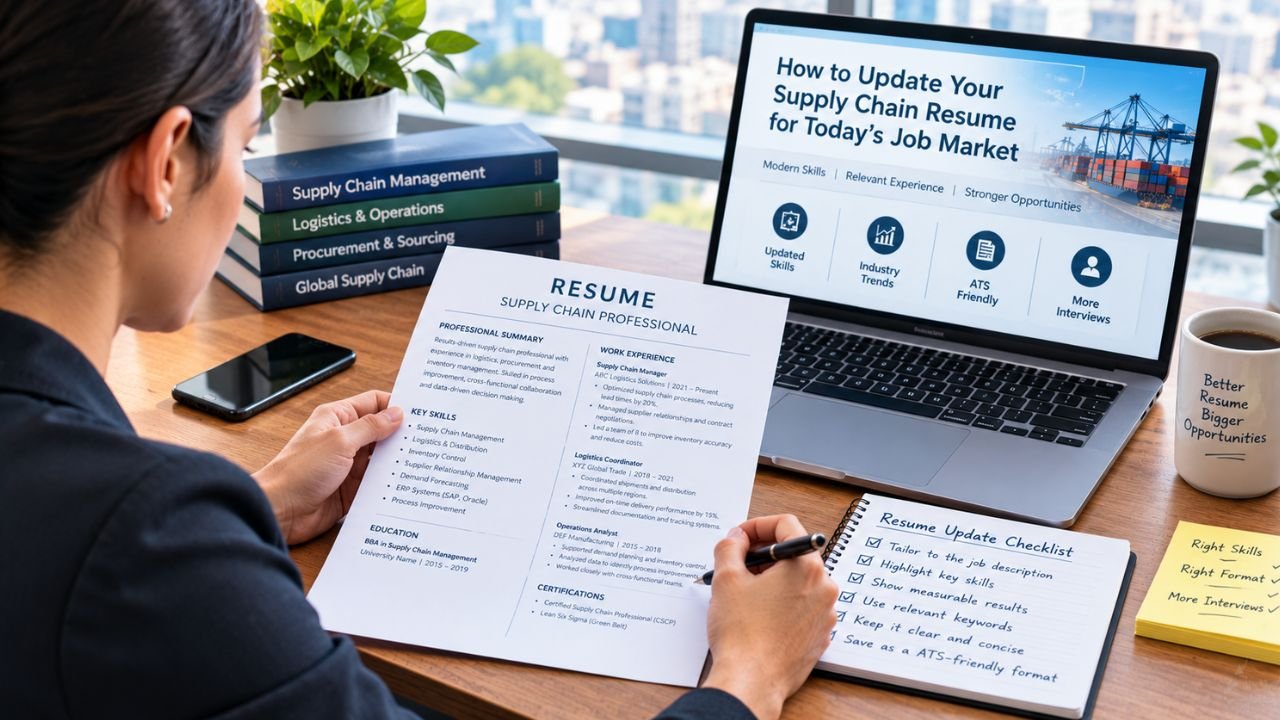
If you haven’t touched your resume in a few years, there’s a good chance it’s telling an outdated story.
Supply chain has changed a lot. Companies have lived through shortages, shipping delays, rising costs, and a big push toward automation and data. Hiring managers have changed too. They’re looking for different skills, they screen resumes in different ways, and they expect candidates to show more than a list of past duties.
The good news is that updating your resume doesn’t mean starting from scratch. It means adjusting how you present what you’ve already done. Here’s how to do it.
Start With What Employers Want Now
Before you change a single line, look at what companies are asking for today.
Pull up five to ten job postings for roles you’d actually apply to. Read them closely and notice the patterns. You’ll probably see words like resilience, risk management, data analysis, supplier diversification, cost control, and cross-functional collaboration come up again and again.
Those repeated themes tell you what to highlight. Your resume should speak to those needs, using real examples from your own experience.
Show How You Handled Disruption
Over the last few years, almost every supply chain professional has dealt with some kind of disruption. Delayed shipments. Supplier shortages. Sudden demand changes. Price spikes.
Employers want to know how you handled it.
This is one of the most valuable things you can add to an updated resume. Think about the times you found a backup supplier, rerouted shipments, adjusted inventory plans, or kept customers happy when things went wrong.
For example:
Identified and qualified two alternate suppliers during a material shortage, keeping production running without major delays.
A line like that shows problem solving, quick thinking, and resilience, which are exactly what companies want right now.
Put Your Results in Numbers
Supply chain is full of measurable outcomes, so use them.
Instead of describing what you were responsible for, show what changed because of your work. Helpful numbers include:
- Cost savings
- Inventory reduction or turnover improvements
- On-time delivery rates
- Lead time reductions
- Forecast accuracy
- Budget size
- Number of suppliers, sites, or team members you managed
Even rough figures help. “Reduced inventory carrying costs by about 15%” is far stronger than “managed inventory levels.”
Highlight Your Technology Skills
Technology plays a much bigger role in supply chain than it used to, and employers want people who are comfortable with it.
Make sure your resume clearly lists the systems and tools you actually use. That might include ERP platforms like SAP or Oracle, warehouse management systems, transportation management systems, planning software, or data tools like Excel, Power BI, or Tableau.
Don’t just list them, though. Where you can, show how you used technology to improve something. For example, did you help roll out a new system, build a reporting dashboard, or use data to improve forecasting? Those details show you’re ready for where the industry is going.
Make Your Resume ATS Friendly
Many companies use applicant tracking systems to screen resumes before a person ever sees them. If your resume isn’t set up for these systems, it might get filtered out even if you’re a great fit.
A few simple tips:
- Use a clean, simple layout without heavy graphics or tables
- Stick to standard section headings like Experience, Skills, and Education
- Include relevant keywords from the job description, naturally and honestly
- Save and send your resume in the format the employer asks for, usually Word or PDF
The goal is to make it easy for both the software and the human reader to understand your experience.
Refresh Your Summary
The summary at the top of your resume is one of the first things a recruiter reads. If yours still says something like “hardworking professional seeking a challenging role,” it’s time for an update.
A strong summary quickly explains who you are, your level of experience, and what you’re good at. For example:
Supply chain manager with 10 years of experience in procurement and logistics, known for reducing costs, strengthening supplier relationships, and keeping operations steady during disruptions.
Keep it short, specific, and focused on the type of role you want next.
Update Certifications and Training
Certifications still carry weight in supply chain. If you’ve earned any since your last update, add them. Common ones include APICS CSCP, CPIM, CLTD, CPSM, and Six Sigma.
Also include recent training or courses, especially in areas like data analytics, sustainability, or new software. They show you’re keeping your skills current.
Cut What No Longer Helps
Updating isn’t just about adding. It’s also about removing.
Old jobs from early in your career can usually be shortened to a single line. Outdated software, basic skills everyone has, and tasks that don’t connect to your next role can often go. This keeps your resume focused and easier to read.
A good rule of thumb is to ask, “Does this help me get the job I want next?” If not, it probably doesn’t need much space.
Match Your LinkedIn Profile
Recruiters often check LinkedIn right after reading your resume. If the two don’t match, it can raise questions.
Make sure your job titles, dates, and main achievements line up. Your LinkedIn can include a bit more detail and personality, but the core story should be the same.
When to Get Professional Help
Sometimes it’s hard to see your own experience clearly. You’ve done the work for so long that your biggest wins start to feel like normal parts of the job.
That’s where a logistics and supply chain resume writer can help. A specialist understands the industry, knows which achievements employers value, and can turn your experience into a resume that fits today’s market. At CareerTuners, the team works with supply chain and operations professionals to highlight real results and position them for the roles they want.
Final Thoughts
The supply chain job market has changed, and your resume should change with it. Focus on what employers need now, show how you handled disruption, put your results in numbers, highlight your technology skills, and make sure your resume works with ATS systems.
A few thoughtful updates can make a big difference in how recruiters see you. And if you’d like expert help, working with an experienced supply chain resume writer at CareerTuners can make your updated resume even stronger.