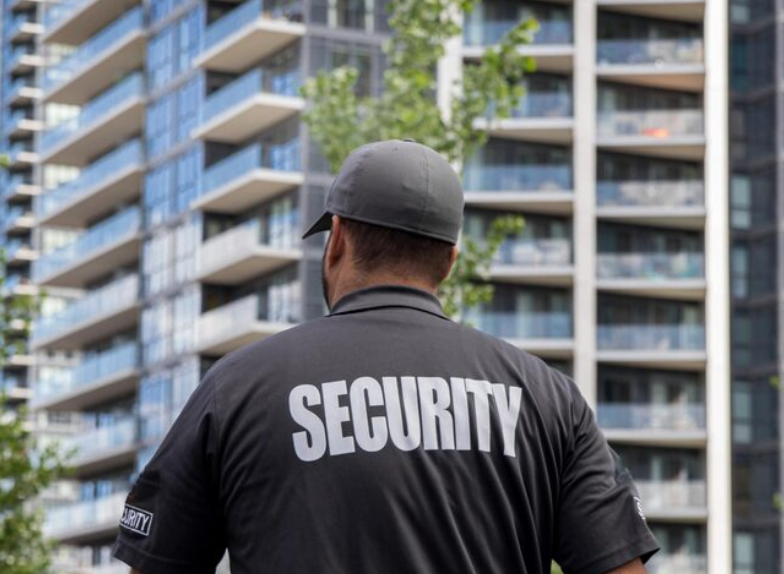
Apartment security is one of the few services where two groups are judging the same arrangement from opposite sides. Residents want to feel safe and want someone to respond when they call. Managers want fewer incidents, fewer complaints, and a defensible record. Both are reasonable, and most friction between them comes from nobody having said out loud what the coverage is actually for.
Here is what each side should expect, and where the common misunderstandings sit.
What Residents Can Reasonably Expect
Presence During the Hours That Matter
Most communities do not staff coverage around the clock, and residents frequently assume otherwise. What residents should expect is coverage weighted toward evenings, overnight hours, and weekends, which is when activity concentrates at a residential property.
Management should publish those hours. A resident who knows an officer is on the property from six in the evening until two in the morning will use the service appropriately. A resident who assumes continuous coverage will be frustrated at ten in the morning.
A Response to Things Within the Officer’s Role
Officers handle noise and disturbance calls, respond to activity in amenity areas, address loitering, and check on anything that looks wrong during rounds. They escort residents to vehicles where that is part of the arrangement. They also enforce the posted rules for pool and amenity areas, which at most Houston communities accounts for a large share of what officers deal with on a given evening.
Patrol That Covers the Whole Property
Residents should expect officers to be moving rather than parked. Coverage means parking areas, building perimeters, pool and fitness areas, laundry rooms, package areas, and the back entrances that get propped open.
A Way to Reach Someone
Communities that work well publish a direct number for the officer on duty during covered hours. Communities that route everything through a management office closing at five leave residents with nowhere to call, and those residents end up calling police for matters an officer fifty feet away could have settled.
What Residents Should Not Expect
This is where most complaints originate, and it is worth being direct about.
Security officers are not police. They do not have arrest powers beyond what any person has, they cannot search people or vehicles, and they cannot resolve criminal matters. When something crosses into criminal conduct, officers call law enforcement, and that is the correct response rather than a failure of the service.
Officers also do not enforce rules that management has not written down. A resident asking an officer to deal with a neighbor’s dog, a parking dispute, or a lease matter is asking for something outside the role unless management has specifically assigned it.
Coverage is also not surveillance. Officers are not watching individual residents, tracking who visits whom, or reporting personal matters to management. Residents sometimes ask for exactly that, and a provider declining it is behaving correctly rather than being unhelpful.
What Managers & Boards Should Expect
Written Post Orders
Managers should expect a written document covering what officers do, what they do not, who they contact in each situation, and what gets documented. Without it, each officer applies personal judgment to situations the community has already decided how to handle.
Post orders are a management decision as much as a security one, because the rules being enforced belong to the property.
Documentation of Every Shift
Shift logs and incident reports should arrive as routine rather than on request. Managers should expect enough detail to be useful, including time, location, what happened, what the officer did, and who was notified.
Boards in particular need this, since they answer to residents paying assessments and want something concrete to point to.
Consistency of Assignment
Officers who work a property regularly learn its patterns, recognize residents, and notice when something is out of place. A property that sees a different face every week never develops that. Managers should expect assignment consistency and should ask how absences are covered.
Supervision
Someone should be checking on officers during shifts at irregular intervals. An unsupervised overnight post drifts, and the drift is invisible until an incident reveals it. Providers that build residential coverage this way treat supervision and written reporting as standard rather than as upgrades, and God’s Armour Security, whose residential and apartment coverage runs across the Houston area, structures its accounts on that basis.
Why the Record Matters More Than People Think
Texas property owners owe a duty to take reasonable steps against criminal acts that are foreseeable, and courts assess foreseeability by looking at prior incidents at and near the property, including how recent they were, how often they occurred, and how closely they resemble the incident in question.
For an apartment community, that makes the incident record meaningful in both directions. A property with a history of similar incidents and no corresponding change has one kind of record. A property that saw a pattern and responded, by shifting patrol hours, repairing a gate, fixing lighting, or adding coverage, has another. The second record is built out of the same patrol logs and incident reports that residents never see.
That is worth saying to boards debating the cost of coverage. The documentation is not administrative overhead. It is the evidence that the property acted on what it knew.
Closing the Gap Between the Two Sides
Most of the friction resolves with communication rather than more hours.
Managers should tell residents what the coverage is, when it runs, what officers handle, and what to call police for. Residents should be given a way to reach the officer during covered hours and should be told what happens to the reports they generate.
Both sides should expect the arrangement to change over time. Incidents cluster, and the clusters tell you where coverage should move. A patrol schedule that has not been reviewed in two years is a decision made once, not a plan that reflects what is happening on the property now.