Some of the most important work in medicine happens on a scale you can barely see. Surgeons reconnect blood vessels smaller than a grain of rice and repair nerves finer than a thread. To do this safely, they need equipment built for extreme accuracy. That’s where microsurgery instruments come in. We’ll walk you through what they are, how surgeons use them, and what to look for when choosing them.
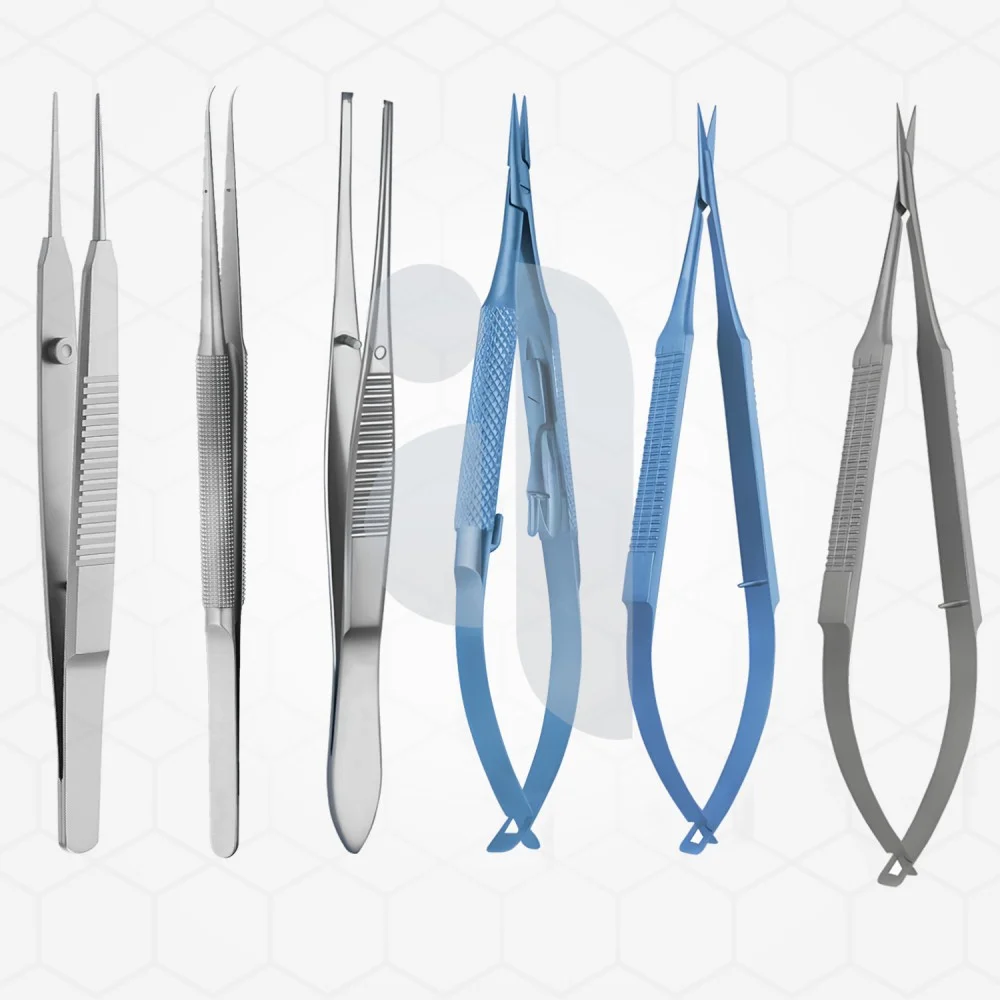
What Are Microsurgery Instruments?
Put simply, microsurgery instruments is a medical instruments group made for procedures performed under an operating microscope or surgical loupes. The family includes micro forceps, spring-handled scissors, needle holders, approximating clamps, and vessel dilators. Compared with standard tools, they’re shorter, lighter, and far finer at the tip. Rounded handles let surgeons roll the instrument between their fingers for smooth, steady movement.
Built for Accuracy and Comfort
Picture holding a needle steady for hours while looking through a microscope. Comfort quickly becomes as important as sharpness. Well-designed instruments offer balanced weight, gentle spring tension, and non-reflective finishes that cut down on glare under bright lights. Tips must meet perfectly every time, since even a tiny gap can tear tissue or drop a suture. Premium stainless steel and titanium help instruments stay strong, resist corrosion, and hold up through repeated sterilization.
Specialties That Depend on Microsurgery
Plastic and reconstructive surgeons use it to transfer tissue and reattach severed fingers. Ophthalmic surgeons depend on micro tools for cataract, corneal, and retinal work. In neuro and spine surgery, specialists repair nerves and remove tumors near critical structures. Dental surgeons use fine instruments for periodontal and implant procedures, while orthopedic teams rely on them for hand surgery and small-bone repair. Across all these fields, dependable microsurgery instruments help protect patient safety and support faster recovery.
Choosing the Right Set for Your Practice
Start with the procedures you perform most often. Think about tip size, working length, handle style, and whether you prefer locking or non-locking needle holders. Ask about material quality and how well the instruments hold their alignment after many sterilization cycles. The best tendon repair system feel like a natural extension of your hand. Our team at AzeeMed is always happy to help you build a set that matches your specialty and workload.
Conclusion
Precision surgery is only as good as the tools behind it. Reliable microsurgery instruments give surgeons the control and confidence to handle the body’s most delicate structures. With over twenty years of expertise and a firm focus on quality, AzeeMed is proud to support surgical teams worldwide. Explore our collection today and see how the right instruments can make a real difference for your patients.