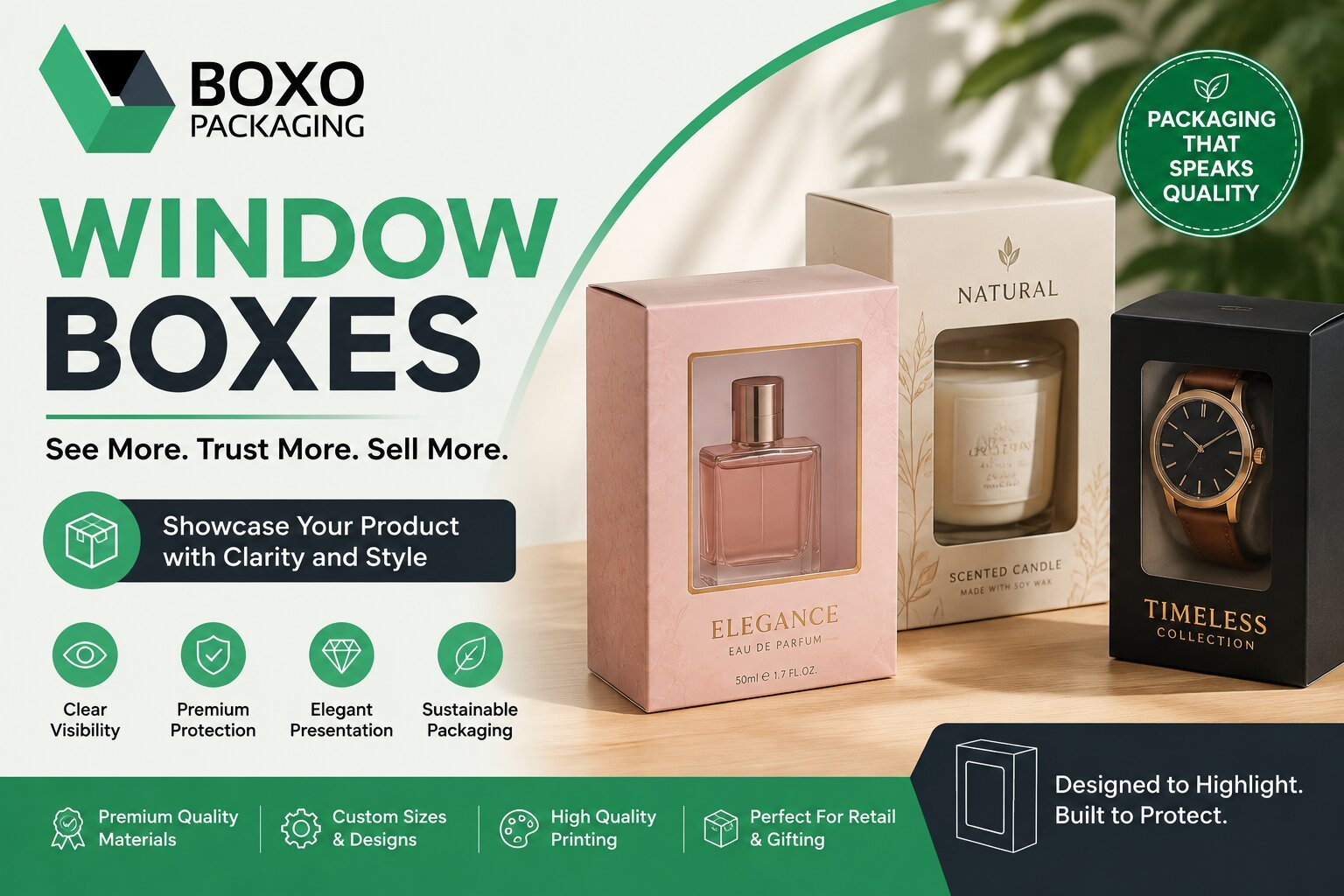
Window Packaging helps businesses display their products while keeping them protected inside an attractive container. Its transparent section allows customers to see the product before purchasing, creating trust and making shopping more convenient. From bakery items to cosmetics and retail accessories, this packaging style combines visual appeal with practical functionality.
A well-designed package can influence buying decisions because customers often appreciate seeing the quality, color, and details of a product. Clear windows also help retailers present merchandise neatly on shelves without opening the box. Choosing the right shape, material, and window placement makes the packaging suitable for different industries.
What Products Work Best With Transparent Packaging?
Transparent display boxes are suitable for products that benefit from visibility. Bakeries can showcase cookies, cupcakes, and chocolates, while beauty brands can display soaps, skincare accessories, and cosmetic sets. Retailers may also use these boxes for stationery, small gifts, electronics accessories, and promotional items.
The ideal design depends on the product’s size, weight, and storage requirements. Food products may need appropriate food-contact materials and protective barriers, while delicate merchandise may require inserts to prevent movement.
Here are five important features to consider when choosing a suitable design:
- Clear display windows: Allow customers to view products without opening the package.
- Durable construction: Use suitable paperboard or cardboard to provide support and protection.
- Custom shapes and sizes: Match the box dimensions to the product for a neat, professional appearance.
- Branded printing: Add logos, colors, product details, and decorative graphics to improve recognition.
- Secure closures: Choose practical folding tabs or other suitable closures to keep products in place.
These features help businesses balance attractive presentation with everyday packaging needs.
Which Materials Should You Choose for Better Results?
Material selection affects strength, printing quality, appearance, and overall cost. Paperboard is a popular option for lightweight retail products because it supports colorful printing and can be cut into different shapes. Corrugated cardboard may be more suitable when additional cushioning or structural strength is needed.
The transparent window is commonly made from clear plastic film, although alternative materials may be available depending on the application. When sustainability matters, review the complete package rather than considering the cardboard alone. Window films, adhesives, and coatings can affect recyclability, depending on local recycling facilities.
For food packaging, ensure that all materials are appropriate for direct or indirect food contact, as required. Proper sizing and suitable construction also help prevent unnecessary damage during storage and transportation.
How Can Custom Designs Strengthen Your Brand?
Custom designs make packaging more recognizable and help businesses communicate their identity. Consistent colors, readable typography, and carefully positioned logos can create a professional appearance. The transparent section should complement the product instead of competing with important branding elements.
For example, a bakery might use pastel printing with a front-facing window to highlight decorated cookies. A cosmetics company could select minimalist graphics and a small transparent panel for an elegant retail presentation.
At Boxo Packaging, businesses can explore customized packaging options designed around their product dimensions, visual preferences, and branding requirements. Choosing the right combination of printing and structural design helps create packaging that looks appealing while remaining practical.
How Do You Select the Right Packaging Supplier?
Finding a suitable supplier involves more than comparing prices. Businesses should review material specifications, printing capabilities, sample quality, minimum order quantities, and production timelines before making a decision.
Ask whether the supplier can accommodate your preferred window shape, dimensions, and finishing requirements. If you plan to ship products, check whether the packaging provides enough protection for the expected handling conditions.
Boxo Packaging can be considered when researching customized packaging for retail products, promotional collections, and branded merchandise. Requesting samples before placing a bulk order can help you evaluate the design, strength, and visibility of the finished package.
Mylar Bags: Smart Packaging for Freshness and Product Protection
Mylar Bags are a popular packaging choice for businesses that need reliable product protection, convenient storage, and attractive presentation. Made with layered flexible materials, these bags can help reduce exposure to moisture, oxygen, light, and outside contaminants when designed with suitable barrier properties. Their performance depends on the material structure, thickness, and closure.
From snacks and coffee to powders, dried foods, and specialty retail products, flexible packaging offers practical solutions for different industries. Businesses can choose from various sizes, finishes, and printing styles to match their products and branding requirements.
Good packaging does more than contain a product. It helps preserve quality, supports easier handling, and gives customers useful information about what they are purchasing.
What Makes This Packaging Suitable for Different Industries?
Flexible pouches are available in multiple constructions, including laminated films designed for different levels of protection. Some products require stronger moisture barriers, while others need protection against light or oxygen. Selecting the appropriate structure helps businesses meet their product’s storage requirements.
Resealable closures can make packaging more convenient for products used over several occasions. Flat pouches work well for lightweight items, while stand-up designs can improve shelf visibility. Businesses should also consider filling methods, transportation conditions, and storage duration before choosing a final design.
Five important features can help you select an effective packaging solution:
- Barrier protection: Choose suitable material layers to help protect products from moisture, oxygen, and light.
- Resealable closures: Use zipper options when repeated opening and closing are important.
- Custom printing: Add logos, product details, and attractive graphics to strengthen brand recognition.
- Flexible sizing: Select dimensions that fit the product and support efficient storage.
- Durable construction: Consider puncture resistance and seal strength for safer handling and transportation.
Each feature should match the product’s specific needs rather than relying on appearance alone.
Which Materials and Finishes Should You Consider?
Packaging materials influence durability, appearance, and product shelf life. Laminated structures may combine different films or foil layers to provide particular barrier properties. However, not every pouch offers the same level of protection, so businesses should check technical specifications before ordering.
Matte finishes create a subtle, premium appearance, while glossy surfaces can make colors look vibrant. Metallic effects can attract attention on retail shelves, and transparent sections may help customers view selected products when appropriate for the product’s protection requirements.
Food businesses should verify that the chosen materials are suitable for the intended food contact and filling conditions. Products that are sensitive to oxygen or moisture may require specialized barriers and validated sealing methods.
How Can Custom Designs Improve Brand Recognition?
A distinctive package helps customers recognize products and remember a business. Consistent colors, readable typography, and carefully arranged graphics can make a brand appear professional. Including clear product information also helps customers understand the contents, storage instructions, and other essential details.
At Boxo Packaging, businesses can explore customized flexible packaging options that align with their branding, product dimensions, and presentation goals. Before finalizing a design, consider how the artwork will appear across different pouch sizes and whether important text remains easy to read.
For retail products, the front panel should communicate the product name clearly. The back panel can provide ingredients, instructions, warnings, and other required information where applicable.
How Do You Choose the Right Packaging Supplier?
Start by identifying your product requirements, expected order quantity, preferred dimensions, and desired finish. Ask suppliers about available material structures, printing methods, minimum order quantities, production schedules, and sample availability.
It is also important to evaluate seal quality and barrier performance instead of selecting packaging based only on price. For products with strict freshness or safety requirements, confirm that the proposed materials and sealing process meet the necessary specifications.
Boxo Packaging can be considered when researching custom packaging options for retail products and branded merchandise. Reviewing samples and technical details before placing a bulk order helps reduce costly design or material mistakes.