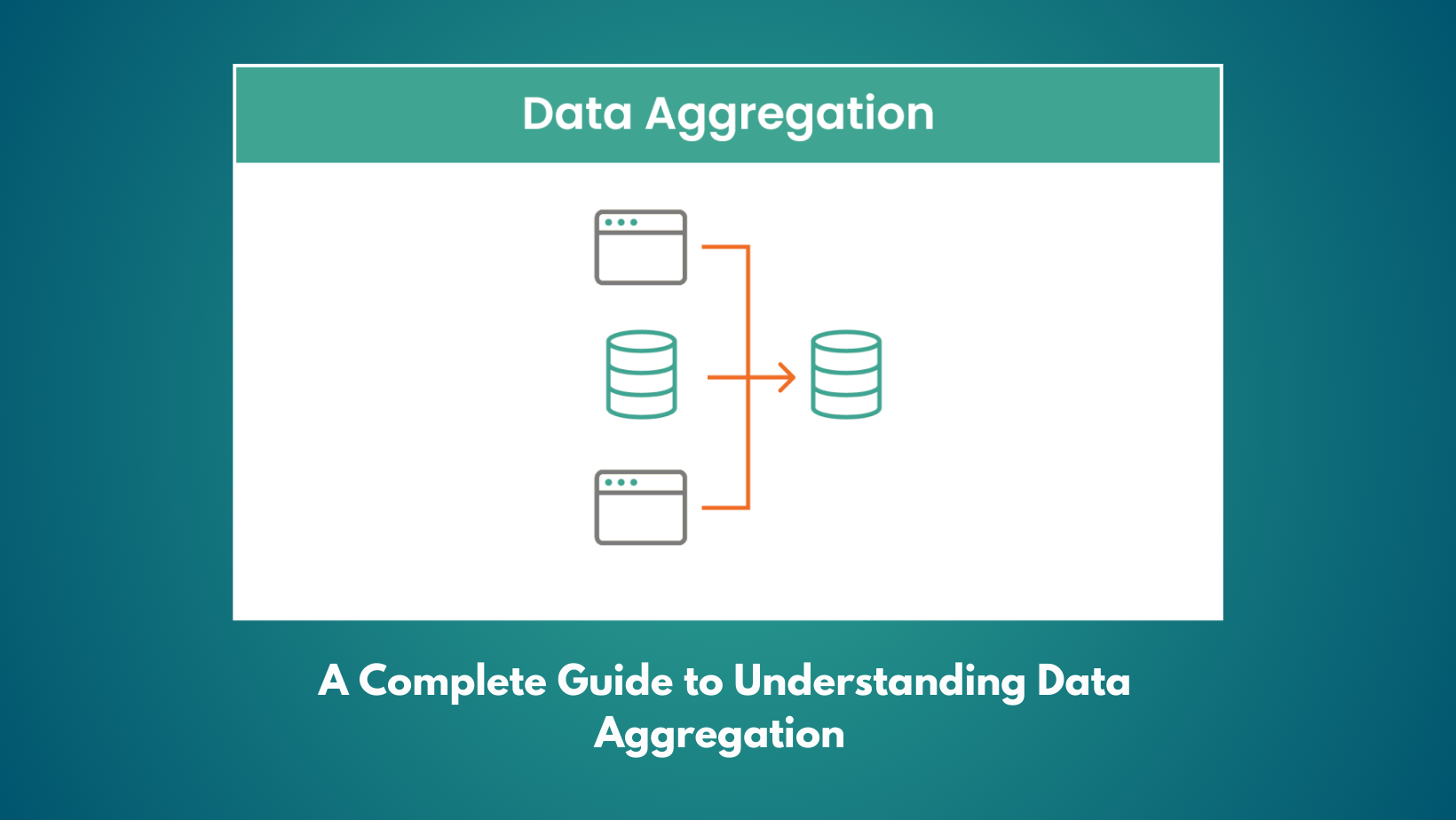
Data aggregation is one of the most important things for people who deal with large amounts of data every day. Although there are people who are familiar with its meaning, there are also individuals who are not completely sure about data aggregation, which is why in the article, we are going to tell you everything about Data aggregation and its importance.
Understanding the Meaning of Data Aggregation
The first thing that you are required to know is what is data aggregation. Well, this term refers to the process of compiling huge amounts of information from a single database, and then organising it into a more organized form that can be understood by people. You need to keep in mind that data aggregation can be done at any level, from pivot tables to data lakes. The main aim of data aggregation is to summarize all the available information in an organised and comprehensive manner.
Since the growth and success of every organisation and company depend on data, the application of data aggregation has turned into one of the most important and relevant tasks in the modern day. From a small business or a global operation, every organisation needs to perform this task.
Why is Data Aggregation important?
In this technologically advanced world, data, in any form, is rapidly expanding, evolving, and becoming more convoluted. It is one of the most valuable currencies in modern times, and without it, every organisation will be entirely useless.
The processing of data is done in such a way that it produces results that are valuable. The capturing of data trends, results, and the presentation of a clearer picture of the information are the insights that are the most important and hence the most valuable. Data aggregation, which is the process of searching, gathering, and presenting data in a summarized, report-based manner, helps organizations to achieve specific business objectives or to carry out process/human analysis at nearly any scale.
Examples of Data Aggregation
Data aggregation has been a very common practice in society for centuries; however, the advances made in computing and technologies such as AI and machine learning have increased the scale and capacity of data aggregation exponentially. Simple data aggregation examples would be counting the number of steps taken during a week of commuting to work or even using a ride-sharing app to get a car at your location within minutes. The first option seems easier, while the second one is quite complex from the backend. Nonetheless, there is a massive amount of data computation and aggregation involved to make it possible for you to get that ride.
How does Data Aggregation work?
There are usually three main stages in data aggregation:
- Data Collection – The information comes from a variety of sources—databases, websites, sensors, applications, or user activity. These sources could easily generate vast amounts of raw data.
- Data Processing – After the data is collected, it finally goes through the cleaning and organizing process. It entails the removal of duplicates, rectification of errors, and standardization of the data into a consistent format.
- Data Summarization – After the data has been cleaned, it is then amalgamated and condensed. These summaries allow organisations to properly understand data.
You can also refer to the website Datarecovee to learn more about the same.