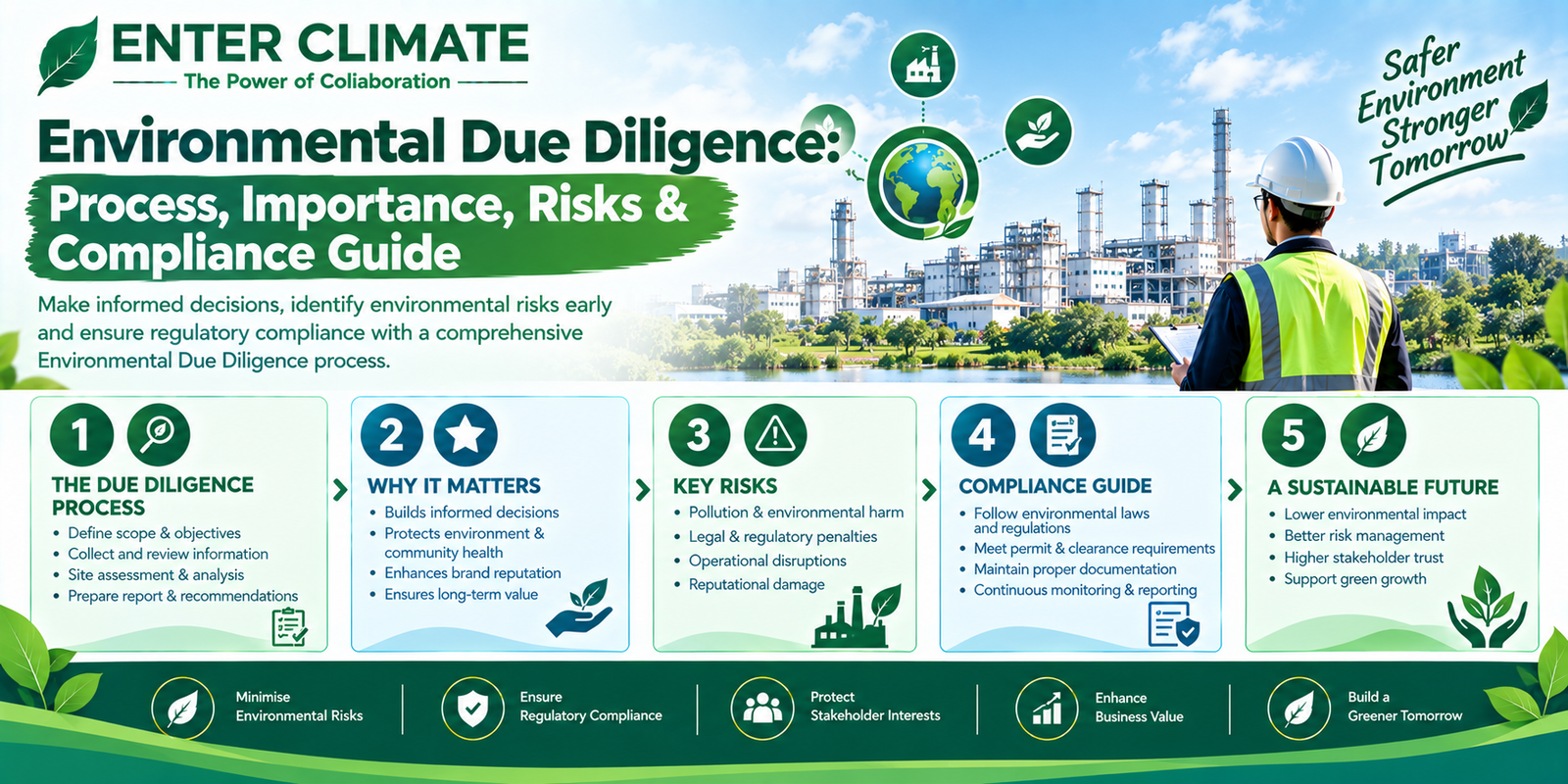
When a company plans to buy land, start a factory, expand a project, or invest in an existing business, it is important to know whether the site follows environmental rules. This is where Environmental Due Diligence becomes useful.
In simple words, environmental due diligence is like checking the environmental health of a business before making an important decision. It helps a company find possible pollution, legal problems, waste issues, water-related concerns, and other environmental risks before they become costly problems.
What Is Environmental Due Diligence?
Environmental Due Diligence is a detailed review of a company’s environmental conditions and compliance status. It may include checking land use, pollution control systems, waste management, water consumption, permits, previous environmental problems, and regulatory records.
For example, if a company wants to purchase an old manufacturing unit, it should first check whether the site has soil or groundwater contamination, pending notices, improper waste disposal, or missing approvals.
This process gives the buyer a clearer picture of what they are actually taking responsibility for.
Why Is Environmental Due Diligence Important?
Environmental problems can affect the cost, safety, and future of a project. A company may discover environmental liabilities only after purchasing a property or starting operations.
Environmental due diligence can help businesses:
- Identify environmental risks at an early stage
- Check whether required approvals are available
- Understand existing pollution and waste issues
- Reduce the chance of regulatory action
- Plan corrective measures
- Support better investment and business decisions
- Improve long-term environmental compliance
It is especially useful for industries where water, chemicals, waste, emissions, or land conditions are major concerns.
Environmental Due Diligence Process
The exact process can change depending on the industry and project, but it usually includes the following steps.
1. Collect Basic Information
The first step is to understand the project. Experts review the location, type of industry, production activities, raw materials, water use, waste generation, and existing environmental approvals.
2. Check Documents and Approvals
Important environmental documents are reviewed to see whether they are valid and applicable to the project. Depending on the project, this may include pollution control consents, waste authorisations and Environmental Clearance.
Environmental Clearance is particularly important for projects that fall under the applicable environmental approval requirements. Government systems such as PARIVESH provide facilities for submission and monitoring of environmental clearance proposals.
3. Conduct Site Assessment
A physical site visit can help identify issues that may not be visible in documents. The assessment may look at waste storage areas, drainage, water sources, air pollution control systems, wastewater treatment plants, chemical storage, and nearby environmental receptors.
4. Study Water and Groundwater Risks
Water availability and groundwater use can be important parts of environmental due diligence. Where groundwater extraction is involved, a Hydrogeological survey report may help understand groundwater conditions, extraction feasibility, and possible impacts.
The Central Ground Water Board notes that accredited professionals or institutions may conduct hydrogeological surveys and prepare reports for groundwater-related assessment and permissions.
5. Check Wastewater Management
Industries that generate wastewater need suitable treatment and disposal systems. In some projects, Zero Liquid Discharge (ZLD) requirements may apply.
A ZLD Certificate or related documentation may form part of the compliance records, depending on the project and applicable requirements. The aim of a ZLD system is to treat and reuse wastewater so that liquid waste is not discharged outside the premises. Government environmental-clearance records also contain projects where ZLD has been required as a project condition.
6. Prepare the Findings
After reviewing documents and site conditions, the findings are organised into a report. The report can identify major risks, minor gaps, missing documents, compliance concerns, and recommended corrective actions.
Common Risks Found During Due Diligence
Environmental due diligence can uncover many types of risks. Some common examples include:
Legal risks: Missing or outdated approvals can create compliance problems.
Pollution risks: Old industrial sites may have soil, air, water, or groundwater contamination.
Waste risks: Poor handling of hazardous, plastic, electronic, or other industrial waste can create environmental liabilities.
Water risks: Excessive groundwater extraction or poor wastewater management can affect both compliance and business operations.
Financial risks: Environmental problems may require expensive treatment, remediation, upgrades, or penalties.
Reputation risks: Environmental violations can damage the public image of a company.
Finding these issues early gives businesses more time to take corrective action.
How Businesses Can Improve Environmental Compliance
Environmental compliance should not be treated as a one-time activity. Businesses should regularly review their approvals, monitor pollution-control systems, maintain records, train employees, and update documents when operations change.
Companies should also keep track of conditions attached to their environmental approvals. Environmental-clearance records can include compliance reports and monitoring information, showing why continued compliance is important after approval is received.
Get Professional Support for Environmental Due Diligence
Environmental rules can be difficult to understand, especially when a project requires several approvals and technical reports. Professional guidance can make the process easier and help businesses identify important gaps before they become bigger problems.
Enterclimate provides environmental consulting and compliance support for businesses dealing with environmental approvals, assessments, reports, and regulatory requirements. Its team can help businesses understand their environmental obligations and plan the next steps according to their project needs.
A proper environmental due diligence exercise is more than just checking documents. It helps a business understand its environmental responsibilities, avoid unexpected risks, and make better decisions for the future.
Author Profile
Upendra Sharma
Upendra Sharma is an Environmental Compliance Consultant who writes about environmental regulations, business compliance, sustainability, and regulatory approvals. He focuses on explaining complex environmental topics in simple and practical language to help businesses better understand their compliance responsibilities.