Large construction projects can involve complicated schedules, multiple contractors, rising material costs and unexpected delays. For developers, keeping everything organised while meeting deadlines can be a major challenge.
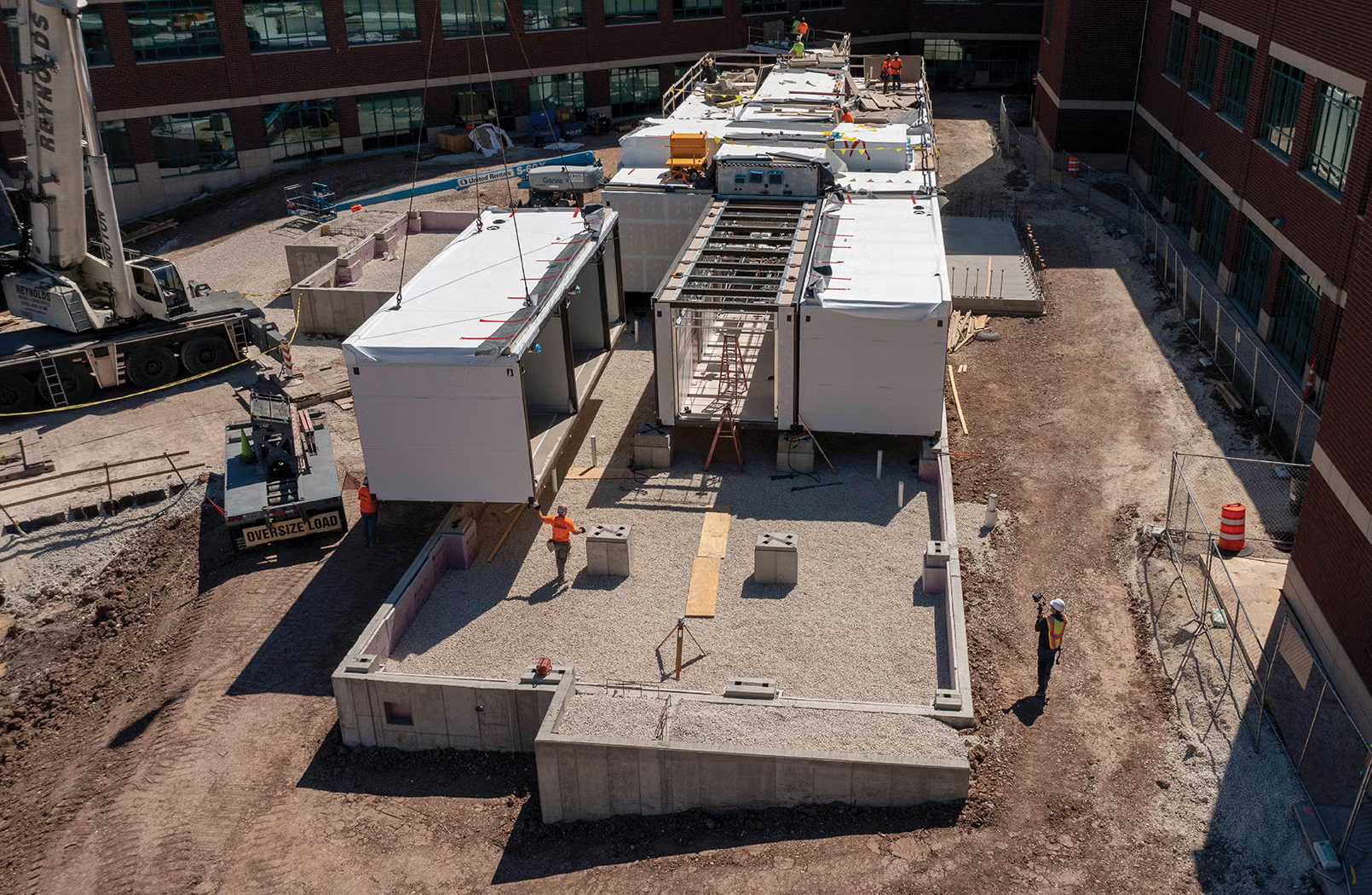
This is one reason prefab construction has become increasingly attractive for large-scale developments. Instead of completing every part of a building on the construction site, many components can be manufactured in a controlled facility before being transported and assembled at the project location.
This approach can help developers improve efficiency, manage construction schedules and reduce some of the uncertainty associated with traditional building methods. From commercial developments to modular healthcare buildings, prefabrication can be adapted to a wide range of projects.
What Is Prefab Construction?
Prefab, short for prefabricated construction, involves manufacturing building components away from the main construction site.
Depending on the project, this can involve individual wall panels, floors, roofs, rooms or complete modules. These components are then transported to the site, where they are assembled into the finished structure.
Traditional construction still plays an important role in the industry, but prefab methods can offer developers another way to approach complex projects.
The main difference is where and when construction work takes place.
Instead of waiting for one stage to finish before starting another, some processes can happen simultaneously. While site preparation is underway, for example, building components can be manufactured elsewhere.
Faster Construction Timelines
Time is one of the biggest reasons developers consider prefabrication.
Traditional construction can be affected by weather, site access, labour availability and delays between different trades. Prefabrication can reduce some of these challenges by moving a significant amount of work into a controlled manufacturing environment.
Components can be produced while groundwork is happening at the development site.
Once the site is ready, completed components can be delivered and assembled relatively quickly.
This does not mean every prefab project will automatically be completed faster. Project size, design complexity, transport requirements and site conditions all matter. However, overlapping construction activities can create opportunities to shorten the overall programme.
Better Control Over Construction
Large projects require careful coordination.
Developers may need to manage architects, engineers, contractors, suppliers and many different trades. A delay in one area can affect several others.
Prefab construction can make certain parts of this process more predictable because components are manufactured in a dedicated facility.
Factory environments can provide controlled conditions for production, reducing some of the variables that exist on an open construction site.
Standardised manufacturing processes can also make it easier to monitor production and identify problems before components are delivered.
Less Dependence on Site Conditions
Construction sites can be unpredictable.
Rain, extreme temperatures, difficult access and other environmental conditions can interfere with traditional building activities.
Because prefab components are manufactured indoors, some construction work can continue regardless of what is happening at the development site.
This can be particularly useful for large projects where delays can have a significant impact on budgets and schedules.
Once the components arrive on site, workers can focus on installation and assembly rather than completing every stage from scratch.
More Efficient Use of Labour
Labour availability is another consideration for developers.
Large projects often require skilled workers across multiple trades. Finding enough qualified workers at the right time can be challenging, particularly when several projects are competing for the same workforce.
Prefabrication can shift some labour-intensive tasks from the construction site to a manufacturing facility.
This can allow certain processes to be carried out using specialised teams and repeatable production methods.
It does not eliminate the need for skilled construction workers. Instead, it changes where and how some of the work is completed.
Potential for Better Quality Control
Quality control can be easier to manage in a factory environment.
Manufacturing facilities can use consistent processes, equipment and inspection procedures. Workers can complete repeated tasks under controlled conditions rather than dealing with constantly changing site environments.
This can help reduce certain types of construction errors.
For example, components can be measured, assembled and inspected before leaving the facility. Problems can potentially be identified before the components reach the construction site.
Quality still depends on the design, materials, manufacturing process and installation, but factory production can provide additional opportunities for quality checks.
Reducing Construction Site Waste
Large construction projects can produce significant amounts of waste.
Traditional construction often involves cutting materials on site, which can result in leftover timber, plasterboard, packaging and other materials.
Prefab manufacturing can make it easier to measure and plan material use before production begins.
Off-site manufacturing may also allow leftover materials to be collected and reused more efficiently than they would be on individual construction sites.
Reducing waste can support both cost management and environmental goals.
Greater Design Flexibility
Prefab construction is sometimes associated with basic or repetitive designs, but modern prefabrication can be much more flexible.
Developers can work with architects and manufacturers to create designs that meet specific functional and aesthetic requirements.
Different modules or components can be combined to create larger buildings with varying layouts.
This makes prefab construction suitable for many types of developments rather than only simple structures.
The design process is particularly important because decisions about dimensions, services and connections often need to be made early.
Useful for Large-Scale Healthcare Projects
Healthcare construction is an area where prefabrication can offer particular advantages.
Projects involving hospitals, clinics, treatment centres and other healthcare facilities often have strict requirements for functionality, hygiene, safety and building services.
Modular healthcare buildings can be manufactured with many of these requirements considered during the design and production stages.
For developers working on healthcare projects, prefabrication can provide a way to create repeatable spaces while maintaining a high level of control over the construction process.
It can also be useful when additional healthcare capacity is needed quickly.
Easier Project Replication
Developers working on multiple sites can benefit from repeatable construction methods.
For example, a company may need to develop several similar healthcare facilities, educational buildings or commercial spaces in different locations.
Once a suitable design and production process has been established, components can potentially be replicated across multiple projects.
This does not mean every building needs to look identical. Internal layouts, finishes and external designs can be adapted to suit different sites.
However, standardising certain elements can reduce the need to develop every component from scratch.
Better Cost Predictability
Construction costs can change quickly due to labour shortages, material price increases and unexpected site problems.
Prefab construction cannot eliminate these risks, but manufacturing components in a controlled environment can make some aspects of the project easier to plan.
Developers can often establish material quantities, manufacturing requirements and installation processes earlier in the project.
There are also potential savings from reduced site labour, shorter construction periods and less material waste.
However, transportation, lifting equipment, factory production and site preparation all add costs, so developers should compare the total project cost rather than assuming prefab is always cheaper.
Reduced Disruption on Busy Sites
Large developments in urban areas can create disruption for nearby residents, businesses and road users.
Traditional construction may involve long periods of deliveries, on-site cutting, storage and other activities.
Prefabrication can reduce some of the work required at the site.
Instead of receiving large quantities of individual materials and assembling everything on location, developers may receive completed components or modules ready for installation.
This can help reduce the amount of activity taking place on site, although large modules may require careful transport and lifting arrangements.
Planning Is Still Essential
Prefab construction offers many benefits, but it is not a shortcut that removes the need for careful planning.
Transport routes, crane access, site preparation, module dimensions and connection points all need to be considered early.
Design changes made late in the process can also be more complicated because components may already be in production.
Developers therefore need close coordination between architects, engineers, manufacturers and construction teams.
Good planning from the beginning is one of the most important factors in making prefabrication work effectively.
Final Thoughts
Prefab construction gives developers another way to approach the challenges of large-scale projects. Faster assembly, controlled manufacturing, reduced site disruption, improved quality control and potentially better cost predictability can all make prefabrication an attractive option.
The approach is particularly useful for projects where speed, consistency and repeatability are important. From commercial developments to modular healthcare buildings, modern prefab methods can be adapted to different building requirements.
However, prefabrication is not automatically the best choice for every project. Developers need to consider design complexity, site conditions, transportation, manufacturing costs and installation requirements before making a decision.
When properly planned, prefab construction can help developers manage complex projects more efficiently while creating buildings that meet modern performance and design expectations.