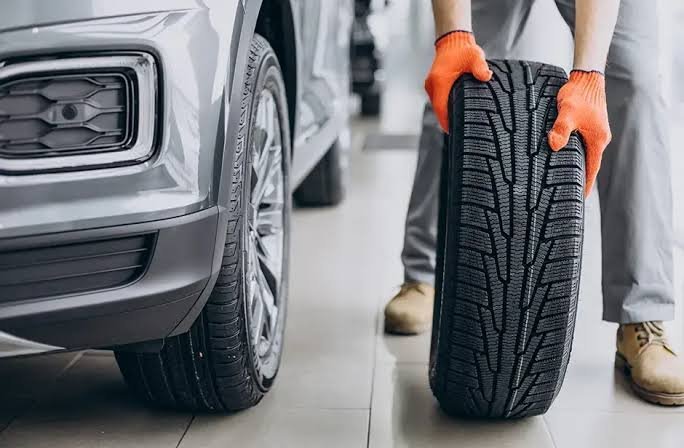
Two sets of tires sit in front of you. One costs 380 dollars, the other 620, and both fit your car perfectly well.
The cheaper set looks like the obvious answer. Run the math across the life of the tire, and that answer often flips.
Price Versus Cost Per Mile
A tire’s real price is what it costs you per mile driven. Divide the purchase price by the treadwear mileage, and the comparison becomes honest instead of emotional.
A $380 set rated for 40,000 miles works out to roughly a penny per mile. A $620 set rated for 80,000 miles costs closer to eight tenths of a cent, and you skip an entire mounting and balancing bill along the way.
Mounting a second cheap set also means paying installation twice, which adds another $80 to $160 to the budget column. Budget tires also tend to underdeliver on their own rating. Softer compounds wear faster in heat, so the advertised mileage assumes conditions most drivers never actually see.
Where Low Prices Come From
Manufacturers reach low price points by removing things you cannot see from the outside. Fewer belt plies, thinner sidewalls, simpler tread compounds, and less silica in the rubber blend.
The consequences appear in wet braking distance, road noise, and how the tire behaves during an emergency swerve. Independent testing regularly finds 30 feet or more separating budget and premium sets stopping from highway speed.
None of this appears on the sidewall. Two tires can look nearly identical in a showroom while behaving completely differently in a panic stop.
Thirty feet is the distance between a close call and a collision report.
The Fuel Penalty
Rolling resistance is a genuine line item in your monthly costs. A tire with poor rolling resistance can cost two to three percent in fuel economy.
Across 60,000 miles, that gap alone erases most of what you saved at purchase. The savings simply relocate from the tire shop to the gas pump, where nobody notices them leaving.
Tire labels list this rating. It takes ten seconds to check, and almost nobody does, which is how a supposedly cheap tire quietly bills you every week at the pump.
Run the Numbers
Before deciding between two sets, compare them on these points:
- Purchase price divided by the treadwear mileage rating
- Wet braking distance from independent test results
- Warranty length and what the warranty actually covers
- Fuel economy rating printed on the tire label
- Cost of a second installation if the cheap set wears out first
Write both columns out. Seeing the totals side by side removes most of the guesswork.
Why Payment Plans Matter
Most drivers choose the cheaper tire for exactly one reason. It is what they can pay for today, which makes it a cash flow decision rather than a value decision.
Financing for tires removes that constraint by splitting the better set into monthly payments that fit the same budget. The gap between the two sets in our example works out to about twenty dollars a month across a year.
Online tire financing applications usually take under a minute, and many run a soft credit check that leaves your score untouched while you compare terms.
When Cheap Actually Wins
There are real cases for the budget set. If you are selling the car within a year, driving under 5,000 miles annually, or replacing a single damaged tire on an already worn set, the cheaper option makes sense.
Age matters here as well, since rubber hardens with time regardless of how much tread remains. Matching matters in that last case. Mixing tread patterns across an axle affects handling, and All Wheel Drive systems can be damaged by mismatched circumferences.
Outside those situations, the long-term math favors the better tire almost every time.
Buying the Tire You Need
Cost per mile decides this question, not the number on the sticker. The better tire usually costs less by the time it wears out, and it stops shorter every single day you own it.
Do the arithmetic before you walk into the decision. Know your size, look up the treadwear rating, and compare total cost across the full life of the set.
The best financing for tires makes the smarter choice affordable today, and trusted sellers offering online tire financing add free nationwide shipping so the math stays in your favor. TireBros24 puts a full catalog behind that, so you pick the set your vehicle needs rather than settling for whatever fits this week’s cash. TireBros24 is a legitimate online retailer of tires and wheels with an A+ rating from the Better Business Bureau (BBB).