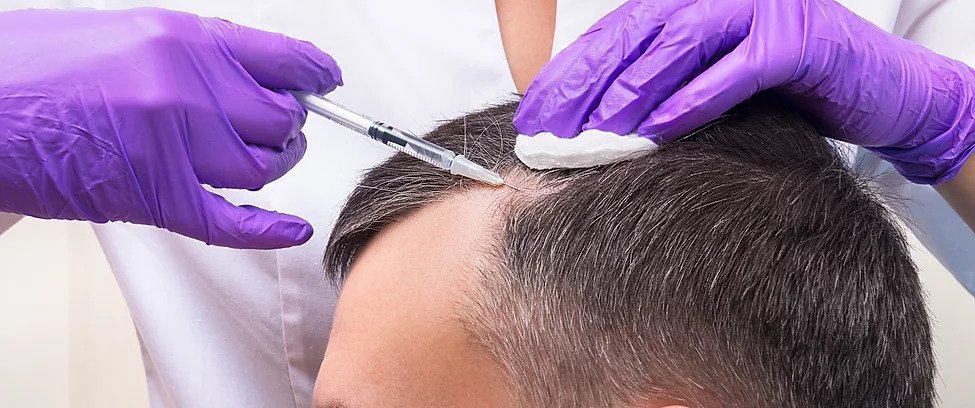
A natural-looking hair transplant depends on more than restoring lost coverage. The direction in which each graft is placed has a major influence on how the transplanted hair blends with the existing growth. Even when grafts are healthy and densely placed, an incorrect angle or orientation can make the result appear artificial. For this reason, careful assessment of the patient’s natural growth pattern is an important part of Hair Transplant in Dubai.
Natural hair direction varies across different areas of the scalp. Hair at the frontal hairline generally grows at a relatively shallow angle, while the direction may gradually change toward the mid-scalp and crown. The crown also has a distinctive rotational pattern that needs to be assessed before graft placement. Experienced hair restoration teams study these characteristics during consultation and treatment planning.
Maintaining the original direction involves examining existing hair, identifying changes in angle across different scalp zones, and placing individual follicular units accordingly. The surgeon must also consider the thickness, curvature, and number of hairs contained within each graft. These details help determine how grafts should be positioned to create a cohesive appearance.
Understanding Natural Hair Direction
Hair does not grow vertically from the scalp. Each follicular unit emerges at a particular angle and follows a specific direction. The angle can also differ significantly between the frontal region, temples, mid-scalp, and crown.
When designing a transplant, these variations need to be mapped rather than treated as one uniform pattern. The frontal hairline usually requires especially careful planning because it is highly visible. Grafts placed too upright or at an inconsistent angle can make the hairline look noticeably transplanted.
The natural direction also changes progressively behind the hairline. A gradual transition between different growth angles can make transplanted and existing hair appear more integrated.
How Is Hair Direction Assessed Before Treatment?
Assessment generally begins during the consultation. The scalp is examined to determine where natural hair remains, how the existing follicles are oriented, and where thinning has altered the original pattern.
Photographs and close visual examination can help document the direction of existing growth. In some cases, magnification or other assessment methods may provide additional information about follicular characteristics.
The surgeon also considers the patient’s anticipated hairline, donor availability, density requirements, and the pattern of hair loss. These factors influence where particular graft types may be most appropriate.
Why Graft Angle Matters
Graft angle affects the way hair lies against the scalp after it grows. The same graft can produce a noticeably different visual effect depending on how it is positioned.
At the frontal hairline, a relatively low angle can help create a softer transition from forehead to hair. Further behind the hairline, the direction may become progressively different as it follows the patient’s natural pattern.
The goal is not simply to insert grafts into empty areas. Instead, placement needs to reproduce the changing architecture of natural growth as closely as practical.
How Is Natural Direction Preserved During Graft Placement?
During transplantation, individual follicular units are placed according to the treatment plan established during the assessment. The recipient sites need to correspond with the intended direction and angle of growth.
Careful site creation is particularly important because the orientation of the recipient opening can influence how the graft ultimately sits. The placement team must also avoid creating an overly uniform pattern, as naturally growing hair contains subtle variations.
The frontal region may use finer grafts to support a gradual hairline, while larger follicular units can potentially be positioned farther behind it where greater coverage is required. The exact approach depends on the patient’s anatomy and donor characteristics.
What Happens at the Crown?
The crown presents a different challenge because hair commonly follows a circular or whorled growth pattern. Simply placing grafts in straight lines across this area can produce an unnatural appearance.
The natural direction around the crown needs to be identified before implantation. Grafts can then be positioned to follow the existing rotational pattern and connect appropriately with surrounding hair.
Crown restoration also requires realistic planning because the area can consume a substantial portion of the available donor supply. A surgeon may therefore consider both existing density and future hair loss when developing the treatment plan.
The Role of Hair Characteristics
Direction is only one part of achieving a natural appearance. Hair calibre, curl, colour contrast with the scalp, and follicular unit composition can all influence how transplanted hair looks.
For example, naturally wavy or curly hair may provide more visual coverage than very straight, fine hair. Similarly, a patient with strong contrast between hair and scalp may require different density considerations from someone with less contrast.
These characteristics should be incorporated into the treatment design rather than relying on a standard implantation pattern for every patient.
What Should Patients Look for When Considering Hair Transplant in Dubai?
Choosing a suitable hair restoration provider involves looking beyond the procedure itself. Patients should consider the qualifications and experience of the medical team, the techniques available, and how thoroughly the scalp is assessed before treatment.
A proper consultation should include an examination of the donor and recipient areas, discussion of the patient’s expectations, and an explanation of how graft placement will be planned. Patients should also ask who performs the critical stages of the procedure and how postoperative monitoring is handled.
Safety standards are equally important. A reputable medical facility should maintain appropriate hygiene, infection-control procedures, qualified clinical staff, and a clear process for managing potential complications.
Frequently Asked Questions
Can incorrect hair direction make a transplant look unnatural?
Yes. If grafts are placed at noticeably different angles from the surrounding hair, the transplanted area may appear artificial. Appropriate planning of angle and orientation helps create a more consistent appearance.
Is hair direction the same across the entire scalp?
No. Hair direction can change between the frontal hairline, temples, mid-scalp, and crown. The crown may also have a distinctive whorl or rotational pattern.
Does hair texture affect how direction is planned?
Yes. Straight, wavy, and curly hair can behave differently after transplantation. Hair calibre and natural curvature may therefore be considered when determining graft placement.
Can the original hair direction always be perfectly recreated?
Not necessarily. Hair transplantation aims to reproduce a natural-looking pattern, but individual anatomy, donor limitations, previous procedures, and existing hair loss can affect what is achievable.
Why is the consultation important for natural-looking results?
The consultation allows the medical team to examine the patient’s individual growth pattern and donor supply before designing the recipient area. This helps determine an appropriate hairline, graft distribution, and implantation direction.
Conclusion
Natural hair direction is an important component of a convincing hair restoration result. Because growth angles vary across the scalp, grafts need to be planned and positioned according to the patient’s existing pattern rather than inserted according to a single standard direction. Careful assessment of the hairline, mid-scalp, temples, and crown can help create a smoother transition between transplanted and existing hair.
For anyone considering Hair Transplant, understanding how graft angle, orientation, density, and hair characteristics are assessed can make the consultation more productive. A qualified medical team should explain the proposed approach clearly, discuss realistic expectations, and develop a treatment plan based on the individual scalp rather than a generic template.