
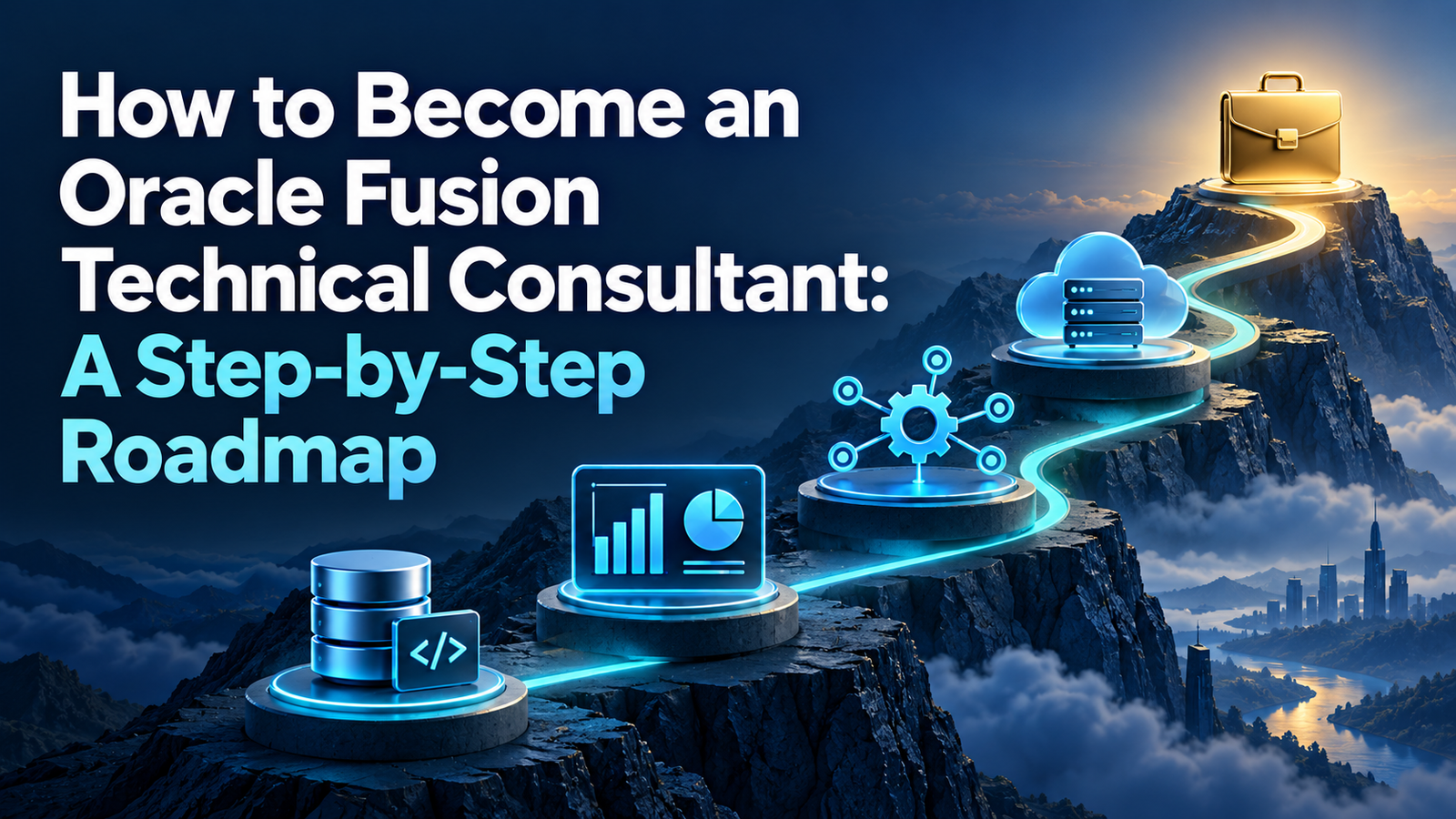
Introduction
Ask ten Oracle consultants how they got started and you’ll hear ten different stories. Some were developers tired of repeating the same work, while others moved over from support desks or testing teams. The encouraging part is that this career is easier to learn than it looks, especially with the right guidance from Soft Online Training. Many people have made the switch without starting over, and a good Oracle Fusion Technical Training in Chennai program can turn that first step into a clear plan. This roadmap shows what to learn, in what order, and which mistakes to avoid on the way.
What a Fusion Technical Consultant Really Does All Day
Let’s clear up the job first, because the title sounds more mysterious than it is.
When a company goes live on Oracle Fusion Cloud, the functional consultants set up the modules: finance, HR, procurement, supply chain. But no business runs on standard setup alone. Someone has to build the custom invoice report the finance head keeps asking for. Someone has to move ten years of employee data out of an old system. Someone has to make Fusion talk to the payroll vendor’s software. That someone is you, the technical consultant.
Your days will mix reports, data loads, integrations and a good amount of detective work when something breaks at 6 pm on a Friday. It’s problem-solving more than pure coding, and that’s what makes it interesting.
Start With SQL, Even If It Feels Boring
I’ll be blunt: if your SQL is weak, nothing else in this career will feel comfortable. Reports, data extracts, validations and troubleshooting all come back to it.
So before you touch anything with “Oracle Cloud” in the name, get properly good at queries. Practice joins until they feel natural. Learn analytical functions. Write a little PL/SQL. Make mistakes on sample data, where they’re cheap.
Alongside that, get familiar with XML, JSON and the idea of web services (REST and SOAP). You don’t need to be an expert yet, but these terms will show up daily once you’re working on integrations, so it’s smart to meet them early.
Get a Feel for How Fusion Is Built
Once the basics are in place, spend time understanding the application itself. Learn what the modules are, how security roles control access, and what lookups, value sets and flexfields do. Understand that Oracle pushes updates every quarter, and that your work has to survive them.
This part is easy to skip, and it’s a mistake. Plenty of people can write a report. Far fewer can explain why a field vanished from a page after an update. The second group gets promoted.
It also helps to know the business flows, even roughly. If you understand how a purchase order becomes a payment, the data you handle starts making sense instead of looking like random tables.
Learning the Tools Properly With Oracle Fusion Technical Training in Chennai
At this stage, self-study starts to run out of steam. You can read documentation for weeks and still not know what a real project feels like. This is where good Oracle Fusion Technical Training in Chennai earns its fee: a trainer who has worked on live implementations, a lab where you can actually click around Fusion, and a syllabus arranged in the order projects really unfold.
Here’s what you should come away able to do:
- Build reports with BI Publisher and OTBI, including data models and layouts
- Load data using FBDI and HDL, then figure out why half the rows were rejected
- Create integrations in Oracle Integration Cloud
- Work with REST APIs and web services
- Extend pages using Visual Builder and Application Composer
A small piece of advice: don’t just follow along with demos. Break things on purpose. Upload a bad file, misconfigure a connection, then fix it. That’s how the knowledge sticks, and it’s exactly what interviewers probe for.
Practice Like You’re Already on a Project
Watching someone else do a task is not the same as doing it yourself. So give yourself small, realistic assignments.
Try building a supplier invoice report with a couple of parameters. Load a batch of item or employee data and clean up the errors. Set up an integration that picks a file from an SFTP folder and pushes it into Fusion. Add an extra field to a page using Visual Builder.
Then write each one up: what the requirement was, how you solved it, what went wrong. Those notes become your portfolio. When an interviewer asks, “Tell me about a problem you solved,” you’ll have real answers instead of textbook ones.
Learn How Projects Actually Run
Here’s something that surprises newcomers. Technical skill is only part of the job. A lot of your time goes into understanding requirements, writing design documents, supporting testing rounds and handling cutover weekends.
Try to learn the rhythm of a typical implementation: gathering requirements, fit-gap discussions, design, unit testing, SIT, UAT, go-live, and the nervous weeks of hypercare afterwards. Practice writing a simple technical specification. Practice explaining your solution to someone who has never seen a line of SQL.
Honestly, communication is what separates a good developer from a consultant clients trust. Ask questions when something is unclear. Give honest estimates. Raise risks early, even when it’s uncomfortable.
Think About Certification, But Keep It in Perspective
Oracle certifications can help, especially if you’re switching careers or don’t have much experience yet. They signal discipline and give recruiters something concrete to check. Options like Oracle Cloud Infrastructure foundations or Oracle Integration exams are popular starting points.
Just don’t treat a certificate as a magic ticket. A certified candidate who can’t debug a failed data load will struggle in an interview, while a practical candidate without one often does fine. Do both if you can, but put hands-on skill first.
Your First Job and What Comes After
Your first role might be junior technical consultant, integration developer or application support analyst. Don’t be picky. Say yes to varied work, ask lots of questions and learn from the seniors around you.
After a couple of years, doors open to senior consultant, technical lead, integration architect and beyond. And because Oracle keeps adding features, including AI capabilities inside Fusion, you’ll never really stop learning. Read the release notes. Stay curious. That habit alone will keep you ahead.
How to Choose the Right Oracle Fusion Technical Training in Chennai
Not every course is equal, so ask questions before you enroll. Who are the trainers, and have they worked on real projects? Will you get access to a live Fusion environment? How much of the course is hands-on versus slides? Are recordings available if you miss a class? Is there help with resumes and interview preparation?
If the answers are vague, keep looking. The right program should make you feel more capable every week, not just more informed.
Conclusion
Becoming an Oracle Fusion Technical Consultant doesn’t require genius, just the right skills learned in the right order. Begin with strong SQL, move on to Fusion fundamentals and the core tools, then practice until the work feels familiar, and finally build the confidence to explain what you’ve done. It takes patience, but every step makes the next one easier. With steady support from Soft Online Training, you can shorten your learning curve and gain the hands-on experience employers look for. Choosing the right Oracle Fusion Technical Training in Chennai will help you walk into your first consulting role feeling prepared. Start with the basics this week, stay consistent, and keep going. Your first project is closer than you think.