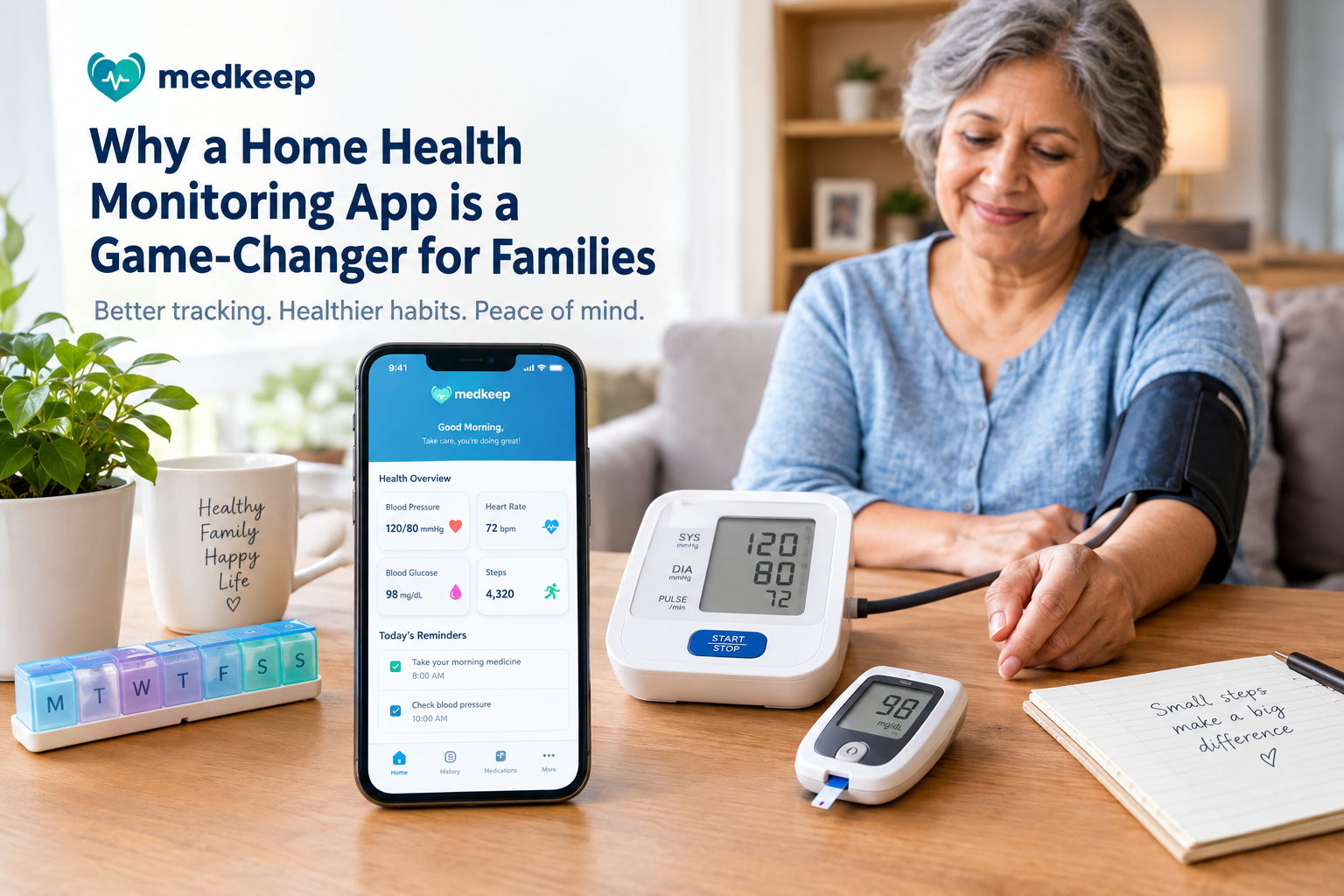
Keeping track of one person’s health can already feel like a lot. Add parents, children, grandparents, or another family member to the mix, and it can quickly become confusing. There may be blood pressure readings written on scraps of paper, medicine times remembered from memory, and prescription details saved in different places.
This is where a simple digital system can make everyday health management less stressful.
A health tracking app for family members can give everyone a more organized way to record important information, keep up with medicines, and stay aware of changes over time. It does not replace professional medical care, but it can make the information needed for that care much easier to manage.
Why Families Need a Simple Health Tracking System
Family health information often changes from day to day. Someone may need to check their blood pressure in the morning, another person may monitor glucose, while a parent might need several medicines at different times.
Trying to remember everything is not always practical.
A digital health record can bring these details together in one place. Instead of searching through notebooks or phone messages, family members can have a clearer view of important records and reminders.
For example, a person caring for an older parent can record regular readings, note medication times, and keep relevant health information available when speaking with a doctor.
Keeping Track of Vital Signs
Regular readings can be useful when a healthcare professional needs to understand how someone’s health has been changing. A health vitals log app can provide a convenient place to record measurements such as blood pressure, pulse, weight, or other information recommended by a healthcare provider.
A track vital signs app can also make it easier to review previous entries instead of relying on memory.
The important part is consistency. A single reading may not tell the whole story, while a properly maintained record can give a clearer history for discussion with a healthcare professional.
Managing Blood Pressure and Glucose at Home
For families monitoring conditions that require regular measurements, keeping records can become part of the daily routine.
A glucose and blood pressure tracker can help users keep related readings organized. Someone might check their blood pressure before breakfast and record their glucose later in the day. Having those entries stored together can make the routine easier to follow.
Similarly, a blood pressure tracker app can help users maintain a history of readings rather than writing numbers on loose pieces of paper.
These tools should be treated as record-keeping aids, not as a replacement for medical advice. If a reading seems unusual or concerning, it is important to follow the guidance of a qualified healthcare professional.
Medication Management for the Whole Family
Vital signs are only one part of family health management. Medicines can be just as difficult to organize, especially when several people have different prescriptions.
A home health monitoring app can help bring medication information and other health details into a more organized routine.
Remembering Medication Times
It is surprisingly easy to forget whether a medicine was already taken, particularly when someone has several medications throughout the day.
A pill reminder app for family can provide reminders for different people and different schedules. This can be useful for a parent managing their own medicines or for someone helping an older family member.
A medication schedule app can also make daily routines easier to follow by keeping medicine times clearly organized.
The goal is not to make healthcare complicated. It is simply to reduce the number of things people have to remember on their own.
Keeping Track of Refills
Running out of an important medicine can create unnecessary stress. Refills are easy to overlook when life gets busy.
A refill reminder app can help families keep an eye on medication supplies and remember when it may be time to arrange another refill.
This can be particularly helpful for caregivers who are managing prescriptions for more than one person.
Managing Medications for Multiple People
Family medication management becomes more complicated when several people take different medicines. A caregiver might be responsible for a spouse’s prescription, a parent’s medication, and their own daily routine.
Trying to remember everything separately can become overwhelming.
The ability to track medications for multiple people gives families a more structured way to organize these details. Each person’s information can be kept separate while still being accessible to the person responsible for managing it.
A Simple Example From Everyday Life
Imagine a daughter helping her elderly father manage his health at home. He checks his blood pressure regularly and takes several medications during the day. She also needs to remember when his prescriptions are due for refill.
Instead of keeping several notes around the house, she can use digital records to organize his readings, medication schedule, and refill reminders. When they have a medical appointment, the information can also help them remember what has happened between visits.
That small change can make a routine feel much more manageable.
Making Health Information Easier to Understand
Good health tracking is not about recording every possible detail. It is about keeping the information that actually matters organized and easy to review.
A family can decide which measurements, medicines, reminders, and documents are important for its situation. Over time, this creates a useful health history that can support conversations with healthcare professionals.
A health tracking app for family members can be especially useful when more than one person needs regular attention. Instead of managing scattered notes and separate reminders, families can create a more consistent routine.
Building Better Health Habits at Home
Technology cannot make health decisions for a family, and it should not replace professional medical care. What it can do is make everyday organization easier.
Recording vital signs, keeping medication schedules visible, remembering refills, and maintaining family health information are all small tasks. But when they are repeated every day, having a simple system can make a real difference to how manageable those tasks feel.
For families using digital health tools, the best approach is usually a practical one: keep information organized, update it regularly, and use it to support—not replace—conversations with healthcare professionals.