Hair texture is an important part of treatment planning because it affects how transplanted follicles may look once they grow. Hair can differ in thickness, curl pattern, wave, softness, density, and natural direction. These characteristics influence how much visual coverage can be achieved and how the hairline may appear after transplantation.
When planning a Hair Transplant in Dubai, specialists generally assess the existing hair rather than focusing only on the number of available grafts. Two people with a similar degree of hair loss may require different approaches because their hair textures create different visual effects. Coarser strands, for example, may provide greater visual coverage, while finer hair can require more careful distribution to create the appearance of density.
Texture also matters when designing the hairline. The angle, direction, spacing, and placement of grafts need to complement the patient’s natural characteristics. Curly or wavy hair may create a different coverage pattern compared with straight hair, even when the same number of follicles is transplanted.
A thorough consultation therefore considers texture alongside donor density, hair calibre, facial proportions, the pattern of hair loss, and the long-term stability of the donor area. Understanding these factors helps create a treatment plan that aims for a natural-looking result rather than simply maximizing the number of implanted grafts.
Why Hair Texture Matters During Transplant Planning
Hair texture influences the way individual strands interact with one another. Straight hair tends to lie closer to the scalp, making changes in density more noticeable in some patients. Wavy or curly hair can create additional volume because the strands occupy more visual space.
Hair calibre is equally relevant. Thick strands generally produce stronger visual coverage than fine strands. However, texture should not be considered in isolation. A patient with fine but naturally dense hair may have a different aesthetic situation from someone with thick strands and a relatively low donor density.
Specialists may therefore evaluate:
- Individual strand thickness
- Straight, wavy, or curly characteristics
- Natural hair direction
- Donor-area density
- Existing coverage in thinning regions
- Hairline characteristics
- Scalp visibility
- The contrast between hair and scalp
These observations help determine where grafts may have the greatest visual impact.
How Texture Influences Graft Placement
Graft placement is not simply about filling empty areas. The positioning of follicles must correspond with the natural direction and appearance of the surrounding hair.
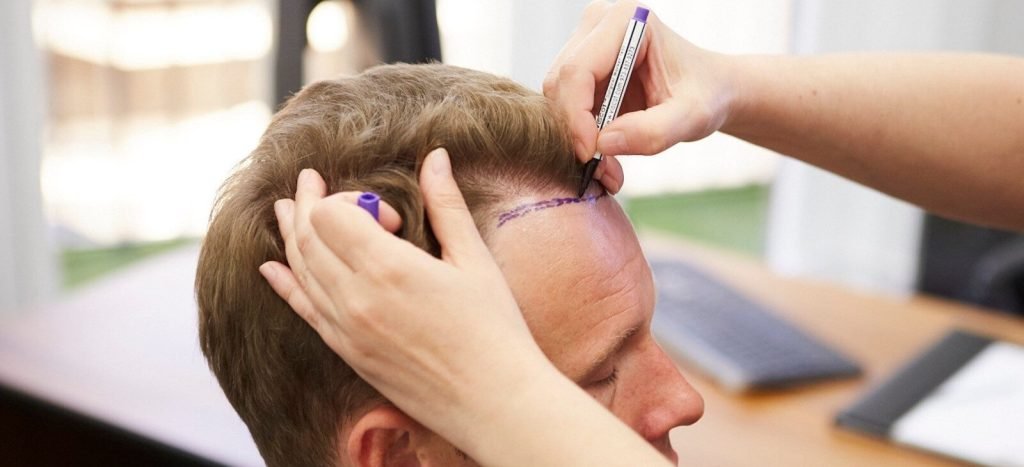
At the hairline, individual follicular units are usually placed carefully to create a gradual transition between the forehead and denser areas behind it. Texture can influence how this transition is designed. A softer or finer texture may require particularly subtle placement, while naturally thicker or curlier hair can produce a different visual transition.
In areas such as the mid-scalp and crown, the natural growth pattern becomes especially important. The crown has a characteristic whorl, and transplanted follicles need to follow an appropriate directional pattern to avoid an artificial appearance.
Texture may also influence how closely grafts can visually complement existing hair. The objective is generally to integrate transplanted follicles with surrounding growth rather than create an isolated area of new density.
Texture and the Appearance of Density
One of the most important distinctions in hair restoration is the difference between actual density and perceived density.
A person may have a particular number of hairs per square centimetre, but the visual impression can vary considerably depending on strand thickness and texture. Coarser or curlier strands can sometimes provide more apparent coverage, whereas fine, straight strands may leave more scalp visible under certain lighting conditions.
This means that treatment planning should not rely solely on graft counts. A specialist may consider the patient’s existing texture when deciding how grafts should be distributed across different areas.
For someone with fine hair, strategic placement may be particularly important. Concentrating grafts in areas where they contribute most to visual coverage can be more appropriate than attempting to create uniform density everywhere.
Hair Texture and Hairline Design
The hairline is one of the most visible aspects of restoration, so texture can play a significant role in its design.
A natural hairline usually does not have a perfectly straight edge. It contains subtle irregularities, varying follicular-unit groupings, and changes in direction. The characteristics of the patient’s own hair can guide how this transition is recreated.
For curly or wavy hair, the natural movement of the strands may affect the apparent shape of the hairline after growth. Straight and fine hair may require a different approach because individual hairs can be more visually distinct.
The patient’s age, facial structure, existing hairline, anticipated future loss, and donor resources should also be considered. Texture is one component of a broader assessment rather than a standalone determinant.
Does Hair Texture Affect the Choice of Technique?
Hair texture can be one consideration when selecting and planning a transplantation technique, although it does not automatically determine which procedure is appropriate.
Techniques such as Follicular Unit Extraction (FUE) involve harvesting individual follicular units from the donor region. The characteristics of these units, including their structure and hair calibre, may influence how extraction and implantation are planned.
The surgeon may also consider whether the patient’s donor follicles contain single-hair or multiple-hair units and how those units can be used in different areas. Single-hair units can be valuable around the frontal transition, while naturally occurring multi-hair units may contribute to density behind it.
The final approach should therefore be based on an individual assessment rather than assuming that one technique works equally well for every hair texture.
How Different Textures Can Change the Visual Outcome
Straight, wavy, and curly hair can produce noticeably different visual outcomes even when similar numbers of grafts are transplanted.
Straight hair often follows a relatively predictable direction, but fine straight strands may make scalp visibility more apparent. Wavy hair can provide additional body and movement, potentially changing how density is perceived. Curly hair can create substantial visual volume because strands bend away from the scalp.
These characteristics are useful during treatment planning because the goal is not necessarily to reproduce an identical number of hairs across every area. Instead, the objective is to create a balanced appearance that works with the patient’s natural characteristics.
Patients should also understand that transplanted hair generally retains characteristics associated with the donor follicles. The texture and behaviour of the new growth should therefore be discussed during consultation rather than assuming that transplanted hair will behave exactly like every strand currently growing in the recipient area.
Understanding Hair Texture Before Hair Transplant in Dubai
Before undergoing treatment, patients should have their donor and recipient areas examined closely. A consultation may involve assessing the scalp, measuring donor density, examining individual follicular units, and identifying the pattern and progression of hair loss.
For Hair Transplant in Dubai, a specialist may also discuss how texture affects the expected appearance of coverage. This is particularly relevant for patients with significant thinning, fine strands, unusual curl patterns, or substantial differences between donor and recipient areas.
A realistic treatment plan should account for current hair loss as well as potential future changes. Preserving donor resources is important because the supply of suitable follicles is limited.
How to Choose the Right Clinic for Hair Transplant in Dubai
Choosing a suitable provider involves more than comparing procedure names or advertised graft numbers. Patients should consider several aspects of the treatment process.
Experience and Qualifications
Look for appropriately qualified medical professionals with relevant experience in hair restoration. Ask who will perform the surgical stages and how the treatment is planned for your specific hair-loss pattern and texture.
Technology and Techniques
Technology can support assessment, graft extraction, implantation, and monitoring, but equipment alone does not determine treatment quality. Ask which technique is recommended and why it is appropriate for your donor characteristics and hair texture.
Safety Standards
A proper clinical environment, appropriate sterilization procedures, medical supervision, and clear postoperative instructions are essential. Patients should also understand potential complications before consenting to treatment.
Consultation Process
A detailed consultation should address donor density, strand calibre, hair texture, hair-loss progression, graft requirements, and realistic expectations. Be cautious of consultations that focus only on a predetermined graft number without examining these factors.
Patient Experience
The provider should explain preparation, recovery, medication requirements, follow-up appointments, and possible temporary shedding. Clear communication can help patients understand what to expect throughout the process.
Expected Results
No responsible provider can guarantee an identical result for every patient. Growth varies according to individual biology, donor characteristics, existing hair, surgical factors, and aftercare. A good consultation should explain these variables clearly.
Frequently Asked Questions
Does thick hair provide better coverage after a transplant?
Thicker strands can create stronger visual coverage because each individual hair occupies more visible space. However, overall results also depend on follicular density, graft distribution, hair-loss severity, and the characteristics of the donor area.
Can curly hair be transplanted successfully?
Curly hair can be transplanted, but its shape and follicular structure may require careful consideration during harvesting and implantation. The natural curl pattern should be incorporated into treatment planning.
Does fine hair require more grafts?
Not necessarily. Fine hair may create less visual coverage per strand, but graft requirements depend on the size and location of the thinning area, donor availability, existing density, and the desired appearance.
Will transplanted hair have the same texture as donor hair?
Transplanted hair generally retains many characteristics of the donor follicles. Its appearance can also change during the growth and maturation process, so patients should discuss expected texture and behaviour during consultation.
Can hair texture affect the design of the transplanted hairline?
Yes. Texture, strand thickness, natural direction, and curl or wave pattern can all influence how the hairline is designed. These characteristics can help determine appropriate placement and spacing for a natural transition.
Conclusion
Hair texture is an important but often overlooked consideration in hair restoration. Strand thickness, curl pattern, natural direction, and perceived density can all influence graft distribution, hairline design, and the overall visual effect of transplantation.
A carefully planned Hair Transplant should therefore consider the complete characteristics of the patient’s hair rather than relying only on graft numbers. Combining texture assessment with donor evaluation, hair-loss progression, facial proportions, surgical technique, and realistic expectations allows the treatment plan to be more individualized and appropriate for the patient’s natural appearance.