
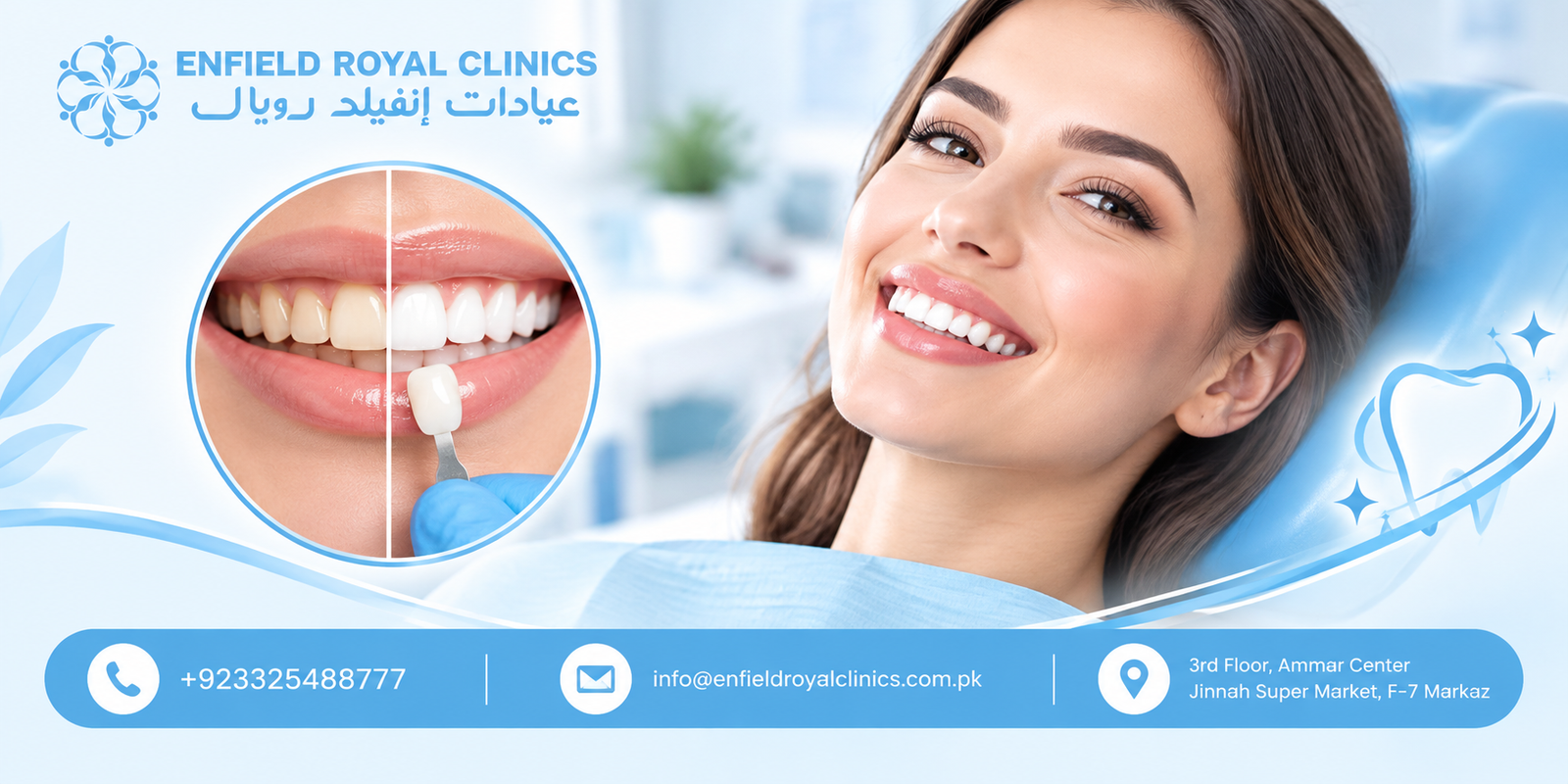
Stubborn tooth stains can make a smile look dull even when a person follows a regular brushing routine. Coffee, tea, tobacco, colorful foods, aging, and other factors can gradually affect the natural appearance of teeth. For people looking for a professional way to improve discoloration, Laser Teeth Whitening in Islamabad can provide a controlled cosmetic approach to brightening natural teeth.
Professional whitening can be effective for many surface stains, but its results depend on the type, depth, and cause of discoloration. Not every tough stain can be removed completely with whitening. Understanding how the treatment works, what it can address, and its limitations can help patients develop realistic expectations.
Why Do Tough Teeth Stains Develop?
Tooth discoloration can develop for several reasons. Some stains form on the outer surface of the teeth after repeated exposure to pigmented foods and beverages. Coffee, tea, cola, tobacco, sauces, and dark-colored foods can gradually leave visible pigments behind.
Age can also affect tooth color. As enamel naturally becomes thinner over time, the darker dentin underneath may become more visible. This can make teeth appear yellowish even without heavy surface staining.
Other discoloration occurs inside the tooth. Certain medications, dental trauma, developmental conditions, and changes in tooth structure can cause intrinsic stains. These deeper stains can be more difficult to treat with conventional whitening.
Therefore, a stain that appears tough may not always be a simple surface stain. Identifying its cause is an important part of deciding whether professional whitening is likely to help.
How Does Laser Teeth Whitening Work on Stains?
Professional teeth whitening primarily uses a whitening agent, commonly containing peroxide, to lighten certain types of tooth discoloration. Some modern systems incorporate specialized light or laser technology into the treatment protocol.
When such technology is used, the light or laser may activate or support the whitening process depending on the specific system. The whitening agent provides the primary bleaching action by interacting with stain molecules and helping break down compounds responsible for certain types of discoloration.
Before treatment, the teeth are assessed and prepared. The gums are protected, and the whitening material is applied according to the selected professional system. The treatment is monitored rather than simply increasing the intensity or duration in an attempt to remove every stain.
This controlled approach can help improve the appearance of stained natural teeth while keeping the treatment focused on the patient’s individual needs.
What Tough Stains Can Professional Whitening Improve?
Professional whitening is often useful for external stains caused by everyday habits. These stains may become difficult to remove through regular brushing alone.
Common examples include:
- Coffee and tea stains
- Tobacco-related surface discoloration
- Dark soft drinks
- Highly pigmented foods
- Certain dietary stains
- General age-related yellowing
When these stains respond to the whitening agent, the teeth can appear noticeably brighter and cleaner.
However, the degree of improvement varies. A stain that has been present for many years may respond differently from a newer surface stain. Similarly, discoloration caused by changes inside the tooth may not lighten as effectively.
Professional assessment helps determine whether the visible discoloration is suitable for whitening or whether another treatment may be more appropriate.
Can Deep or Intrinsic Stains Be Removed Completely?
Whitening has limitations when discoloration originates inside the tooth. Intrinsic stains may result from factors such as certain medications, trauma, developmental changes, or alterations in the internal tooth structure.
In these situations, professional whitening may produce some improvement, but the result can be less predictable than it is for external stains. Complete removal should not be promised.
A dental professional can examine the teeth and determine whether the discoloration appears superficial or deeper. If whitening is unlikely to provide the desired result, other cosmetic dental options may be discussed.
This evaluation is particularly important for people who have tried ordinary whitening products without seeing much improvement.
What About Stains on Crowns, Veneers, and Fillings?
Another important limitation is the presence of dental restorations. Crowns, veneers, bridges, and tooth-colored fillings generally do not whiten in the same way as natural teeth.
If a person has visible restorations among the front teeth, professional whitening may brighten the surrounding natural teeth while the restorations retain their existing color. This can potentially create a noticeable difference in shade.
For this reason, existing dental work should be considered before treatment. The goal is not simply to whiten every visible surface but to create a balanced and attractive overall smile.
A dental assessment can help determine whether the current shade of restorations may affect the expected cosmetic result.
Is Professional Whitening Suitable for Sensitive Teeth?
Some people experience temporary sensitivity during or after professional whitening. The likelihood and intensity can vary depending on individual tooth characteristics and the whitening system used.
People who already have sensitive teeth should mention this before treatment. Exposed dentin, enamel wear, cavities, gum recession, or other dental conditions may also influence sensitivity and treatment suitability.
Professional whitening involves protecting the gums and using the whitening material according to the appropriate protocol. This is different from repeatedly applying strong whitening products without professional guidance.
Using more whitening material or extending treatment unnecessarily does not guarantee better stain removal. It may instead increase sensitivity or discomfort.
How Can Patients Maintain a Whiter Smile After Treatment?
Once tough stains have been reduced, maintaining the result becomes important. Regular brushing and flossing can help limit plaque and surface buildup. Routine dental examinations can also help identify new staining and other oral health concerns.
Reducing frequent exposure to coffee, tea, tobacco, dark beverages, and heavily pigmented foods can help slow the development of new stains. Drinking water after consuming staining drinks can also reduce prolonged contact between pigments and the teeth.
Professional whitening should not be treated as a replacement for daily oral hygiene. Teeth naturally experience some discoloration over time, so occasional maintenance may be considered when appropriate.
The most effective long-term approach combines professional cosmetic care with consistent oral hygiene and sensible lifestyle habits.
Frequently Asked Questions
1. Does laser teeth whitening remove tough stains?
It can improve many stubborn surface stains, particularly those caused by coffee, tea, tobacco, and pigmented foods. Deep internal discoloration may respond less predictably.
2. Can professional whitening remove stains completely?
Not always. The outcome depends on the type, depth, and cause of the discoloration. Some intrinsic stains may require an alternative cosmetic treatment.
3. Are old coffee and tea stains difficult to whiten?
Long-standing stains can sometimes be more challenging, but professional whitening may still improve their appearance. The response varies according to the condition and type of discoloration.
4. Do whitening treatments remove stains from veneers or crowns?
Generally, veneers, crowns, bridges, and fillings do not whiten like natural teeth. Their existing color should be considered when planning professional whitening.
For more information visit Enfield royal clinic in islamabad