
Introduction
Getting two enterprise systems to actually talk to each other is never as simple as it sounds. Oracle Fusion Applications power HR, finance, and customer operations for thousands of companies, and platforms like Soft Online Training make it easier to see how these systems connect in practice. Rarely does any of this run in isolation, everything’s linked to something else.
That’s where APIs step in, bridging the gaps between systems. If you’re serious about learning this hands-on rather than just reading theory, enrolling in Oracle Fusion Technical Training in Chennai is a smart move. Let’s look at why APIs matter so much and how developers use them daily.
What APIs Really Do in the Oracle Fusion World
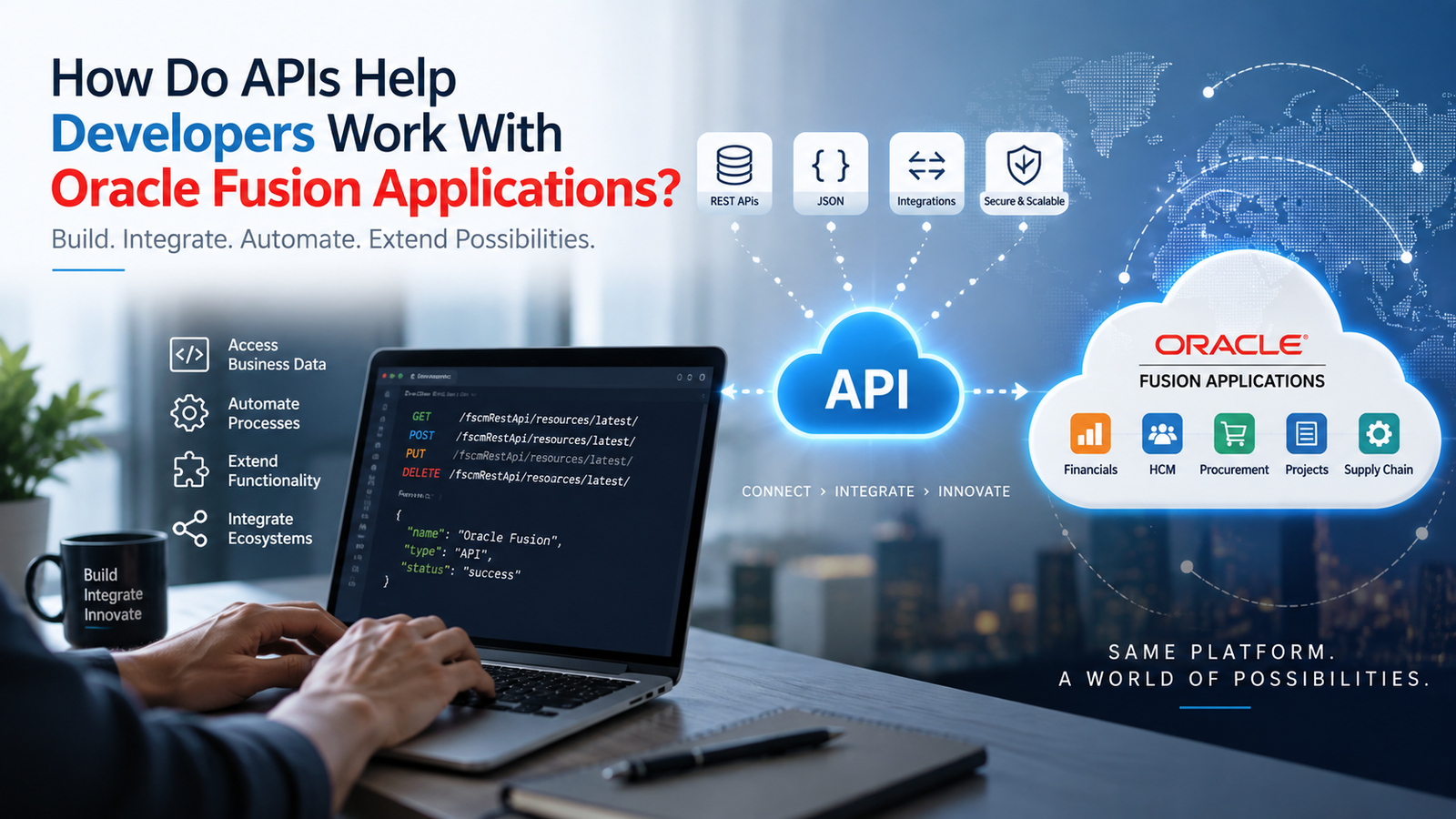
Think of APIs as the translators sitting between Oracle Fusion and whatever else your business runs on. Instead of poking around in the database directly (which, trust me, is asking for trouble on a cloud platform that updates itself regularly), developers use APIs to pull data, kick off processes, or add new functionality without touching the core system at all.
This matters more than it sounds like it should. Oracle pushes quarterly updates to Fusion Applications, and if you’ve built custom code that hooks directly into the database structure, there’s a real chance an update breaks something. APIs act as a buffer Oracle can change what’s underneath, but as long as the API contract stays consistent, your integration keeps working. Anyone who’s gone through Oracle Fusion Technical Training in Chennai will tell you this is one of the first lessons that actually sticks, because it’s the difference between an integration that survives an update cycle and one that gets you a 2 AM phone call.
There are a few flavors of APIs Oracle gives you to work with REST, SOAP, and the integration adapters that come with Oracle Integration Cloud. They’re not interchangeable, and picking the wrong one for the job is a mistake I’ve seen even experienced developers make.
REST APIs: The Workhorse for Everyday Integrations
Most new integration work these days leans on REST APIs, and for good reason. They’re simple, they speak JSON (which is far easier to read than XML, let’s be honest), and they work over plain HTTP calls that most developers are already comfortable with. Need to fetch a customer record, update an invoice, or check inventory levels? A REST call handles it in a few lines.
Here’s a real-world example: say a company has a sales team out in the field using tablets. Instead of forcing reps to log into the full Fusion Applications interface which, let’s face it, nobody wants to do standing in a client’s lobby, a developer can build a lightweight mobile app that talks to Fusion through REST APIs. The rep pulls up customer info, updates an order, submits an expense claim, all without ever opening the “real” application. That kind of practical use case is exactly what gets covered in a good Oracle Fusion Technical Training in Chennai program, where students spend real time in Postman figuring out authentication headers, request bodies, and why their API call keeps returning a 401 error (spoiler: it’s usually the token).
SOAP Services Still Have Their Place
Now, REST gets all the attention, but SOAP hasn’t disappeared and it won’t for a while. Older systems, particularly in payroll or banking, were often built around SOAP’s strict XML standards. These systems expect a certain rigidity: guaranteed delivery, formal contracts, built-in error handling. REST is more relaxed by design, which is great until you’re moving money around and “relaxed” isn’t really the vibe you want.
So developers working on things like payroll integrations or financial reconciliations often find themselves reaching for SOAP, not because it’s trendy, but because the receiving system simply doesn’t understand anything else. Knowing both protocols and knowing when to use which separates a developer who can handle whatever a client throws at them from one who only knows how to hammer nails.
Oracle Integration Cloud Takes the Grunt Work Out
Writing custom code for every single integration gets old fast. That’s the whole point of Oracle Integration Cloud (OIC) : it gives developers pre-built connectors and a drag-and-drop visual builder so you’re not reinventing the wheel every time a client wants Fusion talking to Salesforce or Workday.
You still need to understand the underlying logic mapping fields correctly, setting up the right triggers, handling errors gracefully but OIC cuts down the boilerplate considerably. I’ve seen integration projects that would’ve taken weeks in pure code get done in days using OIC’s flow builder. It’s not magic, but it’s close enough that most technical teams lean on it heavily once they get comfortable with it.
Automating the Boring Stuff
This is probably where APIs earn their keep the most: automation. Nobody wants to manually create user accounts every time someone joins the company, or manually update inventory counts every time something sells. APIs let developers wire these things together so they just happen.
New hire shows up in the HR system? An API call kicks off provisioning in Oracle Fusion HCM automatically accounts created, access roles assigned, no human needed to babysit the process. Same idea on the supply chain side: a sale gets recorded at the point of sale, and an API updates inventory in Fusion SCM in near real-time. It sounds small, but multiply that across thousands of transactions a day, and you start to understand why manual processes just don’t scale.
Getting Data Out for Reporting
Fusion’s built-in reporting is fine, but it’s not always what a business actually needs. A lot of companies want their data sitting in Power BI or Tableau alongside data from five other systems, so leadership can see the whole picture in one dashboard instead of jumping between five logins.
APIs make that possible. Developers build pipelines that pull data out of Fusion on a schedule nightly, hourly, whatever the business needs so reports stay fresh without someone manually exporting spreadsheets every Monday morning. It’s not glamorous work, but it’s the kind of thing that quietly makes a company’s decision-making a lot faster.
Don’t Skip the Security Part
It’s easy to get excited about what APIs can do and forget that you’re essentially opening a door into sensitive company data. Oracle supports OAuth 2.0 for a reason developers need to manage tokens properly, restrict access based on roles, and actually keep an eye on API usage logs instead of just assuming everything’s fine.
Beyond that, things like API versioning and rate limiting aren’t just nice-to-haves; they’re what keeps an integration maintainable a year down the line when nobody remembers exactly how it was built. Skip this stuff early on, and you’ll pay for it later, usually at the worst possible time.
Where This Skill Set Can Take You
There’s genuinely strong demand right now for developers who can work confidently across REST, SOAP, and OIC within the Fusion ecosystem. Companies aren’t just looking for people who understand Oracle, they need people who can connect Oracle to everything else the business runs on. That’s a specific, learnable skill, and it’s exactly what a solid Oracle Fusion Technical Training in Chennai course is built around: real scenarios, real API calls, real mistakes made in a training environment instead of on a live client system.
Wrapping Up
APIs have quietly become the thing holding modern Oracle Fusion implementations together connecting systems, automating tedious work, and giving businesses the flexibility to build exactly what they need instead of settling for whatever’s built in. Whether you’re leaning toward REST, need SOAP for something legacy, or want to speed things up with Oracle Integration Cloud, understanding these tools well is worth the effort. If you’re serious about getting there, pairing something like Soft Online Training with focused, practical Oracle Fusion Technical Training in Chennai is probably the fastest way to go from “I’ve read about this” to “I’ve actually built it.” The field isn’t slowing down, and neither is the demand for people who know how to make these systems work together.