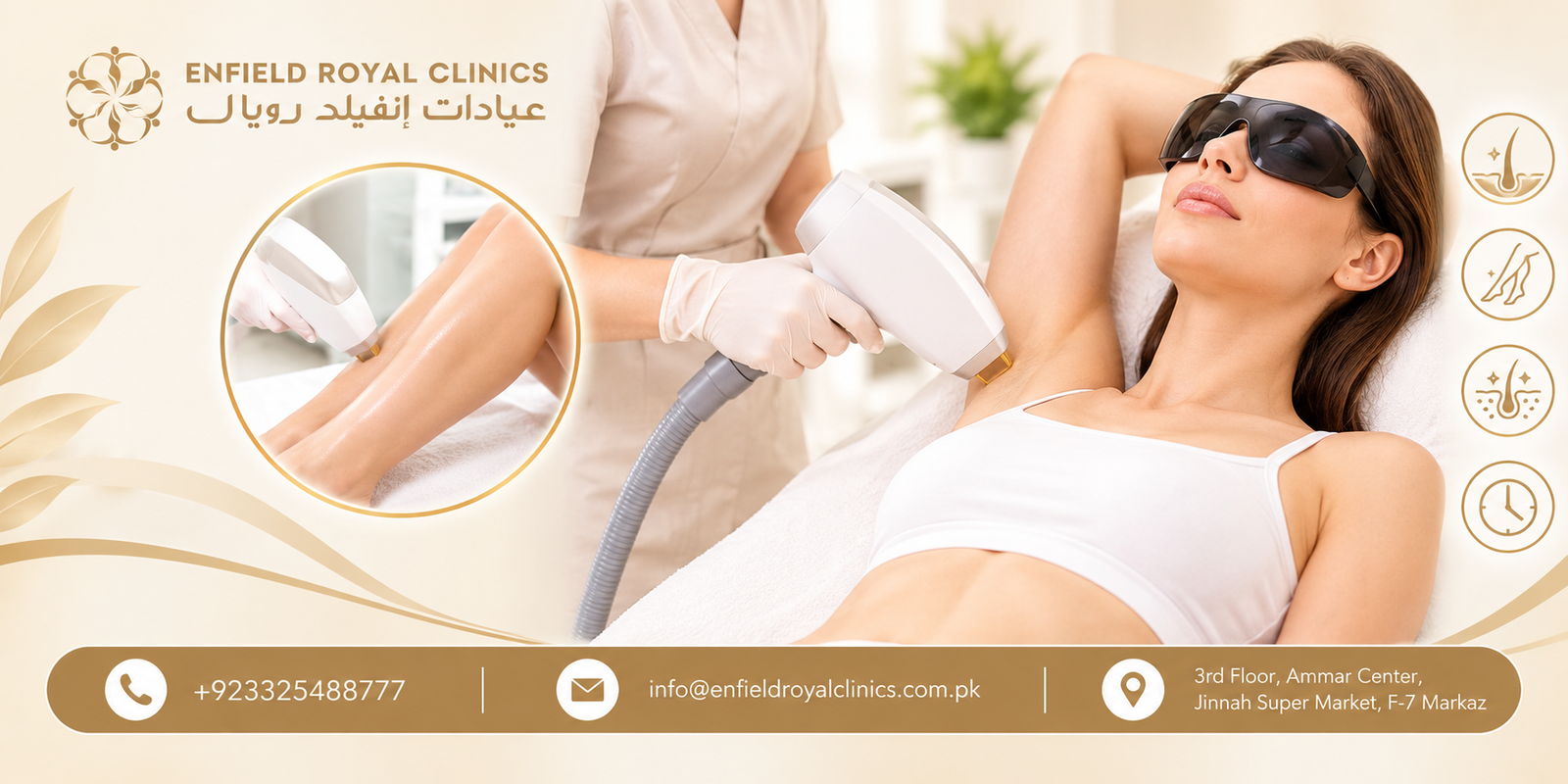
Laser hair removal is widely used to reduce unwanted hair on different areas of the body. However, one common question among people considering treatment is whether it works equally well on every skin type. Skin tone, hair color, hair thickness, and the type of laser technology used can all influence how the treatment works.
Laser Hair Removal In Islamabad can be suitable for many different skin tones when the treatment is properly assessed and appropriate technology and settings are selected. Modern laser systems have made treatment more adaptable, but laser hair removal is not a one-size-fits-all procedure. Individual skin and hair characteristics need to be considered before treatment begins.
How Does Skin Tone Affect Laser Hair Removal?
Laser hair removal works by directing light energy toward pigment in the hair follicle. Because the laser interacts with pigment, the amount of melanin in both the hair and surrounding skin can influence treatment.
Lighter skin with darker hair often provides a strong contrast between the hair and the surrounding skin. This can make it easier for the laser to target the hair follicle while limiting energy absorbed by the surrounding tissue.
Darker skin contains more melanin, which means the surrounding skin may also absorb some laser energy. This does not automatically mean that laser hair removal cannot be performed. Instead, treatment may require more careful selection of laser technology, wavelength, energy level, and other settings.
A personalized approach is therefore important for maintaining a balance between effective hair reduction and skin safety.
Can Laser Hair Removal Be Used on Darker Skin?
Yes, laser hair removal can be performed on darker skin, but treatment requires careful planning. Certain laser technologies and settings are better suited to higher levels of skin pigmentation.
For darker skin, the treatment provider may adjust the energy level and other parameters to reduce unnecessary heating of the surrounding skin. Cooling methods may also be used with some laser systems to improve comfort and protect the skin.
A recent tan can also affect treatment because tanning temporarily increases the amount of pigment in the skin. For this reason, excessive sun exposure is generally avoided before and after treatment.
People with darker skin should have their skin assessed before starting treatment. This allows the treatment approach to be selected according to the individual’s pigmentation and hair characteristics.
What Role Does Hair Color Play in Treatment?
Hair color is another major factor affecting laser hair removal. The laser generally targets pigment within the hair, so darker hair often responds more effectively.
Black and dark brown hair usually contains enough pigment to absorb laser energy efficiently. Coarse hair may also respond well because it provides a stronger target.
Very light blonde, gray, white, or some red hair can be more challenging because it contains less of the pigment targeted by many laser systems. As a result, the response may be limited or less predictable.
This means that two people with the same skin tone may experience different results because their hair characteristics are different.
An assessment of both skin and hair is therefore important when determining whether Laser Hair Removal In Islamabad is likely to provide useful hair reduction.
How Is Laser Technology Selected for Different Skin Types?
Different laser systems use different wavelengths, and these characteristics can affect how energy interacts with the skin and hair.
A suitable laser should be selected according to factors such as skin tone, hair color, hair thickness, and treatment area. For people with more melanin in their skin, the choice of wavelength and treatment settings becomes particularly important.
Using the same settings for every person is not an ideal approach. Individualized treatment can help control the amount of energy delivered to the skin while still providing an appropriate target for the hair follicle.
Modern systems may also include cooling features that help reduce discomfort and protect the surface of the skin during treatment.
The objective is not simply to use stronger energy. Effective treatment depends on using an appropriate combination of technology, settings, timing, and treatment technique.
What Skin Conditions Can Affect Laser Hair Removal?
Skin tone is not the only consideration. The condition of the skin in the treatment area can also affect whether a session should proceed.
Recently sunburned, irritated, inflamed, or damaged skin may be more sensitive to laser energy. Treatment may need to be delayed until the skin has recovered.
People should also mention relevant skincare products, medications, previous cosmetic procedures, and any history of unusual reactions before treatment. This information can help determine whether additional precautions are needed.
Areas with significant pigmentation changes or other skin concerns may also require careful assessment. Treating healthy, stable skin generally makes it easier to manage the treatment safely.
What Can People Expect From Laser Hair Removal on Different Skin Types?
Results vary from person to person. Someone with dark, coarse hair may experience a stronger response than someone with very light or fine hair.
The treatment area also matters. Facial hair may behave differently from hair on the legs, arms, back, or underarms. Hormonal influences can also contribute to continued or new hair growth in some individuals.
Multiple sessions are normally needed because hair follicles move through different growth stages. Laser treatment is most effective when suitable follicles are in their active growth phase.
Over a series of treatments, many people notice that hair becomes finer, grows more slowly, and appears less dense. However, laser hair removal should generally be viewed as long-term hair reduction rather than a guarantee that every hair will disappear permanently.
How Can Different Skin Types Be Treated More Safely?
Safety depends heavily on proper preparation and individualized treatment. Avoiding excessive sun exposure before and after treatment can be particularly important because changes in skin pigmentation may affect the response.
A small test area may sometimes be considered when there are concerns about how the skin will respond. This can provide useful information before treating a larger area.
After treatment, gentle skincare and sun protection can help support recovery. Temporary redness, warmth, or mild sensitivity may occur, but unusual or prolonged reactions should receive professional attention.
Following the recommended treatment schedule is also important. Trying to treat too frequently or using unsuitable settings does not necessarily produce faster results and may increase skin irritation.
Is Laser Hair Removal Suitable for Everyone?
Laser hair removal can work across a broad range of skin tones, but the results and treatment approach can differ. Skin tone alone does not determine suitability.
Hair color, hair thickness, skin condition, recent sun exposure, hormonal factors, treatment area, and available laser technology all play a role.
People with darker skin can often undergo treatment when an appropriate laser and carefully selected settings are used. People with very light, gray, or white hair may have more limited results because of the lower pigment level in the hair.
A professional assessment before treatment can help determine whether the expected benefits are realistic and which approach may be most appropriate.
Frequently Asked Questions
1. Does laser hair removal work on all skin tones?
Laser hair removal can be used on many skin tones, including darker skin, but the treatment settings and technology need to be selected carefully according to the individual’s pigmentation and hair characteristics.
2. Is laser hair removal less effective on dark skin?
Not necessarily. Darker skin may require more careful treatment because it contains more melanin. With suitable technology and appropriate settings, effective hair reduction may still be achieved.
3. Which hair color responds best to laser hair removal?
Dark hair generally responds well because it contains more pigment for the laser to target. Very light, gray, or white hair may respond less effectively to many laser systems.
4. Can tanned skin receive laser hair removal?
Recently tanned skin may require extra caution because increased pigmentation can raise the risk of unwanted skin reactions. Treatment may be postponed until the skin returns closer to its normal tone.
For more information visit Enfield royal clinic in islamabad