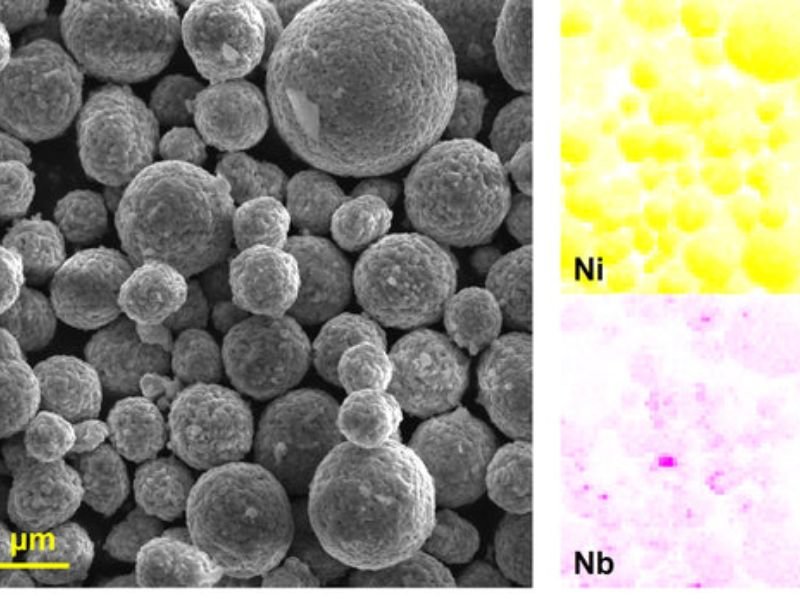
Modern battery development often requires more than selecting a high performance cathode. Researchers may need to modify particle surfaces to improve compatibility, stability, and overall cell behavior. This is where custom cathode coating services can become valuable. Surface coatings can help create a controlled interface between a cathode active material and the electrolyte, supporting research into advanced lithium ion and solid state battery designs. Ampcera focuses on advanced battery materials and solutions for next generation energy storage. Its work with coated cathode materials gives battery developers an option for evaluating surface engineered powders alongside solid electrolytes and other development services.
Why Cathode Surface Coating Matters?
The surface of a cathode is where important reactions can occur during battery operation. Incompatible reactions between the cathode and electrolyte may contribute to impedance growth, capacity loss, or other performance challenges.
A carefully designed coating can act as a protective layer on the cathode surface. The goal is not simply to add another material. The coating should be selected and applied so it supports the requirements of the complete battery system.
For researchers, custom cathode coating services can provide a practical way to investigate different surface treatments without developing every coating step internally.
What Are Custom Cathode Coating Services?
Custom cathode coating services are specialized material processing solutions in which a cathode powder is treated with a selected coating according to a research or development objective.
Depending on the project, researchers may consider factors such as:
- Cathode chemistry
- Coating composition
- Coating amount
- Particle size
- Target voltage range
- Solid electrolyte compatibility
- Desired electrochemical behavior
- Processing requirements
The exact coating approach should be matched to the material and intended application. A coating that works for one cathode chemistry may not provide the same results with another.
Why Customization Can Be Useful?
Standard commercial materials can be a good starting point, but some research programs require specific formulations. Custom processing can help teams compare different coating conditions while keeping other parts of the experiment controlled.
This can be particularly useful when a company is studying a new cathode chemistry or investigating how surface modifications affect battery performance.
Ampcera and Coated Cathode Materials
Ampcera develops advanced materials for solid state battery research and related energy storage applications. Its coated cathode portfolio includes lithium niobium oxide and lithium zirconium oxide coated materials based on NMC and other cathode chemistries.
These materials are designed for researchers studying the relationship between cathode surfaces and solid electrolytes. Surface engineering can be especially relevant in solid state cells because the cathode and electrolyte must maintain suitable physical and chemical contact.
Researchers exploring custom cathode coating services can use this type of material development as a reference point when defining their own coating objectives.
Coatings for NMC Cathodes
NMC cathodes containing nickel, manganese, and cobalt are widely studied for high energy battery applications. Their composition can be adjusted to achieve different balances between capacity, stability, and other performance characteristics.
High nickel cathodes can offer attractive energy potential, but their surface chemistry can also create additional challenges. Researchers therefore continue to investigate protective and functional coatings.
Ampcera offers lithium niobium oxide coated NMC materials as part of its cathode portfolio. Such materials can help researchers study how a modified cathode surface behaves within an advanced battery architecture.
The usefulness of custom cathode coating services depends on the research question. Testing should consider the coating, cathode, electrolyte, electrode formulation, and cell conditions together.
Important Factors in Coating Development
A successful coating is not determined by chemistry alone. The coating needs to be distributed appropriately across the active material surface, and its thickness can influence performance.
Researchers may evaluate:
- Surface coverage
- Coating uniformity
- Coating thickness
- Chemical stability
- Lithium ion transport
- Interface resistance
- Mechanical stability
- Cycling behavior
A coating that is too thick could create an unwanted transport barrier. A coating that is incomplete may provide limited surface protection. Careful characterization is therefore important during material development.
How Can Coatings Support Solid State Batteries?
Solid state batteries use solid electrolytes rather than conventional liquid electrolytes. This creates new opportunities but also places greater attention on solid interfaces.
The cathode composite may contain active cathode particles, solid electrolyte, and conductive additives. The quality of contact between these components can influence ionic and electronic transport.
Custom cathode coating services can support research by allowing teams to investigate how different surface treatments affect these interfaces.
A well designed coating may help manage unwanted reactions while maintaining pathways needed for lithium ion movement. However, performance depends on the complete formulation and processing method, so experimental validation remains essential.
Choosing a Cathode Coating Approach
Before starting a coating project, researchers should define what they want the surface treatment to accomplish. The objective could be improved interface stability, reduced side reactions, better compatibility with a solid electrolyte, or another measurable performance target.
A useful development process can include:
- Identify the cathode chemistry.
- Define the target battery application.
- Select a suitable coating chemistry.
- Establish the desired coating level.
- Evaluate particle and surface characteristics.
- Prepare coated material under controlled conditions.
- Test electrochemical performance.
- Compare results with an uncoated reference.
This approach makes it easier to understand whether the coating is providing a meaningful improvement.
Benefits of Working With a Specialized Provider
Developing coating processes internally can require specialized equipment, material expertise, and repeated optimization. For smaller research teams, outsourcing selected processing steps can reduce the need for additional infrastructure.
Custom processing can also help teams explore material concepts before investing in dedicated production equipment.
When selecting a provider, researchers should consider:
- Experience with battery materials
- Available coating chemistries
- Material scale options
- Process consistency
- Characterization capabilities
- Technical communication
- Ability to support development projects
A strong provider should understand that coating development is closely connected to the cathode and electrolyte system.
Ampcera’s Broader Battery Solutions
Cathode coatings are only one part of solid state battery development. Researchers may also need solid electrolytes, electrode processing, electrolyte films, and specialized testing equipment.
Ampcera provides a broader portfolio that includes sulfide solid electrolytes, coated cathodes, dry processing services, electrolyte film services, and battery research equipment. This range can help teams investigate multiple stages of a battery development workflow.
For organizations considering custom cathode coating services, access to complementary battery materials can make experimental planning more straightforward.
Frequently Asked Questions
What are custom cathode coating services?
Custom cathode coating services provide specialized surface treatment for cathode powders based on defined research or development requirements. The coating chemistry and processing conditions can be selected according to the intended application.
Why coat a cathode material?
A surface coating may help protect the cathode, manage reactions at the electrode electrolyte interface, or improve compatibility with another battery component. Results depend on the coating chemistry and complete cell design.
Are coated NMC materials useful for solid state batteries?
They can be useful for research into cathode electrolyte interfaces. However, researchers should evaluate the specific cathode, coating, electrolyte, electrode formulation, and operating conditions together.
Can coatings affect battery resistance?
Yes. A coating can influence interface resistance and lithium ion transport. This is why coating thickness, composition, uniformity, and compatibility need to be carefully evaluated.
Conclusion
Advanced battery development increasingly depends on controlling interfaces as well as improving bulk materials. Cathode surface engineering offers researchers a practical way to study how protective or functional layers can influence battery behavior.
For teams evaluating custom cathode coating services, the most important step is to connect the coating objective with the complete battery design. Cathode chemistry, coating composition, electrolyte compatibility, processing, and testing should all be considered together.
Ampcera’s experience with coated cathode materials and broader solid state battery solutions provides researchers with practical options for exploring advanced electrode designs. As battery technology continues to develop, carefully engineered cathode surfaces can remain an important part of building more stable and capable energy storage systems.