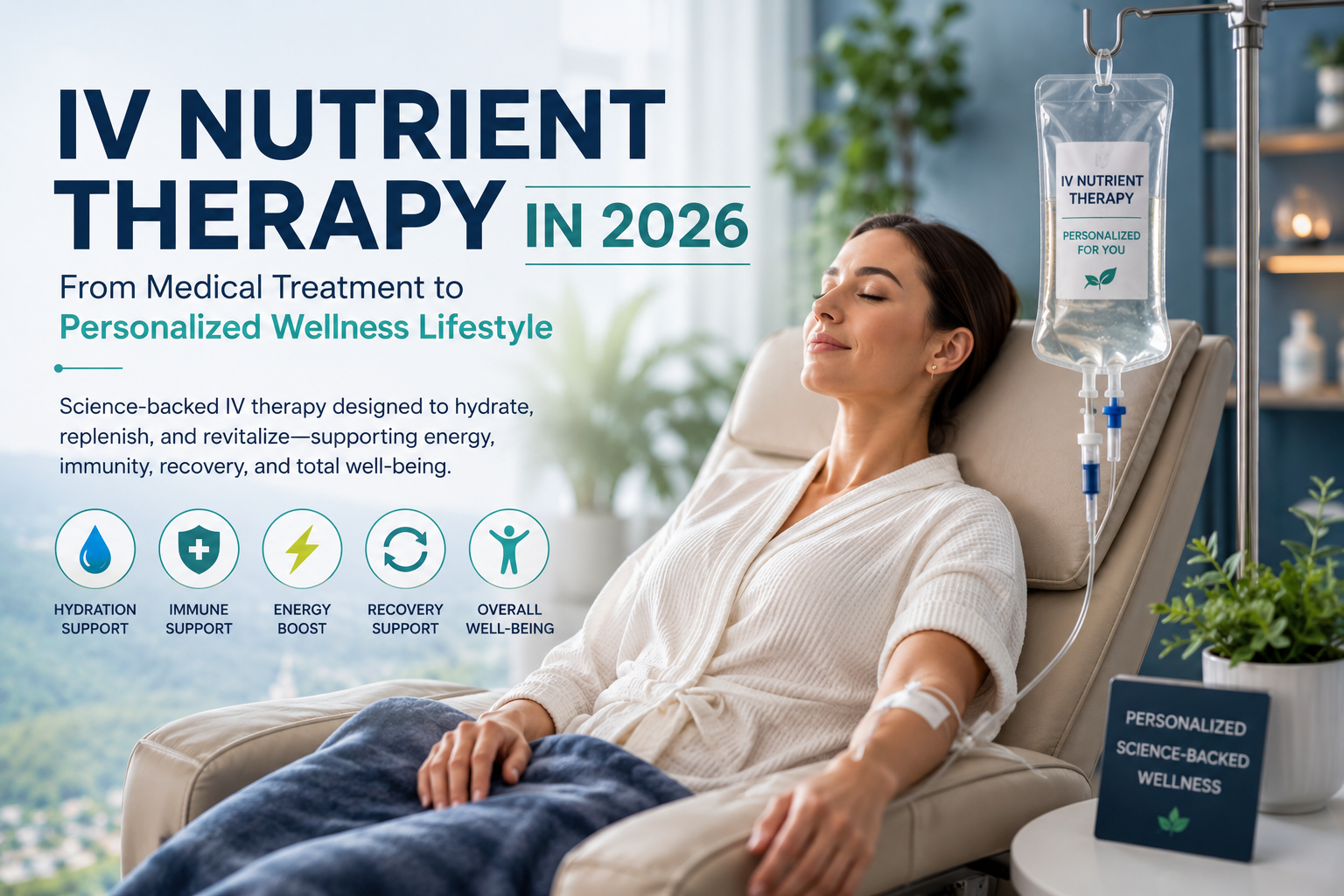
Intravenous nutrient therapy has moved from a treatment primarily associated with hospitals and clinical care into a broader wellness environment. In 2026, IV nutrient therapy is offered in medical practices, wellness centers, and specialized clinics for purposes ranging from fluid replacement and treatment of documented nutrient deficiencies to individualized wellness support.
The underlying technology is not new. Intravenous administration has long been an established medical method for delivering fluids, medications, electrolytes, and certain nutrients when oral administration is inadequate, inappropriate, or too slow for a particular clinical situation. What has changed is the range of settings in which intravenous infusions are now offered and the growing consumer interest in personalized formulations.
An important distinction remains necessary: the fact that nutrients can be delivered directly into the bloodstream does not automatically mean that an IV formulation provides greater overall health benefits than a balanced diet or an oral supplement. Scientific evidence varies considerably according to the nutrient, dose, route of administration, medical indication, and health status of the individual.
For this reason, modern IV nutrient therapy is best understood as a clinical intervention whose appropriateness depends on individualized assessment rather than as a universal wellness treatment.
What Is IV Nutrient Therapy?
IV nutrient therapy involves administering a sterile solution containing selected fluids, electrolytes, vitamins, minerals, amino acids, or other appropriate substances directly into a vein.
Unlike oral supplementation, intravenous administration bypasses the gastrointestinal tract. The administered substances enter systemic circulation directly, allowing clinicians to control the composition and amount delivered.
The approach can be particularly relevant when a person has a documented deficiency, impaired gastrointestinal absorption, significant fluid loss, or another medical circumstance in which intravenous administration is clinically appropriate.
In wellness settings, formulations can contain combinations of nutrients such as vitamin C, B vitamins, magnesium, amino acids, and other ingredients. LifeMed Institute, for example, describes customized IV formulations that may include glutathione, vitamin C, taurine, glutamine, arginine, lysine, magnesium, calcium chloride, and B vitamins.
However, an ingredient being included in an IV formulation does not establish that the formulation is clinically necessary for every individual. The evidence supporting an IV nutrient depends on its specific medical application.
How IV Nutrient Therapy Differs From Conventional IV Treatment
Traditional IV therapy is widely used in conventional healthcare for clearly defined medical purposes.
Examples include:
- Treatment of significant dehydration
- Administration of certain medications
- Replacement of fluids and electrolytes
- Delivery of nutrients when oral or enteral administration is inadequate
- Support during certain medical procedures or acute illnesses
- Management of specific deficiencies or malabsorption conditions
The expansion of IV therapy into wellness settings has introduced a broader category sometimes called IV vitamin therapy or wellness infusion therapy.
The distinction is important because the evidence supporting medically indicated intravenous treatment is not necessarily transferable to elective wellness infusions.
A 2023 review published in Drug and Therapeutics Bulletin found strong clinical justification for intravenous vitamins in certain serious medical conditions but noted a lack of high-quality evidence supporting high-dose vitamin infusions for general health benefits in individuals without a specific deficiency or medical condition.
Consequently, responsible IV therapy for wellness should not be marketed as a replacement for appropriate medical treatment, nutrition, exercise, sleep, or management of diagnosed disease.
Why IV Nutrient Therapy Has Become Popular
Several factors have contributed to the growth of IV nutrient services.
Direct Delivery Into the Circulation
The principal physiological difference between intravenous and oral administration is the route of delivery.
Oral nutrients must pass through the digestive system before entering circulation. Absorption can vary depending on the nutrient, gastrointestinal function, food intake, medication interactions, and other physiological factors.
An intravenous infusion bypasses the digestive tract and places the administered substance directly into systemic circulation.
That characteristic can be medically valuable when gastrointestinal absorption is impaired or when rapid delivery is required.
It does not, however, establish that intravenous administration is inherently superior for people who can adequately obtain and absorb nutrients through food or oral supplementation.
Increasing Interest in Personalized Wellness
Modern healthcare increasingly emphasizes individualized assessment rather than identical treatment plans for every patient.
This concept has also influenced wellness medicine. Instead of using one standardized infusion for every individual, some clinical practices evaluate health history, medications, symptoms, nutritional status, laboratory findings, and wellness goals before determining whether an infusion is appropriate.
This model is often described as personalized IV therapy.
The quality of personalization depends on the clinical assessment behind it. A customized IV bag is not necessarily evidence of personalized medicine if the formulation is selected without a relevant medical rationale.
Potential IV Nutrient Therapy Benefits
The potential benefits of an IV infusion depend on what is being administered and why.
Hydration and Fluid Replacement
One of the clearest applications of intravenous fluid therapy is fluid replacement when oral hydration is insufficient or impractical.
IV fluids can deliver water and electrolytes directly into the circulation. In appropriate clinical circumstances, this can help restore fluid balance.
This is fundamentally different from claiming that every healthy person requires IV hydration therapy. For individuals capable of maintaining adequate hydration through oral fluids, an IV infusion may provide little additional physiological benefit.
Correction of Specific Nutrient Deficiencies
Intravenous administration can be useful in selected situations involving nutrient deficiency, particularly when oral treatment is ineffective, poorly absorbed, or otherwise unsuitable.
Examples can include certain cases involving malabsorption or severe depletion.
The appropriate route depends on the underlying condition. Oral supplementation remains adequate for many nutritional deficiencies, while some situations require injectable or intravenous treatment.
Rapid Nutrient Delivery
An IV infusion provides direct systemic delivery.
This can be clinically useful when a nutrient needs to reach the bloodstream without relying on gastrointestinal absorption. The importance of this characteristic depends on the substance and the medical objective.
It should not automatically be interpreted as evidence that the body will use every intravenously administered nutrient more effectively than nutrients obtained through food or oral supplementation.
Support During Specific Medical Situations
Some IV nutrients have established or investigated medical applications under particular circumstances. The clinical evidence, dosing requirements, and safety considerations vary substantially among nutrients.
Vitamin C provides an example of why the route and dose matter. NIH’s Office of Dietary Supplements notes that intravenous administration can produce substantially higher blood concentrations of vitamin C than oral administration, but high-dose IV vitamin C remains a specialized medical intervention rather than a general-purpose wellness treatment.
IV Vitamin Therapy and the Evidence Behind Wellness Claims
The growing popularity of IV vitamin therapy has generated claims involving energy, immunity, mental clarity, athletic recovery, skin health, detoxification, and general vitality.
Some of these claims have plausible biological mechanisms, but biological plausibility is not equivalent to demonstrated clinical effectiveness.
Cleveland Clinic’s 2026 review of IV vitamin therapy notes that research supporting broad general-wellness benefits remains limited. It also distinguishes the use of IV therapy for specific medical conditions from elective wellness use.
This distinction is particularly important for evidence-based health communication.
A nutrient may play an essential role in normal physiology without supplementation producing an additional benefit in an individual who already has adequate levels.
For example, B vitamins participate in energy metabolism, but that does not mean an IV infusion of B vitamins will necessarily increase energy in an individual who is not deficient.
Similarly, vitamin C contributes to immune function, but evidence supporting high-dose IV vitamin C for general immune enhancement in healthy people is not sufficient to justify broad therapeutic claims.
IV Hydration Therapy: Where It Fits
IV hydration therapy is often discussed separately from nutrient infusions, although the two may be combined.
A basic IV hydration treatment may primarily involve intravenous fluid, while an IV nutrient infusion may include additional vitamins, minerals, or other compounds.
Hydration can be medically important during significant fluid loss. Situations such as severe vomiting, diarrhea, or certain acute illnesses may require professional evaluation and, in some circumstances, intravenous fluid replacement.
For mild dehydration in otherwise healthy individuals, oral fluids are generally a practical first-line approach.
The decision to use IV hydration should therefore be based on clinical need rather than convenience alone.
What Can Be Included in an IV Nutrient Infusion?
Formulations vary between providers and clinical circumstances.
Commonly discussed components include:
B Vitamins
B vitamins participate in energy metabolism, neurological function, red blood cell production, and other physiological processes.
However, the presence of adequate dietary B vitamins does not automatically mean that intravenous supplementation will produce an additional energy benefit.
Vitamin C
Vitamin C is an essential nutrient involved in collagen synthesis, antioxidant function, and immune physiology.
IV vitamin C can achieve much higher blood concentrations than oral vitamin C, but high-dose IV administration requires appropriate medical oversight because route, dose, kidney function, and other patient-specific factors can affect safety.
Magnesium
Magnesium is involved in hundreds of biochemical reactions, including those related to muscle and nerve function and energy metabolism.
IV magnesium has established medical uses in particular situations, but indiscriminate administration is not appropriate because excessive magnesium can cause adverse effects, especially in individuals with impaired kidney function.
Amino Acids
Certain IV formulations contain amino acids such as taurine, glutamine, arginine, or lysine.
Amino acids are fundamental components of proteins and participate in numerous metabolic pathways. Their inclusion in a wellness infusion should nevertheless be based on an appropriate clinical rationale rather than the assumption that intravenous delivery is automatically beneficial.
Glutathione
Glutathione is an endogenous antioxidant involved in cellular redox processes.
It has attracted significant attention in wellness settings, but claims surrounding IV glutathione should be distinguished from established clinical indications.
The FDA has previously raised concerns regarding the use of inappropriate glutathione ingredients in compounded sterile injectable preparations, illustrating why ingredient sourcing and sterile-compounding standards are critical.
Personalized IV Therapy: What Personalization Should Actually Mean
Personalization should extend beyond choosing a preferred flavor or selecting a named infusion package.
A clinically meaningful assessment can consider:
- Medical history
- Current symptoms
- Existing diagnoses
- Current prescription and nonprescription medications
- Dietary intake
- Hydration status
- Relevant laboratory findings
- Kidney and cardiovascular function
- Pregnancy status when applicable
- Known allergies or sensitivities
- Previous reactions to IV medications or nutrients
- The specific objective of treatment
Laboratory testing may be appropriate in selected circumstances, particularly when a suspected deficiency or metabolic issue needs clarification.
However, testing should also be clinically justified. Ordering large panels without a defined clinical question can generate unnecessary findings that may lead to inappropriate supplementation.
The strongest model is therefore assessment → indication → formulation → administration → monitoring, rather than simply selecting an infusion from a menu.
What Happens During an IV Nutrient Therapy Session?
A typical session begins with a clinical review and assessment of whether IV administration is appropriate.
If treatment proceeds, a trained healthcare professional inserts an IV catheter into a peripheral vein, commonly in the arm or hand. The selected solution is then administered over a period determined by the formulation, volume, infusion rate, and clinical circumstances.
During administration, the patient may be monitored for symptoms or adverse reactions.
After the infusion, the catheter is removed, and the insertion site is assessed.
The process may appear straightforward, but intravenous administration is an invasive medical procedure and requires appropriate infection-control practices.
The CDC recommends aseptic technique, sterile single-use needles and syringes, appropriate handling of medication containers, and patient-specific infusion equipment.
Safety Considerations in IV Nutrient Therapy
The fact that vitamins and minerals are naturally occurring substances does not eliminate the risks associated with intravenous administration.
Infection
Any procedure involving vascular access creates an opportunity for infection if proper aseptic technique is not followed.
The CDC identifies unsafe injection practices as a preventable source of transmission of bloodborne and other infections.
Bruising and Vein Irritation
Insertion of an IV catheter can result in temporary bruising, discomfort, irritation, or inflammation of the vein.
Extravasation
Extravasation occurs when an infused substance escapes from the vein into surrounding tissue. The consequences depend on the substance involved and can range from local irritation to significant tissue injury.
Fluid Overload
Rapid or excessive administration of intravenous fluids can create complications in susceptible individuals, particularly those with certain cardiac or renal conditions.
Nutrient Toxicity
Water-soluble vitamins are not automatically harmless at high doses simply because excess amounts can often be excreted.
The risk varies by nutrient, dose, route, kidney function, medication use, and individual health status.
High-dose intravenous administration can produce concentrations that would be difficult to achieve through ordinary oral intake, making dose selection particularly important.
Medication and Supplement Interactions
Nutrients can interact with medications or affect laboratory testing.
A complete medication and supplement history should therefore form part of an appropriate clinical assessment.
Who Should Exercise Particular Caution?
IV nutrient therapy may require additional evaluation for individuals with:
- Kidney disease
- Cardiovascular disease
- Uncontrolled hypertension
- Electrolyte abnormalities
- Pregnancy or breastfeeding
- Significant liver disease
- Known allergies
- Complex medication regimens
- Previous adverse reactions to IV treatments
- Conditions affecting fluid balance
Cleveland Clinic specifically recommends discussing IV vitamin therapy with a healthcare provider in the presence of conditions such as heart disease, high blood pressure, kidney disease, or pregnancy.
The appropriate precautions depend on the specific formulation and the individual’s medical history.
Why Sterile Preparation Matters
An IV infusion does not simply involve combining nutrients in a container. Because the material enters the bloodstream, sterility is a fundamental safety requirement.
The FDA has highlighted the danger of using ingredients unsuitable for sterile compounding. In one warning, the agency reported adverse events associated with injectable NAD+ products compounded using inappropriate food-grade ingredients and emphasized that ingredients intended for sterile drugs must meet appropriate requirements.
This issue demonstrates why consumers should consider more than the ingredient list.
Important questions include:
- Who prepares the infusion?
- Are sterile compounding standards followed?
- Are appropriate pharmaceutical-grade ingredients used?
- Is the formulation prepared for a specific patient?
- Is there appropriate clinical oversight?
- Are single-use supplies used correctly?
- Are adverse reactions monitored and managed?
These considerations are particularly relevant as IV services expand beyond traditional hospital environments.
IV Nutrient Therapy and the Modern Wellness Lifestyle
The growing role of IV nutrient therapy in wellness culture reflects a broader shift toward preventive health and personalized care.
However, wellness should not be reduced to a series of procedures.
Foundational health behaviors remain central, including:
- Balanced nutrition
- Adequate protein and micronutrient intake
- Regular physical activity
- Resistance and cardiovascular exercise
- Adequate sleep
- Stress management
- Appropriate hydration
- Preventive medical care
- Management of chronic conditions
IV therapy can potentially complement these measures in selected circumstances, but it cannot compensate for chronically inadequate nutrition, insufficient sleep, physical inactivity, or unmanaged medical conditions.
Cleveland Clinic similarly emphasizes that IV vitamin therapy should not replace a healthy diet, appropriate medical treatment, and foundational lifestyle practices.
IV Therapy Versus Oral Supplements
One of the most common misconceptions is that intravenous administration is always superior to oral supplementation.
The correct comparison depends on the clinical situation.
Oral supplementation may be appropriate when:
- The individual can absorb nutrients normally.
- A deficiency is mild or can be corrected orally.
- The nutrient has good oral bioavailability.
- There is no need for rapid intravenous administration.
- Long-term maintenance is the primary objective.
IV administration may be considered when:
- Rapid fluid replacement is necessary.
- Gastrointestinal absorption is impaired.
- Oral administration is not feasible.
- A specific medical indication supports intravenous treatment.
- A clinician determines that the intravenous route offers a meaningful clinical advantage.
The route of administration should therefore be selected according to clinical need rather than the assumption that faster delivery automatically produces better health outcomes.
Common Misconceptions About IV Nutrient Therapy
Misconception 1: IV Nutrients Are Always Better Absorbed
IV administration delivers the administered substance directly into circulation, but “better absorption” is an oversimplification because IV administration bypasses absorption rather than improving gastrointestinal absorption.
Whether this produces a meaningful clinical advantage depends on the nutrient and treatment objective.
Misconception 2: IV Therapy Detoxifies the Body
The body already has sophisticated systems for processing and eliminating metabolic waste, particularly through the liver, kidneys, lungs, gastrointestinal tract, and skin.
Broad claims that an IV infusion “detoxes” the body should therefore be treated cautiously unless a specific medical mechanism and evidence support the claim.
Misconception 3: More Vitamins Produce Better Results
Higher doses do not automatically produce greater benefits.
Some nutrients have narrow therapeutic considerations, and excessive intake can cause adverse effects.
Misconception 4: Wellness IV Therapy Is Risk-Free
It is not.
IV therapy involves vascular access and exposure to concentrated substances. Infection, vein irritation, dosing errors, allergic reactions, fluid-related complications, and nutrient toxicity are among the potential risks.
Misconception 5: Everyone Needs Routine IV Therapy
There is insufficient evidence to conclude that healthy individuals universally require routine IV vitamin infusions.
The 2023 review of intravenous vitamin injections found insufficient high-quality evidence that high-dose vitamin infusions provide general health benefits in people without a specific deficiency or medical condition.
Best Practices for Choosing an IV Therapy Provider
A medically responsible provider should demonstrate more than an attractive menu of infusion options.
Appropriate Clinical Assessment
Treatment should begin with a health assessment rather than an automatic recommendation.
Transparent Formulation
Patients should be able to understand what an infusion contains and why each component is being used.
Qualified Medical Oversight
The clinical team should have appropriate training and authority to assess patients, administer treatment, recognize complications, and respond to adverse events.
Infection-Control Standards
The facility should follow recognized aseptic and injection-safety practices.
The CDC recommends sterile single-use needles and syringes, appropriate medication preparation areas, and patient-specific infusion equipment.
Appropriate Ingredient Sourcing
Sterile injectable products require appropriate pharmaceutical handling. FDA warnings regarding unsuitable ingredients demonstrate the importance of proper sourcing and preparation.
Follow-Up
A personalized treatment plan should include a method for assessing whether the intervention is producing a meaningful and appropriate outcome.
The Role of IV Nutrient Therapy in Personalized Preventive Care
Preventive medicine increasingly emphasizes identifying individual risk factors before they become significant health problems.
IV therapy can be one component of this broader model when a specific clinical rationale exists.
For example, a provider may identify nutritional concerns through medical history, dietary assessment, or laboratory evaluation and then determine whether oral supplementation, dietary intervention, injectable therapy, or IV administration is most appropriate.
This approach avoids treating the infusion itself as the objective.
The objective is the underlying health outcome.
For individuals exploring a medically supervised approach to nutrient infusion, IV nutrient therapy can be evaluated as part of a broader wellness plan that considers individual health needs, treatment goals, and appropriate clinical oversight.
Frequently Asked Questions
1. What is IV nutrient therapy?
IV nutrient therapy is the intravenous administration of fluids containing selected vitamins, minerals, electrolytes, amino acids, or other appropriate substances. The solution enters the bloodstream directly through a vein. Its clinical value depends on the specific formulation, dose, indication, and health status of the individual.
2. What are the potential IV nutrient therapy benefits?
Potential benefits depend on the treatment objective. In medically appropriate situations, intravenous therapy can provide fluid replacement, deliver certain nutrients when oral administration is inadequate, and correct selected deficiencies. Evidence for broad wellness claims such as improved energy or immunity in otherwise healthy individuals remains limited.
3. Is IV vitamin therapy better than taking vitamins orally?
Not necessarily. IV administration bypasses the gastrointestinal tract and can be advantageous when absorption is impaired or rapid delivery is medically necessary. For many nutritional needs, dietary intake or oral supplementation may be sufficient. The appropriate route depends on the individual and the specific nutrient.
4. How does IV hydration therapy work?
IV hydration therapy introduces sterile fluid directly into a vein. It can be useful when significant fluid replacement is medically necessary or oral hydration is inadequate. For routine hydration in healthy individuals who can drink normally, oral fluids are generally sufficient.
5. How often should IV nutrient therapy be received?
There is no universal schedule that applies to everyone. Frequency should depend on the medical indication, formulation, response, laboratory findings when relevant, and clinical judgment. Routine infusions without a defined rationale should not be assumed to be necessary.
6. Is personalized IV therapy actually personalized?
It can be, provided the treatment is based on meaningful individual assessment. Personalization should involve relevant medical history, medications, health conditions, nutritional factors, and, when appropriate, laboratory information. Simply choosing different ingredients from a menu does not necessarily constitute clinically personalized care.
7. Can IV therapy replace a healthy diet?
No. IV therapy does not replace the nutritional complexity of a balanced diet. Food provides macronutrients, micronutrients, fiber, phytochemicals, and other components that cannot be replicated by a standard IV formulation. IV treatment should be considered a targeted intervention rather than a substitute for healthy nutrition.
8. Are there risks associated with IV nutrient therapy?
Yes. Potential risks include pain or bruising at the insertion site, vein irritation, infection, extravasation, allergic reactions, fluid-related complications, medication interactions, and adverse effects from excessive doses of certain nutrients. The risk profile depends on the specific formulation and individual health status.
9. Who may need additional evaluation before receiving IV therapy?
Individuals with kidney disease, cardiovascular disease, uncontrolled blood pressure, pregnancy, significant electrolyte abnormalities, complex medication regimens, or previous reactions to IV treatments may require additional evaluation. The specific precautions depend on the proposed formulation.
10. Does IV vitamin therapy boost immunity?
Some nutrients are essential for normal immune function, but that does not establish that IV administration enhances immunity in healthy individuals beyond adequate nutritional status. Evidence for broad immune-boosting claims associated with elective IV vitamin therapy remains limited.
11. Can IV therapy provide faster results than oral supplements?
Intravenous administration places the administered substance directly into circulation, so it bypasses gastrointestinal absorption. However, faster delivery does not necessarily mean better clinical outcomes. The relevance of rapid delivery depends on the specific nutrient and medical objective.
12. What should patients look for in an IV therapy provider?
Important considerations include qualified clinical oversight, appropriate patient assessment, transparent ingredient and dosing information, sterile preparation and administration, infection-control procedures, appropriate ingredient sourcing, and a process for monitoring adverse reactions and treatment outcomes.
Conclusion
IV nutrient therapy represents the intersection of established intravenous medicine and the expanding field of personalized wellness. The intravenous route offers a direct method of delivering fluids and selected nutrients into systemic circulation, making it clinically valuable in specific circumstances involving hydration, nutrient deficiencies, impaired absorption, or other appropriate medical indications.
At the same time, the growing availability of elective IV vitamin therapy requires careful distinction between evidence-supported medical applications and broader wellness claims. Research does not currently establish that high-dose IV nutrient infusions are universally beneficial for healthy individuals who already obtain adequate nutrients through diet.
The most responsible approach is therefore individualized rather than routine. Clinical assessment, appropriate formulation, evidence-based dosing, sterile preparation, qualified administration, and follow-up are essential components of responsible IV care.
In 2026, the evolution of IV therapy is less about turning an infusion into a universal wellness solution and more about integrating intravenous treatment into individualized healthcare when a clear clinical or wellness rationale exists. When appropriately selected and medically supervised, IV nutrient therapy can serve as one component of a broader strategy that includes nutrition, physical activity, preventive care, sleep, hydration, and management of individual health needs.