
Introduction
Ask any finance grad who’s just started working with Oracle Fusion what confuses them most, and it’s rarely the software itself. It’s the fact that nobody warned them the screen is just the tip of the iceberg, something Soft Online Training often points out early on. Behind every field and button sits a chain of people, approvals, and decisions miss that chain, and you’ll spend your first year clicking buttons without knowing why. That’s the gap people notice once they look into Oracle Fusion Financials Training in Pune. The tool isn’t hard; the problem is being taught where to click before why it matters.
Why Cash Forecasts Go Wrong
Here’s a scenario most people in AP have lived through. The treasury team’s cash forecast is off not wildly, but enough to cause a headache. Nine times out of ten, it’s not one big mistake. It’s a handful of small disconnects: an invoice due date that didn’t match the supplier’s actual terms, an approval that sat in someone’s queue two days longer than expected, a payment batch that ran a day later than planned.
The tempting fix is to just go in, change the date, and move on. And sure, that solves today’s problem. But it doesn’t tell you why it happened, and it definitely won’t stop it from happening again next month. The more useful question is: who set this payment term in the first place? Who approved the invoice, and when? When was the batch actually scheduled to run, and did anyone tell the treasury about the delay?
Once you start asking those questions instead of just patching the symptom, something shifts. You stop thinking of Oracle Fusion as a system you operate and start thinking of it as a record of decisions other people made decisions you now need to trace. That mental shift is honestly the whole point of good Oracle Fusion Financials Training in Pune; it’s less about memorizing screens and more about learning to read a trail of evidence.
Understand the Process Before You Touch a Setting
Before anyone changes a configuration, it helps to sit with the bigger picture for a bit. How does a revenue schedule interact with tax treatment? How does that, in turn, affect whether the next team down the line can actually trust the numbers they’re seeing? These aren’t rhetorical questions, they’re the kind of thing worth jotting down as you go, almost like a running diary of “here’s what connects to what.”
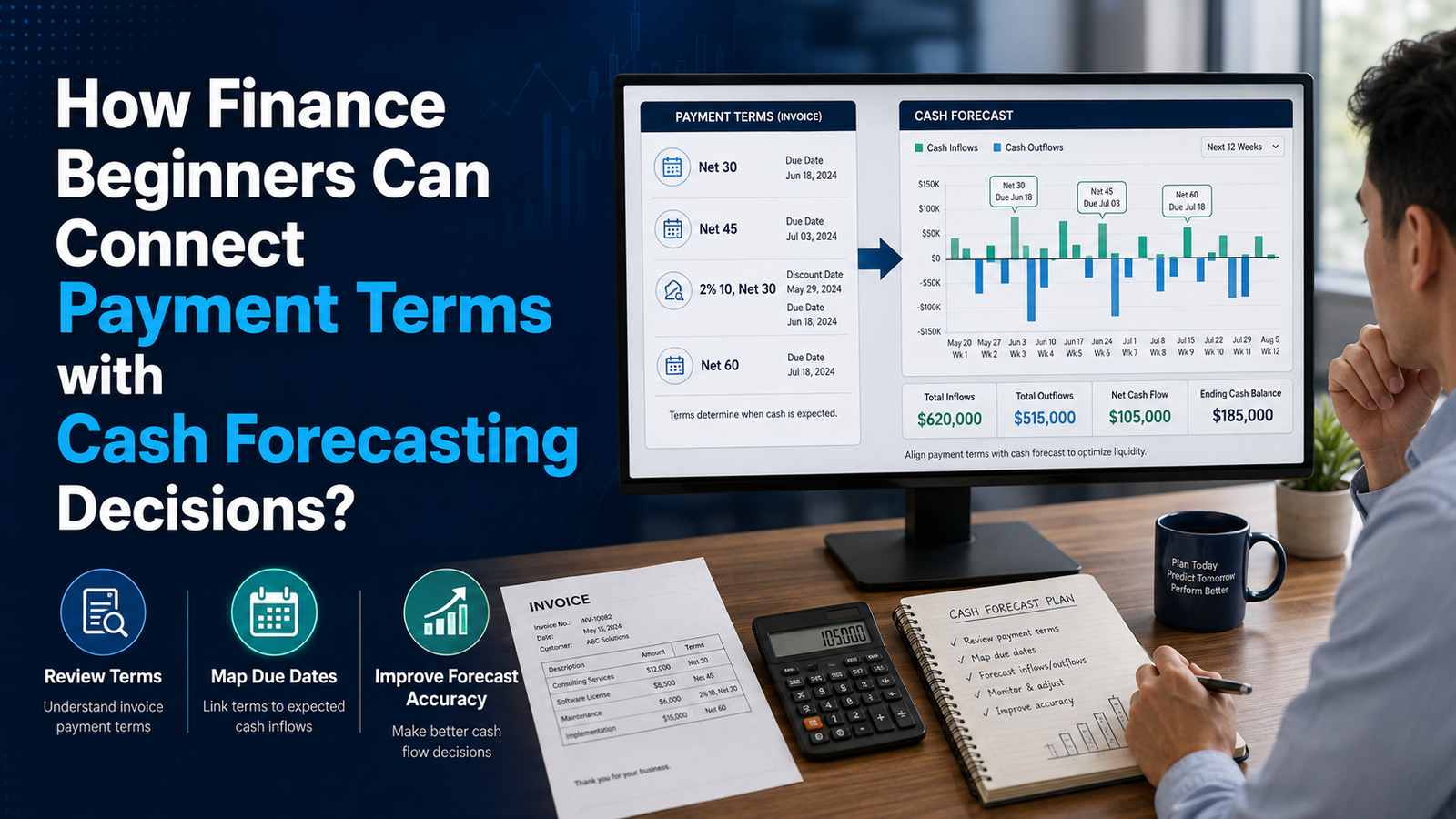
In a good training session, this plays out as a conversation, not a lecture. Someone brings up a payment date rule, someone else points out how it affects the cash forecast, and together the group traces it back to a subledger journal entry that nobody had thought to check. Nobody’s hiding behind jargon. It’s just people working through a real business rule out loud. That kind of back-and-forth is what makes payment terms, due dates, supplier priorities, forecast timing, and validation feel like connected pieces of one story instead of a glossary of unrelated ERP terms you memorized for an exam.
The same logic holds for approvals. It’s worth asking how an approval hierarchy actually lines up with the roles people hold, and how something like a receipt application ties back to a control account rather than just guessing based on what a screen label seems to suggest. Honestly, this is where a lot of self-taught learners get stuck, and it’s one reason structured Oracle Fusion Financials Training in Pune programs spend so much time on ownership and sequencing instead of jumping straight into “click here, then here.”
A Few Checks Worth Building Into Habit
Once you’ve got the process context, the next step is building habits you can actually repeat on the job. A few worth mentioning:
- Trace how working capital numbers connect to the accounting events behind them, and see how receipt application lines up against the ledger calendar. Turn what you notice into a specific question, not a vague worry.
- Compare how early payment discounts play against ledger close dates, or how a delayed batch quietly shifts tax treatment in the forecast.
- Follow an approval trail through to a reconciliation note and see whether supplier priorities were respected before jumping to blame a report or a workflow for something that actually started upstream.
- Separate validation problems from approval problems. They get lumped together constantly, and they’re rarely the same issue.
None of this is glamorous work. It’s closer to detective work than anything you’d put on a slide. But it’s exactly the kind of exercise that turns classroom knowledge into something you can actually use during an implementation, and it’s usually where good training including most solid Oracle Fusion Financials Training in Pune courses spends the bulk of its hands-on time.
Don’t Skip the Documentation
It’s tempting, once you’re deep into scenarios and workshops, to treat official documentation as an afterthought. Don’t. Oracle’s own Financials documentation gives you a stable point of reference, a way to check whether what you’re seeing in the system matches what it’s actually supposed to do. It won’t replace hands-on practice, but it saves a lot of arguing later about whether a problem is a setup issue, a user mistake, a security gap, or something baked into the technical design.
If you’re going through Oracle Fusion Financials Training in Pune, get in the habit of cross-checking what you learn in class against the documentation. It’s a small habit, but it pays off. It reminds you that the software’s behavior is documented and predictable, even when the business process wrapped around it is anything but.
What Actually Makes Training Worth It
Here’s the honest truth about ERP training: a certificate on its own doesn’t mean much. What matters is whether your training was built around real scenarios or just sales language about job placement and “guaranteed” outcomes. The thing worth chasing isn’t the piece of paper, it’s the ability to look at a mess of evidence, ask the right question, and explain clearly why something happened the way it did.
That skill shows up in more places than you’d expect. It’s the difference in an interview between someone who can explain why a process works and someone who only knows where to click. It shows up in support work, where fixing something quickly depends on understanding who owns what. It shows up in implementation testing, where catching a misconfigured payment term before go-live saves everyone weeks of cleanup later. And it shows up in the day-to-day back-and-forth between business teams and technical teams, who are often talking about the exact same transaction using completely different vocabulary.
The Takeaway
If there’s one thing worth remembering, it’s this: learn the process before the feature, the evidence before the opinion, and who owns what before you go looking for a workaround. You don’t need to master every configuration option in your first month. What actually helps is building a repeatable way to connect what’s happening in Oracle Fusion to real decisions, clean data, and controls people can trust.
Build that foundation through practice, through documentation, and through training that’s actually grounded in real scenarios like Oracle Fusion Financials Training in Pune and everything you learn after that comes faster, and sticks better.