
Introduction
Most people meet Oracle Cloud Financials through a screen, a form to fill in, a report to run, a journal to approve. But according to Tech Leads IT, the screen is only the visible layer of a much deeper process, where data moves between people, approvals, controls, and evidence, and that movement, not the interface, determines whether a project’s numbers can be trusted. Anyone working through Oracle Cloud Financials Online Training learns this quickly: the value isn’t memorizing menu paths, it’s tracing how a transaction was allocated, who owned that decision, and why the report looks the way it does a skill Oracle Cloud Financials Training Online is built to teach.
Why the Fastest Fix Is Rarely the Right One
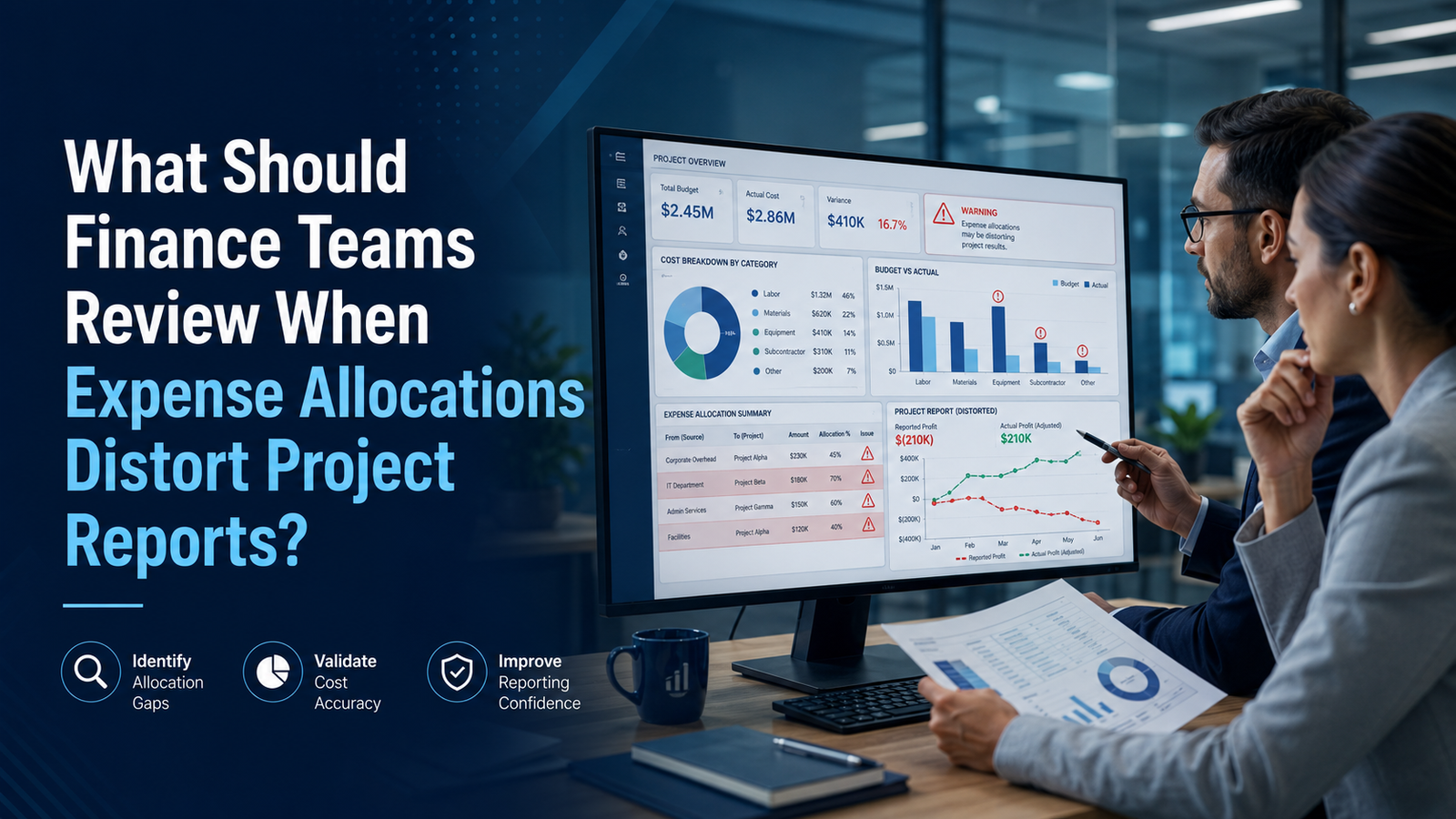
When a project margin looks distorted, the instinctive response is to go looking for a setting to change a percentage to adjust, a segment to remap, a rule to disable. That instinct treats the problem as a navigation issue: find the screen, fix the value, move on. It’s fast, but it’s frequently wrong, because it skips the harder and more durable questions:
- Ownership: Who actually owns this allocation rule, and did they authorize this run?
- Timing: Was this expense posted before or after the period it should affect?
- Access: Who has the ability to change allocation basis, and is that access appropriately restricted?
- Downstream impact: Which reports, ledgers, and stakeholders are affected once this allocation runs?
Anyone who has gone through structured Oracle Cloud Financials Training Online will recognize this pattern immediately. The courseware is built around exactly this kind of tracing exercise, because the skill that actually transfers to a job isn’t “click here to fix it” it’s the discipline of following a number back to its source before touching anything.
Process Context: How Distortion Actually Enters a Report
A useful way to think about this is as a chain of custody for a number. A project margin figure is the end of a long chain that starts with a raw transaction a shared expense, a payroll cost, an overhead charge and passes through several stages before it lands in a report:
- Allocation rules decide how a shared cost gets divided across cost centers or projects.
- Cost center ownership determines who is accountable for reviewing and approving that division.
- Project coding attaches the allocated amount to a specific task, expenditure type, or funding source.
- Journal review checks whether the resulting subledger entry makes sense before it posts to the general ledger.
- Reporting aggregates all of this into the margin, variance, or performance report a stakeholder actually reads.
- Audit explanation is the final test: can someone explain, in plain business language, why this number is what it is?
When a report looks wrong, the mistake could be sitting at any one of these six stages, and skipping straight to “reporting” without checking the earlier links is how teams end up patching symptoms instead of causes. A support analyst who has worked through Oracle Cloud Financials Online Training learns to compare the posted transaction against the audit trail first, separate the allocation logic from the coding logic, and only then look at whether the report itself is summarizing things correctly.
A Practical Review Sequence
For finance teams facing a distorted project report, a repeatable review sequence works better than an ad hoc search for the “wrong number.” Here is a sequence that mirrors how experienced project accountants actually work through these issues:
Step 1: Confirm the reporting variance is real. Before assuming the allocation is broken, reconcile the reported figure against the underlying subledger journals and the general ledger balance. Sometimes what looks like a distortion is a timing difference between when a cost was incurred and when it was recognized a legitimate accrual or cutoff issue rather than a broken rule.
Step 2: Separate allocation from coding. Allocation rules decide how much of a shared cost lands on a project. Project coding decides where that amount is classified once it arrives. These are two different failure points, and conflating them wastes review time. Check the allocation basis first: is it using headcount, revenue, square footage, or another driver, and is that driver still accurate? Then check whether the resulting amount was coded to the correct task or expenditure category.
Step 3: Trace ownership and timing together. Every allocation rule should have a named owner responsible for reviewing it periodically. If a rule hasn’t been reviewed since a reorganization, a new project phase, or a change in shared-service costs, it is a prime suspect. Cross-check the posting date of the allocation against the ledger calendar to rule out a period-close timing mismatch.
Step 4: Review the approval trail. Look at who approved the allocation batch and the journal that resulted from it. A missing or rubber-stamp approval is often a bigger red flag than the number itself, because it means the control that should have caught the issue never actually functioned.
Step 5: Reconcile against expenses and receipts. Where the distortion touches revenue-side accounts, check receipt application and revenue schedules against the allocated expense. Margin problems frequently show up as an expense issue when the actual mismatch is on the revenue recognition side; the two need to be checked together, not separately.
Step 6: Document the explanation, not just the fix. Once the cause is found, the review isn’t finished until someone can explain it in plain terms: what happened, why the control didn’t catch it earlier, and what should change so it doesn’t recur. This explanation is what an auditor, a project sponsor, or a new team member will actually rely on later.
Why Documentation and Structured Training Both Matter
Official Oracle Financials documentation is essential here it gives a stable, vendor-defined description of how allocation engines, subledger accounting, and project costing are supposed to behave. But documentation alone rarely resolves a live business dispute about whether an issue belongs to configuration, user behavior, process ownership, security, or design. That’s where structured practice earns its value.
This is the gap that well-designed Oracle Cloud Financials Online Training is meant to close. Rather than teaching configuration screens in isolation, good training ties each feature to a realistic scenario: a distorted margin report, a currency conversion mismatch, an unexplained variance at period close, a control account that doesn’t tie out. Learners who go through Oracle Cloud Financials Training Online in this scenario-driven way come away able to do more than operate the software; they can read financial evidence, ask precise diagnostic questions, and defend a conclusion to a skeptical stakeholder or auditor.
That capability is what actually gets tested in interviews, in support tickets, in implementation testing, and in day-to-day collaboration between finance and technical teams. Anyone can learn where a button is. Fewer people can look at a distorted project report, trace it calmly through allocation, ownership, coding, and approval, and land on an explanation that holds up under scrutiny.
Building the Right Habit Early
The core habit worth building and the one that any credible finance-focused course should reinforce is to study the process before the feature, the evidence before the opinion, and the ownership before the workaround. A beginner doesn’t need to master every configuration option in Oracle Cloud Financials on day one. What they need is a repeatable method for connecting system activity to real business decisions: who set the rule, who was supposed to review it, what timing assumption it depends on, and what report ultimately depends on it being right.
Finance teams that build this habit stop treating distorted project reports as mysteries to be patched and start treating them as evidence trails to be followed. That shift from reactive fixing to structured tracing is the real return on investment from any serious Oracle Cloud Financials Online Training or Oracle Cloud Financials Training Online program, and it’s the skill that makes every future report easier to trust.