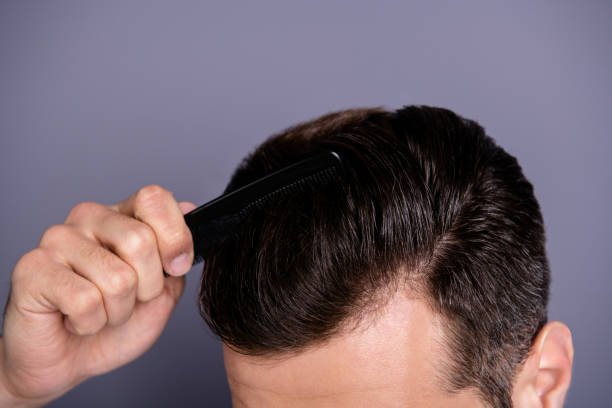
Thinning at the temples can gradually change the shape of the hairline and make the forehead appear broader. Because the temple region plays an important role in framing the face, even modest hair loss can noticeably affect overall appearance. Follicular Unit Extraction, commonly known as FUE, is a modern hair restoration technique that transfers individual follicular units from a suitable donor area into areas affected by hair loss. For individuals considering FUE Hair Transplant in Abu Dhabi, understanding how FUE can restore thinning temple areas, how natural growth patterns are recreated, and what influences the final result can help set realistic expectations.
Understanding Temple Hair Thinning
The temples are located at the outer edges of the frontal hairline and naturally have a distinctive growth pattern. Hair in this region is often finer and grows at a different angle from the hair farther behind the frontal scalp.
Temple thinning can occur gradually as part of a receding hairline or broader pattern of hair loss. In some individuals, the corners become noticeably recessed while the central frontal hairline remains relatively intact. This can create a triangular or irregular appearance around the forehead.
Because temple loss can develop at different rates on each side, asymmetry is also possible. Restoration therefore requires attention to both the shape and balance of the temple areas.
How FUE Can Restore the Temples
FUE involves extracting individual follicular units from a suitable donor region and transplanting them into carefully prepared recipient sites. For temple restoration, the technique allows follicles to be placed precisely within areas where density has decreased.
The objective is to recreate coverage while maintaining the natural transition between the temples, frontal hairline, and surrounding scalp. Since individual grafts can be positioned separately, FUE provides flexibility when treating relatively small or precisely defined areas.
The number of grafts required depends on the extent of temple recession, existing hair density, donor availability, and the desired level of improvement.
Why Temple Restoration Requires Precision
The temples are highly visible and have a delicate appearance. Hair in this region often grows forward or downward at relatively shallow angles, while the surrounding frontal hair may have a different direction.
If transplanted follicles do not follow these natural patterns, the restored area may appear inconsistent with the surrounding hair. FUE allows recipient sites to be prepared according to the direction and angle required for the temple region.
Precise placement is particularly important at the leading edge because even small differences in angle or spacing can influence how natural the restoration appears.
Can FUE Restore Receding Temple Corners?
Yes, FUE can potentially restore recessed temple corners in appropriately selected individuals. Individual follicular units can be placed into the areas where the natural temple contour has become less defined.
The objective is usually not to create an extremely low or dense temple line. Instead, restoration focuses on rebuilding a balanced contour that complements the existing frontal hairline.
A carefully designed temple can help create a smoother transition between the forehead and hair-bearing scalp while maintaining an appearance that is appropriate for the individual’s facial proportions.
The Importance of a Natural Temple Shape
Natural temples vary considerably from person to person. Some individuals have relatively straight frontal hairlines with subtle temple angles, while others naturally have more pronounced recession.
A successful restoration should account for these individual differences. Recreating an identical temple shape for everyone would not necessarily produce a natural appearance.
FUE allows the placement of individual grafts to follow a customized design. The transition should generally be gradual rather than creating a sharply defined border between the forehead and transplanted hair.
Can FUE Increase Temple Hair Density?
FUE can increase visual density in selected thinning temple areas by adding suitable follicular units. However, temple restoration is often more about improving the contour and reducing visible scalp than achieving maximum density.
Because temple hair tends to be finer, carefully distributing grafts can create a soft appearance. Placing follicles too densely or creating an abrupt edge may make the restored area look less natural.
The ideal density depends on the individual’s existing hair characteristics and the amount of donor hair available.
Donor Hair and Temple Restoration
The donor area provides the follicles used during FUE, making its quality an important factor in temple restoration. Hair thickness, texture, density, and follicular characteristics can influence how well the transplanted hair complements the existing temples.
Fine individual grafts can be particularly useful when creating a soft frontal or temple transition. Thicker grafts may contribute more strongly to density behind the leading edge.
Since donor follicles are limited, strategic selection is important. The objective is to achieve meaningful temple improvement without unnecessarily using donor resources that may be needed elsewhere.
Can FUE Blend With Existing Temple Hair?
Yes. When some native temple hair remains, transplanted follicles can potentially be placed among existing hairs to increase visual density and create a smoother transition.
Blending depends on matching the direction, angle, spacing, and characteristics of the surrounding hair. The result should not appear as a separate transplanted section but rather as a continuation of the individual’s existing growth pattern.
The stability of native temple hair is also relevant because ongoing recession could change the relationship between transplanted and existing follicles over time.
What If Temple Recession Is Still Progressing?
Temple recession can continue depending on the underlying hair-loss pattern. This makes long-term planning important when considering restoration.
If native hair continues to recede while transplanted follicles remain, the restored area may eventually look different from the original design. A thoughtful approach should therefore consider possible future changes rather than focusing only on the current shape of the temples.
Preserving an appropriate amount of donor hair can also be important for maintaining flexibility as the hair pattern develops.
Can FUE Correct Uneven Temples?
Yes, FUE can potentially improve asymmetry between the two temple regions. It is common for natural hairlines to have some degree of variation, but noticeable differences in recession may affect the overall balance of the face.
Because FUE involves individual graft placement, selected areas can be treated according to their specific needs. The objective is not necessarily to make both temples mathematically identical but to create a visually balanced appearance.
Subtle differences can still look natural because perfectly symmetrical hairlines are uncommon.
How Long Does Temple Restoration Take?
Temple restoration develops gradually. The transplanted follicles need time to establish their natural growth cycle before mature hair becomes visible.
New growth generally becomes increasingly noticeable over several months. As the follicles mature, the transplanted hair can begin to blend more naturally with existing temple and frontal hair.
The timeline varies among individuals and depends on factors such as the number of grafts transplanted, the characteristics of the recipient area, and individual hair-growth patterns.
Who May Be Suitable for Temple FUE?
FUE may be considered for people with established temple thinning or recession who have sufficient suitable donor follicles and realistic expectations.
The cause and stability of hair loss are important considerations. People with rapidly changing hair patterns may require more careful long-term planning, while those with stable localized recession may have a clearer restoration target.
A personalized assessment can help determine whether the available donor hair can support the desired temple reconstruction.
Setting Realistic Expectations
FUE can improve thinning temples, but it cannot create an unlimited amount of new hair. The final result depends on the available donor supply, size of the affected region, hair characteristics, and restoration design.
Temple restoration is often most successful when the objective is to create a natural contour rather than dramatically alter the entire forehead shape. A modest, well-integrated improvement can have a meaningful effect on facial framing.
Understanding the limitations of donor hair and the gradual nature of transplanted growth can help establish realistic expectations.
Final Thoughts
So, can FUE Hair Transplant restore thinning temple areas? Yes, FUE can be an effective option for selected individuals experiencing temple recession or localized thinning. Its ability to transplant individual follicular units allows precise placement that can follow the delicate direction and angle of natural temple hair.
The final appearance depends on donor hair quality, existing native hair, temple shape, graft placement, density, and the stability of the underlying hair-loss pattern. With thoughtful planning, FUE can help rebuild a softer, more balanced temple contour and improve the way the hairline frames the face.
FAQs
Can FUE restore thinning temples?
Yes. FUE can add individual follicular units to selected areas of temple thinning and may improve both density and the overall contour of the frontal hairline.
Can FUE restore completely recessed temples?
FUE can potentially restore coverage in areas where temple hair has been permanently lost, provided sufficient suitable donor follicles are available. The extent of restoration depends on individual circumstances.
Does temple hair transplantation look natural?
It can. Natural-looking temple restoration depends on placing grafts at appropriate angles, following natural hair direction, and creating a gradual transition rather than a sharp boundary.
Can FUE correct uneven temple recession?
Yes. Individual graft placement allows selected areas to be addressed separately, which can help improve the visual balance between the two sides of the frontal hairline.
How long does it take to see temple hair growth after FUE?
Visible growth develops gradually over several months. The transplanted follicles mature progressively and can increasingly blend with the surrounding frontal and temple hair.