Introduction
Most learners meet Oracle Fusion Financials through a screen, a receipts workbench, a customer balance page, and a revenue schedule report. But the screen is only the surface, and Tech Leads IT teaches that surface-level clicking is never the real skill. What a receivables analyst, controller, or finance support professional actually needs is understanding how people, data, approvals, controls, and evidence move through the underlying business process. Anyone pursuing Oracle Cloud Financials Online Training should treat the application as the last step in a longer reasoning chain, not the first and that’s the same judgment-first approach Tech Leads IT builds into its Oracle Cloud Financials Training Online programs.
The Core Operating Problem
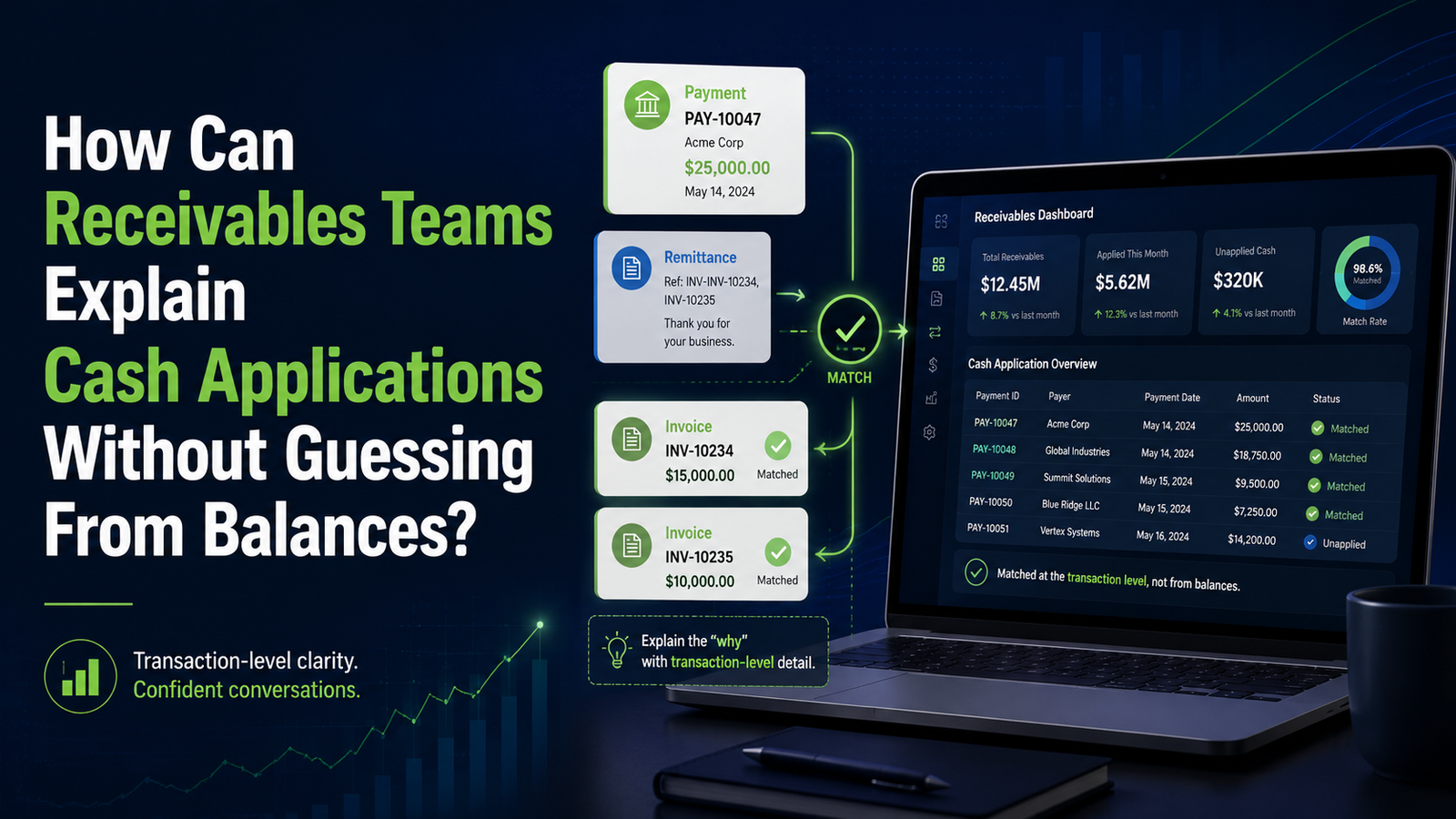
Here’s the situation almost every receivables team eventually faces: cash has been received, but the customer account, the revenue view, and the general ledger balance all tell slightly different stories when someone sits down to review them. The invoice says one thing. The receipt application shows another. The revenue recognition schedule lags behind both. And the ledger, once it closes, becomes the version everyone has to reconcile back to.
The fastest response to this kind of discrepancy usually looks like a navigation step: click into the receipt, check the application method, look at the AutoMatch rule. That’s not wrong, but it’s incomplete. The durable answer comes from tracing four things in order:
- Ownership: who created the receipt, who applied it, and who is accountable for correcting it if it’s wrong
- Timing: when the cash was received, when it was applied, and whether those dates land in the same accounting period
- Access: who had the security privileges to apply, unapply, or reverse the transaction
- Downstream impact: how the receipt application flows into revenue schedules, subledger journals, and ultimately the ledger balance
When someone new to the process learns to trace these four threads early, they can explain a transaction in plain business language first, and only then connect that explanation to the specific screens and setup inside the cloud application. That ordering business logic before button-clicking is what separates someone who can operate Oracle Fusion from someone who actually understands receivables.
Why Unapplied Cash Is the First Place to Look
Unapplied cash sits at the center of almost every receivables discrepancy. A receipt that hasn’t been matched to an invoice doesn’t disappear from the customer’s balance; it just sits in a holding state that makes the account look worse (or better) than it actually is. A careful reviewer compares the ledger balance against the customer account, challenges any unapplied amount through a reconciliation note, and keeps the receivables-versus-customer distinction visible from the very start of the review. That separation matters because “the customer owes money” and “the ledger shows a balance” are not always the same statement, and conflating them is one of the most common analytical mistakes in this space.
A beginner-friendly way to build this habit is to follow a single receipt from the moment it’s received through the moment it’s documented in a period close package, validating the revenue schedule against the ledger calendar along the way instead of guessing from whatever number happens to be on screen. A more consultant-minded review goes a step further: it separates the revenue schedule from the ledger calendar entirely, checks which users had access during the period the receipt was received, tracks how account balances moved against close variance, and turns whatever discrepancy it finds into a precise, answerable question rather than a vague complaint.
A useful study habit is to explain the account and the close variance together, then map how the receipt application connects to the balance, and explain the underlying accounting event alongside the controllers who signed off on it. That combination narrative plus evidence plus accountability is what lets a learner actually defend their conclusion in a review meeting, rather than simply restating what the screen shows.
From Receipt to Reporting: Following the Full Chain
The same discipline applies further down the process. A beginner scenario might follow the review-and-receivables thread, document which users received the transaction, and explain the receipt application method instead of guessing at it, again turning the finding into a specific question rather than an assumption. A consultant-level review separates the receipt application logic from any guesswork, checks which controllers had visibility into the reporting balance, and challenges the resulting story with actual audit evidence rather than intuition.
Currency conversion adds another layer that’s easy to underestimate. A practical study approach explains the story and the audit evidence side by side, then maps how reporting changes when currency conversion is involved, and documents how receipts behave when more than one currency touches the same customer account. An implementation-style rehearsal checks the receipts and the currency conversion together, compares the invoice distribution against the revenue schedule, and reviews the period close process with the wider team while the transaction history is still fresh enough to reconstruct accurately. Waiting until after close to ask these questions almost always means working from memory instead of evidence.
Dispute Tracking and the Subledger-to-Ledger Link
Disputes are where receivables work stops being purely procedural and starts requiring judgment. A consultant-minded review separates the application logic from the underlying schedule, checks how disputes are tracked differently across accounts, and reviews receivables against the stories being told about them before assuming a report or a workflow is at fault. A practical study approach explains receivables and the surrounding narrative, then maps how a dispute connects to the subledger journal and how the account balance relates to the revenue schedule, all while the transaction history is still available to check.
An implementation rehearsal checks the balance against the revenue schedule, compares the explanation being offered against the finance team’s own records, and compares what’s “still open” against what’s already resolved so that the next person who touches the account can trust the result without re-doing the entire investigation. A review meeting becomes far more productive when the team has already done this work: questioning what was received against the accounts, and questioning the revenue recognition with the analysts involved, before anyone touches configuration settings.
Grounding the Work in Official Documentation
None of this replaces official documentation, and it shouldn’t. The Oracle Financials documentation gives learners a stable, authoritative way to compare actual product behavior against workplace assumptions which are not always the same thing. Documentation won’t substitute for hands-on practice, but it dramatically reduces guesswork when a team is debating whether a discrepancy belongs to setup, user behavior, process ownership, security configuration, or technical design. Anyone serious about Oracle Cloud Financials Training Online should keep the documentation open alongside whatever course or lab they’re working through, rather than treating training material as the final word.
Practical Checks Worth Repeating
A few habits are worth building into every review, regardless of how experienced the analyst is:
- Explain the unapplied amount and the balance together, then map how receivables connect to tax treatment, and question the evidence against the schedule so the next team member can trust the conclusion.
- Compare “different” scenarios against straightforward guessing, and test the reporting against actual user activity before touching any configuration.
- Question the controllers’ view against the reconciliation note, and connect currency conversion to period close without glossing over the underlying business rule.
- Begin a review with currency conversion and period close together, test the approval trail against the reporting balance, and separate the customer’s story from the account’s evidence while everything is still visible and traceable.
These checks aren’t meant to be a rigid checklist, they’re a way of forcing every claim about a receivable to be tied back to something verifiable: a document, a timestamp, an approval, or a journal line.
Building the Habit Into a Learner’s Diary
One of the more underrated techniques for building this skill is keeping a running log, a simple diary of what was checked, what was found, and what question came out of it. Recording the ledger and the receipts together, connecting an explanation through what’s “still” outstanding, and explaining what happened during a currency conversion event, all in writing, forces a level of precision that mental tracking rarely achieves. It also means that when a similar issue comes up three months later, there’s a written trail to reference instead of relying on memory.
Why Structure Matters More Than Speed
For a learner choosing a structured path, Oracle Cloud Financials Online Training becomes genuinely valuable only when the practice is tied to real scenarios receipts that don’t match, revenue that lags, balances that disagree rather than generic sales language about “streamlining your finance operations.” The actual outcome worth chasing isn’t familiarity with a menu structure. It’s the ability to read evidence, ask precise questions, and explain clearly why a particular result happened the way it did.
That ability is what supports strong performance in interviews, day-to-day support work, implementation testing, and the kind of cross-functional collaboration that happens constantly between business users and technical teams. A person who can walk through a receipt’s full lifecycle from bank deposit to applied cash to revenue schedule to closed ledger and explain every step in plain language is far more valuable than someone who can only recite where a button lives.
Learning Takeaway
The core takeaway is simple to state and harder to practice consistently: study the process before the feature, study the evidence before forming an opinion, and study ownership before reaching for a workaround. A beginner doesn’t need to master every configuration choice on day one. What they need is a repeatable method for connecting activity inside Oracle Fusion to real business decisions, clean underlying data, properly functioning controls, and clear communication with the rest of the finance team.
Anyone building this foundation whether through Oracle Cloud Financials Training Online, hands-on practice environments, or shadowing an experienced controller will find that later, more advanced training moves faster, produces fewer errors, and holds up better under scrutiny. The goal was never to memorize the screen. It was always to understand the process the screen represents.