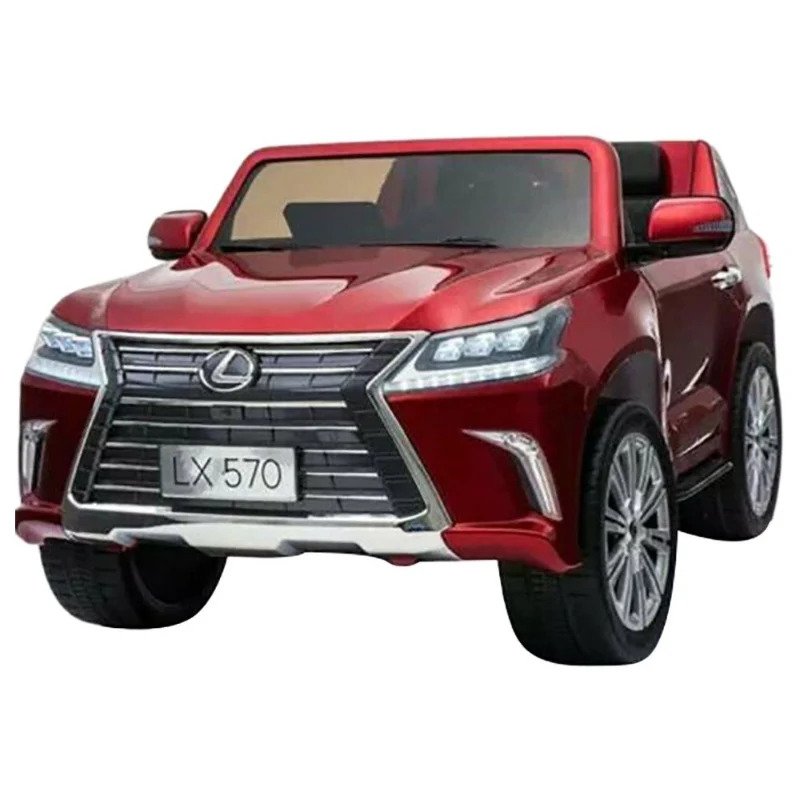
Buying a ride-on vehicle for a child can be an exciting experience. For children, the attraction is obvious: they get their own miniature vehicle that lets them pretend to drive, explore their surroundings, and turn ordinary outdoor play into an adventure.
For parents, however, choosing the right model requires more thought.
A ride-on vehicle that works well for a four-year-old may not be appropriate for a toddler. Similarly, a model designed for an older child may be unnecessarily large or powerful for a younger rider.
If you’re comparing kids ride on cars, one of the most important things to consider is the age and physical development of the child who will actually be using the vehicle.
Age is a useful starting point, but it isn’t the only consideration. Height, weight, coordination, confidence, riding experience, and the intended riding environment all play a role.
This guide explains what parents should look for at different stages of childhood and how to choose a ride-on vehicle that remains comfortable, manageable, and enjoyable.
Why Age Matters When Choosing a Ride-On Vehicle
Ride-on vehicles aren’t one-size-fits-all products.
Children develop their coordination, strength, reaction speed, and confidence at different rates. A vehicle that feels simple to one child might be difficult for another.
The wrong size or performance level can make riding frustrating and potentially unsafe.
A vehicle that is too small may become uncomfortable quickly. One that is too large or powerful may be difficult for a younger child to control.
That’s why parents should consider age alongside:
- Height
- Weight
- Physical development
- Experience
- Vehicle speed
- Weight capacity
- Seat dimensions
- Riding environment
The manufacturer’s recommended age and weight limits should always be the starting point.
Ride-On Cars for Toddlers
Toddlers are at the beginning of their ride-on journey.
At this stage, simplicity is generally more important than power.
Parents should look for a vehicle with:
- Low speed
- Easy controls
- Stable construction
- Comfortable seating
- Simple steering
- Appropriate weight capacity
- Adult supervision
A parental remote control can be especially useful.
It allows an adult to control the vehicle while the child becomes familiar with the experience.
Rather than expecting a toddler to immediately understand acceleration and steering, parents can gradually introduce them to the vehicle.
What Should Parents Look for in a Toddler Ride-On?
Simple Controls
Too many controls can be confusing for a very young child.
A straightforward system allows them to focus on learning basic movement and steering.
Stable Design
A wide and stable four-wheel configuration can make the vehicle easier to manage.
Low Speed
Young children generally don’t need high-speed performance.
Controlled movement gives them time to understand steering and stopping.
Remote Control
This can provide parents with an additional way to supervise the ride.
Comfortable Seat
A properly sized seat helps the child remain comfortable during play.
Ride-On Cars for Children Around 3 to 4 Years
As children become more coordinated, they may be ready for a more interactive driving experience.
At this stage, parents can start considering vehicles that allow children to control:
- Steering
- Forward movement
- Reverse
- Braking
- Basic vehicle functions
Depending on the child’s development, a suitable 12V model may provide a practical balance between performance and manageability.
However, age recommendations vary between products.
Parents should never assume that every vehicle marketed as a children’s ride-on is suitable for every three- or four-year-old.
Building Confidence Through Controlled Play
Children learn through repetition.
A child may initially struggle to keep the vehicle moving in a straight line or may turn the steering wheel too sharply.
This is normal.
Start with short sessions in an open area.
Give the child time to learn:
- How the accelerator works
- How steering changes direction
- How to stop
- How to reverse
- How to respond to obstacles
Parents can gradually reduce their involvement as the child’s confidence improves.
Ride-On Cars for Children Around 4 to 6 Years
This can be an especially interesting stage because many children begin developing stronger control and greater confidence.
They may be ready for vehicles with:
- More interactive controls
- Working lights
- Music
- Bluetooth features
- Forward and reverse gears
- Greater battery capacity
- More substantial body designs
At this stage, parents should still prioritise suitability over additional features.
A child may be fascinated by lights and music, but those features don’t compensate for an unsuitable size or weight capacity.
Should a 4-Year-Old Use a 24V Vehicle?
There isn’t one answer for every child.
A four-year-old who is physically larger and already experienced with ride-on vehicles may have different needs from a smaller first-time rider.
Rather than using age alone, look at:
- Manufacturer’s recommended age
- Weight limit
- Vehicle size
- Speed
- Motor configuration
- Child’s experience
- Riding environment
If a 24V vehicle is specifically designed for the child’s age and size, it may be appropriate.
If not, a smaller vehicle may be the better choice.
Ride-On Cars for Children Around 6 to 8 Years
Older children often want something that feels more like a “real” vehicle.
They may prefer:
- Larger SUVs
- Sports-car designs
- Police vehicles
- Pickup-style models
- Two-seater vehicles
- More powerful systems
At this stage, vehicle size and weight capacity become particularly important.
A child who has outgrown a small ride-on car may find a larger model more comfortable and enjoyable.
Some of Toyzinn’s current models are designed with larger bodies, two seats, 24V systems, and multiple motors, offering different configurations for older children depending on the individual model’s specifications.
Why Weight Matters More as Children Grow
Parents sometimes focus heavily on age.
But weight can be just as important.
Imagine two six-year-olds:
- Child A weighs 18 kg.
- Child B weighs 25 kg.
They may be the same age, but the demands they place on the vehicle can be different.
A vehicle’s motor, battery, suspension, and chassis need to handle the rider’s weight.
Always check the manufacturer’s maximum load.
Larger Ride-On Vehicles for Older Children
Older children may benefit from:
- Larger seats
- Larger wheels
- Greater ground clearance
- More powerful motors
- Higher battery capacity
- Stronger chassis
- Larger weight capacity
However, parents should still match the vehicle to the child’s experience.
A larger vehicle can be physically harder to maneuver.
Power should increase as the child becomes ready for it—not simply because they have reached a certain birthday.
What About Two-Seater Ride-On Cars?
Two-seater models can be attractive to families with multiple children.
They allow siblings to share the experience, provided that the model is designed for multiple riders and the total weight remains within the manufacturer’s limits.
Before choosing one, consider:
- Combined rider weight
- Seat dimensions
- Vehicle size
- Motor configuration
- Battery capacity
- Recommended age
A two-seater can also be useful for families that want a larger vehicle their child can continue using as they grow.
But don’t assume that two seats automatically mean two children can ride together.
Always follow the product specifications.
Ride-On Cars for Siblings
If siblings will share the vehicle, parents should think beyond seating.
The children may have different:
- Ages
- Heights
- Weights
- Experience levels
For example, a vehicle suitable for an older child may not be appropriate for a much younger sibling.
If two children are going to ride together, the model should be specifically designed for that use.
Parents should also supervise shared riding closely.
Age Is Only One Part of the Decision
It is tempting to create a simple chart saying:
Age X = 12V
Age Y = 24V
But real-world buying decisions aren’t that simple.
Two children of the same age can have different abilities.
That’s why parents should use age as a starting point rather than an absolute rule.
The complete picture includes:
Age
How old is the child?
Weight
How much does the child weigh?
Height
Will they fit comfortably in the seat?
Experience
Have they used a ride-on vehicle before?
Environment
Where will they ride?
Vehicle Specifications
What speed, battery, motor, and weight capacity does the model offer?
Matching Vehicle Size to Your Child
A properly sized vehicle should allow your child to sit comfortably and operate the controls without excessive stretching.
Check:
- Seat position
- Steering wheel reach
- Pedal access
- Legroom
- Door clearance where applicable
If your child looks cramped inside the vehicle, they may have already outgrown it.
On the other hand, if they struggle to reach the controls, the vehicle may be too large.
Comfort directly affects control.
Why Speed Shouldn’t Be the Priority
Children often think faster means more fun.
Parents should think differently.
A ride-on vehicle should provide enough speed to be exciting while remaining manageable for the rider.
Younger or inexperienced children benefit from controlled speeds.
As their experience increases, parents can consider vehicles with greater performance—provided that the child remains within the manufacturer’s recommended age and weight limits.
Parental Remote Controls by Age
Remote controls can remain useful even as children become more experienced.
For toddlers, parents may use the remote to control most of the ride.
For preschool-aged children, parents can allow the child to steer while keeping the remote ready.
For older children, the remote can serve as an emergency backup during supervised learning.
The level of parental involvement can therefore change as the child develops.
Choosing Based on Riding Environment
Age isn’t enough.
Consider where the vehicle will be used.
Small Garden
A compact, lower-powered model may be ideal.
Large Garden
A larger vehicle may provide more freedom.
Driveway
Smooth surfaces are generally easier for smaller ride-on vehicles.
Grass
Consider tire design and motor power.
Indoor Play
Check whether the manufacturer allows indoor use and whether the vehicle’s dimensions are appropriate.
UAE Weather and Ride-On Vehicles
The UAE climate also deserves consideration.
High temperatures can affect batteries and other components.
When the vehicle isn’t being used, keep it:
- Away from direct sunlight
- In a shaded area
- In a dry location
- Protected from extreme heat
Parents should also follow the manufacturer’s charging and battery-storage instructions.
Good storage habits can help preserve battery performance.
How to Choose a Vehicle That Will Last
Parents naturally want their purchase to provide long-term value.
One way to achieve this is to choose a model with enough capacity for reasonable growth.
But don’t buy an oversized vehicle simply because you want it to last longer.
Instead, look for a vehicle that:
- Fits the child comfortably now
- Has an appropriate weight capacity
- Offers suitable performance
- Provides enough seat space
- Matches the intended riding environment
The goal is to balance current suitability with reasonable future use.
Features to Prioritise by Age
Different age groups may benefit from different features.
Toddlers
Prioritise:
- Remote control
- Low speed
- Stable design
- Simple controls
Preschoolers
Consider:
- Adjustable speed
- Forward/reverse
- Comfortable seating
- Remote control
Older Children
Consider:
- Larger body
- Greater weight capacity
- Stronger motors
- Larger battery
- Two seats where appropriate
Entertainment features such as music and lights can be considered after the essentials.
Licensed Designs for Different Ages
Ride-on cars inspired by real vehicles can make play more immersive.
Children may recognise the shape of a sports car, SUV, police car, or luxury vehicle and use it as part of imaginative play.
Toyzinn’s collection includes various licensed and vehicle-inspired designs, including models based on brands such as Mercedes-Benz, Lamborghini, Ford, and Maserati.
The design can certainly influence a child’s enjoyment.
But the model’s specifications should still determine whether it’s actually suitable.
How to Tell If Your Child Has Outgrown Their Ride-On
There are several signs that a child may need a larger vehicle.
Look for:
- Knees becoming cramped
- Difficulty reaching controls
- Less comfortable seating
- Weight approaching the maximum limit
- Reduced vehicle performance
- Child becoming physically too large for the cabin
If these signs appear, it may be time to consider a larger model.
How to Introduce a New Ride-On Safely
When your child gets their first vehicle—or moves to a larger one—give them time to adjust.
Start with:
Step 1: Explain the Controls
Show them every important control.
Step 2: Practice Stopping
Stopping is just as important as moving.
Step 3: Start Slowly
Use the lowest available speed setting if the model provides one.
Step 4: Choose an Open Area
Avoid obstacles and traffic.
Step 5: Supervise
Stay close until your child demonstrates reliable control.
Common Mistakes Parents Make
Buying Based Only on Age
Age doesn’t tell the entire story.
Ignoring Weight
Weight affects vehicle performance.
Choosing the Most Powerful Model
More power isn’t automatically better.
Focusing Too Much on Features
Lights and music are fun, but they aren’t the most important specifications.
Forgetting Storage
Larger vehicles need more space.
Assuming Two Seats Mean Unlimited Capacity
Always check the weight limit.
A Quick Age-Based Buying Guide
Here’s a simple framework to help parents begin.
| Child’s Stage | What to Prioritise | Typical Considerations |
| Toddler | Control and stability | Low speed, simple controls, remote |
| 3–4 years | Learning | Manageable speed, comfort, supervision |
| 4–6 years | Independence | More controls, suitable battery, safety |
| 6–8 years | Performance | Larger body, greater capacity, outdoor use |
| Older children | Size and capability | Larger models, stronger systems, experience |
These are general guidelines, not fixed rules. Always follow the specifications for the individual vehicle.
Final Thoughts
Choosing a ride-on vehicle according to age isn’t about finding a strict age-to-voltage formula.
Every child develops differently.
Instead, parents should look at the complete picture: age, height, weight, coordination, confidence, previous experience, riding environment, and the specifications of the vehicle itself.
Younger children generally benefit from simple controls, stable construction, manageable speeds, and parental supervision. As children grow and become more confident, larger vehicles with greater capacity and stronger performance may become appropriate.
The most important thing is to choose a vehicle that your child can comfortably and confidently control.
Parents comparing different options can browse the kids ride on cars collection to compare different designs, battery systems, seating configurations, and features.
Once you find the right vehicle, remember that safe riding habits are just as important as the vehicle itself. Introduce your child to the controls gradually, choose a suitable riding area, supervise younger riders, and follow the manufacturer’s recommendations.
A well-chosen ride-on vehicle can provide children with hours of imaginative outdoor play while giving them an exciting way to explore movement, independence, and pretend driving.
And if you’re building a wider collection of children’s products at home, you can explore toys designed for different stages of childhood and different types of play.
Frequently Asked Questions
What age can children start using ride-on cars?
It depends on the individual model. Some vehicles are designed for very young children, while others are intended for older riders. Always follow the manufacturer’s age and weight recommendations.
Are 12V ride-on cars suitable for younger children?
Many 12V models are designed with younger riders in mind, but suitability depends on the individual vehicle’s specifications.
Are 24V ride-on cars only for older children?
Not necessarily. What matters is whether the specific model is designed for the child’s age, size, weight, and experience.
Should I buy a ride-on car that my child can grow into?
Choose a vehicle that is appropriate for your child now while providing reasonable room for growth. Avoid buying a vehicle that is too large or powerful for them to control.
Are two-seater ride-on cars suitable for siblings?
They can be, provided the vehicle is designed for two riders and the combined weight remains within its recommended capacity.
What is more important: age or weight?
Both matter. Age provides a general indication of developmental stage, while weight directly affects whether the vehicle can safely and effectively carry the rider.
What features should younger children have?
Younger children can benefit from low speeds, simple controls, stable construction, comfortable seating, and parental remote controls.
Can older children still enjoy ride-on cars?
Yes. Larger ride-on vehicles with higher weight capacities and stronger performance can provide an engaging experience for older children, provided the model is appropriate for them.