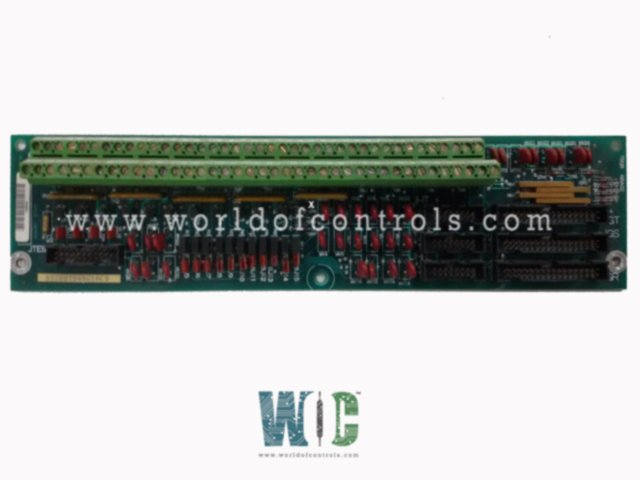
In industrial turbine control systems, accuracy and reliability are paramount. One crucial component that helps achieve this in GE’s Mark V turbine control system is the input termination module. This article explains how input termination works in GE Mark V systems and highlights the vital role the input termination module plays within the turbine industry.
Understanding GE Mark V Turbine Controls
The GE Mark V system is a trusted control platform used widely in gas turbine applications. It manages key turbine operations such as startup sequences, speed regulation, safety interlocks, and overall system efficiency. To function correctly, the Mark V relies on precise and stable input signals from various sensors and switches throughout the turbine.
What Is an Input Termination Module?
An input termination module serves as the critical interface between the turbine’s field wiring and the control system’s processing units. It performs several essential functions:
- Signal Conditioning: It cleans and formats raw signals from sensors and switches so the control system can accurately interpret them.
- Electrical Protection: The module isolates and protects the control system from electrical noise, surges, or faults present in the field wiring.
- Signal Integrity: Proper termination maintains stable and interference-free signals, reducing the risk of control errors.
The Role of the Input Termination Module in GE Mark V
The input termination module in GE Mark V systems is designed to handle numerous discrete input signals—such as those from pressure switches, temperature sensors, and limit switches. It is engineered to operate reliably under the demanding conditions common in turbine environments, which often involve high temperatures and electrical interference.
Key Functions
- Reliability in Harsh Environments: Designed for durability, the module withstands industrial stressors without signal degradation.
- Multiple Input Channels: It consolidates multiple input signals in one module, simplifying wiring and maintenance.
- Signal Conditioning and Isolation: Protects the control system by ensuring incoming signals are free from transient electrical faults.
- Modular Design: Allows easy maintenance and quick replacement to reduce turbine downtime.
How Input Termination Works in Practice
In a gas turbine system, numerous sensors continuously monitor key operating parameters such as temperature, pressure, and rotational speed. These sensors send signals back to the control system, which must process the data accurately to keep the turbine running smoothly.
Here’s how the input termination module supports this process:
- Signal Reception: Signals from field sensors travel along wiring to the input termination module.
- Signal Conditioning: The module filters out electrical noise and stabilizes signal levels to ensure data integrity.
- Electrical Isolation: It isolates the control system from potential electrical surges or faults originating in field wiring.
- Signal Transmission: The cleaned and protected signals are forwarded to the Mark V controller’s input cards.
- Control Action: The Mark V controller analyzes the signals to adjust turbine operations, such as fuel flow regulation or safety shutdowns.
Why Proper Input Termination Is Critical
Proper input termination is essential to turbine safety and efficiency. Without it:
- Signal Noise Could Cause Malfunctions: Erroneous or noisy signals may trigger incorrect control actions.
- Damage to Control Equipment: Electrical surges from unprotected inputs can damage sensitive electronics.
- Increased Maintenance and Downtime: Poor signal termination leads to frequent troubleshooting and operational interruptions.
By ensuring clean, stable, and protected signals, the input termination module helps maintain the reliable and safe operation of GE Mark V turbine controls.
Conclusion
The input termination module is a fundamental part of the GE Mark V turbine control system. It ensures accurate reception, conditioning, and protection of input signals from field devices, enabling precise turbine control. For operators and engineers working with GE Mark V systems, understanding the importance of input termination modules is key to maintaining optimal turbine performance and longevity.