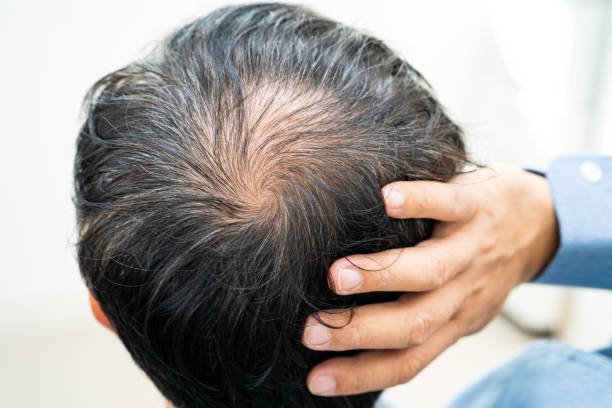
Hair thickness is an important part of overall hair appearance, especially when thinning makes individual strands look finer and the scalp more visible. When follicles become less productive, they may continue growing hair but produce strands that are progressively thinner. For people exploring regenerative approaches, GFC Treatment for Hair in Abu Dhabi may be an option to consider because Growth Factor Concentrate is designed to support existing follicles with concentrated growth-promoting components. Research into GFC and related regenerative treatments has reported encouraging improvements in hair shaft diameter, density, and follicular activity, making hair thickness an important area of interest.
What Does Hair Thickness Mean?
Hair thickness refers primarily to the diameter of an individual hair strand. It is different from hair density, which describes the number of hairs within a particular scalp area. A person can have a reasonable number of follicles but still experience visibly thin hair if the strands produced by those follicles have become very fine.
This distinction is especially important in pattern hair loss. Susceptible follicles can undergo miniaturization, gradually producing shorter and thinner hairs. As this process continues, overall volume decreases and the scalp may become more noticeable.
Improving strand thickness can therefore have a significant effect on the appearance of fullness, even when the total number of follicles changes only modestly.
What Is GFC Treatment for Hair?
GFC stands for Growth Factor Concentrate. It is an autologous regenerative approach that uses a sample of the individual’s own blood, which is processed to concentrate selected growth-promoting components. The prepared concentrate is then introduced into targeted areas of the scalp.
Growth factors naturally participate in cellular communication, tissue regeneration, and processes involved in follicular activity. GFC is intended to provide concentrated biological signals around weakened hair follicles and support their natural growth environment.
The goal is not to create new follicles but to encourage existing follicles to remain active and potentially produce stronger, thicker-looking strands.
Can GFC Improve Hair Thickness?
Research suggests that GFC may improve hair thickness in suitable individuals, particularly when thinning is associated with androgenetic alopecia or pattern hair loss. Clinical studies of concentrated growth factor treatments have reported increases in hair shaft diameter alongside improvements in hair density.
This is significant because thicker strands provide greater visual coverage. When miniaturized hairs become more substantial, the scalp can appear less visible and the overall hairstyle may look fuller.
The degree of improvement varies between individuals. The condition of the follicles, the extent of miniaturization, and the underlying cause of hair loss can all influence the response.
How Could GFC Support Thinning Hair Strands?
Hair follicles are surrounded by a complex biological environment that influences their ability to produce hair. When follicular activity becomes less robust, the resulting strands may become increasingly fine.
GFC delivers concentrated growth-promoting factors to targeted areas of the scalp. These factors may interact with biological pathways involved in cellular activity and hair follicle development.
If the follicles respond appropriately, the potential result is improved production of thicker strands. Because the hair-growth cycle takes time, this process develops gradually rather than immediately after treatment.
Why Is Hair Diameter Important?
Hair diameter can strongly influence the perception of hair density. Fine hairs provide less coverage, while thicker terminal hairs can create a more substantial appearance.
This means that improving hair thickness can sometimes make a thinning area look fuller even without a dramatic increase in the number of follicles. For individuals with early or moderate miniaturization, supporting the follicles that are already producing fine hairs may therefore be an important objective.
Clinical research involving concentrated growth factors has reported increases in hair diameter, suggesting that GFC may have potential beyond simply increasing the number of visible hairs.
What Does Research Say About GFC and Hair Thickness?
The available evidence is encouraging. Clinical studies have evaluated concentrated growth factor treatments in people with androgenetic alopecia and have reported improvements in hair density, follicle density, and hair diameter.
Research has also found increases in terminal hair density following concentrated growth factor treatment. Terminal hairs are generally thicker and more visible than miniaturized hairs, making changes in terminal hair characteristics particularly relevant when evaluating overall fullness.
More recent studies have continued to investigate GFC in different patterns of hair loss, including female pattern hair loss. Findings involving women have also indicated improvements in target-area hair counts, while broader research has reported changes in hair shaft characteristics.
Although these results are promising, GFC research is still developing. Differences between treatment protocols and study populations mean that further research is needed to determine the most effective approaches and establish consistent expectations.
Can GFC Help Miniaturized Hair Become Thicker?
Miniaturization is one of the main reasons hair gradually loses its thickness. A follicle that once produced a strong terminal hair may eventually produce a much finer strand.
Because GFC is intended to support existing follicles, miniaturized follicles that remain active may represent a potential target. If their biological activity improves, they may potentially produce thicker strands during subsequent growth cycles.
However, the treatment cannot guarantee that every miniaturized follicle will return to its previous size or level of productivity. The condition of each follicle and the stage of hair loss remain important factors.
Does GFC Improve Hair Thickness or Hair Density First?
There is no universal sequence that applies to every individual. Hair thickness and density are related but separate characteristics, and research may measure them independently.
Some individuals may notice changes in strand quality before an obvious increase in overall density, while others may experience a more noticeable improvement in the number of visible hairs. As the growth cycle progresses, improvements in both characteristics can contribute to a fuller appearance.
This is why evaluating hair diameter alongside density can provide a more complete picture of treatment response.
When Can Thicker Hair Become Noticeable?
Hair growth is gradual, so changes in strand thickness generally take time. Clinical studies of concentrated growth factor treatments have assessed outcomes over several months, with some reporting measurable improvements around three months and continuing changes during longer follow-up periods.
The exact timeline can vary according to the individual’s hair-growth cycle and the condition of the follicles. Consistent photographs taken under similar lighting can help reveal gradual changes that may be difficult to notice from day to day.
Patience is therefore an important part of evaluating any treatment designed to influence the natural hair-growth cycle.
Is GFC Suitable for All Types of Thin Hair?
GFC may be particularly relevant to pattern hair loss in which follicles remain active but have become weakened or miniaturized. However, not every case of fine or thin hair has the same underlying cause.
Hair may appear thin because of reduced density, follicular miniaturization, changes in the hair-growth cycle, or other conditions affecting the scalp and follicles. Identifying the underlying cause is therefore important before determining whether GFC is an appropriate approach.
A scalp and hair assessment can help establish whether viable follicles are present in the areas where greater thickness is desired.
Can GFC Completely Restore Hair Thickness?
GFC should not be considered a guaranteed method of completely restoring hair thickness. Its potential is primarily associated with supporting existing follicles and improving the characteristics of the hair they produce.
The available research is promising but continues to evolve. Studies vary in size, treatment protocols, and follow-up periods, so larger clinical investigations are needed to better define long-term outcomes and identify the people most likely to benefit.
Realistic expectations are therefore essential when considering GFC for hair thickness.
Final Thoughts
So, can GFC Treatment for Hair improve hair thickness. Research suggests that it may improve hair shaft diameter and support the production of thicker-looking strands in suitable individuals, particularly those experiencing pattern hair loss with active but miniaturized follicles. Improvements in strand thickness, especially when combined with greater visible density, can contribute to a fuller and more substantial appearance.
GFC is designed to support existing follicles rather than create new ones. Its potential effectiveness depends on the underlying cause of thinning and the condition of the follicles. With an appropriate assessment and realistic expectations, GFC may offer a regenerative approach for people seeking to improve the thickness and overall appearance of thinning hair.
FAQs
Can GFC Treatment for Hair make hair strands thicker?
GFC may improve hair shaft diameter in suitable individuals. Clinical research involving concentrated growth factors has reported increases in hair thickness alongside improvements in hair density.
Does GFC improve hair thickness or density?
GFC may potentially influence both characteristics. Research has reported improvements in hair density and hair diameter, which can work together to create a fuller-looking scalp.
Can GFC thicken miniaturized hair?
GFC may support active miniaturized follicles and potentially improve the thickness of the strands they produce. The extent of improvement depends on the condition and activity of the individual follicles.
How long does it take to see thicker hair after GFC?
Changes in hair thickness develop gradually because follicles follow a natural growth cycle. Studies have reported measurable improvements over several months, with some observing changes around three months and during later follow-up.
Can GFC completely restore the original thickness of thinning hair?
GFC cannot guarantee complete restoration of original hair thickness. Its potential is primarily to support existing follicles and improve the characteristics of the hair they produce, with results varying according to individual follicular condition.