Imagine discovering a new business for the first time. You visit its website, scroll through its social media page, or see its storefront from across the street. Before you know anything about the company, one thing has already started communicating with you: its visual identity.
That is where logo design becomes powerful.
A logo may be a small element of a brand, but its influence can be surprisingly large. The right design can make a company look professional, memorable, trustworthy, and different from its competitors. The wrong design can make even an excellent business appear confusing or forgettable.
So, how can a simple visual mark create such a strong impression? Let’s explore what makes a logo memorable and how businesses can turn their visual identity into a competitive advantage.
Your Logo Is More Than a Picture
Many business owners think of a logo as an image that goes at the top of a website. In reality, it can become a visual shortcut for the entire company.
When customers repeatedly see the same symbol, colors, and typography, they begin connecting those elements with their experiences with the business. Over time, the logo can become associated with quality, service, reliability, or whatever the company consistently delivers.
That is why effective logo design begins with strategy rather than decoration.
A designer should understand the company’s personality, audience, industry, competitors, and goals before deciding what the final identity should look like.
The Psychology Behind First Impressions
People process visual information incredibly quickly. Before reading a paragraph about your business, visitors may already have formed an initial impression from your colors, shapes, typography, and overall presentation.
A professional visual identity can communicate confidence and organization. A playful design can suggest creativity and friendliness. A minimalist approach can create a sense of sophistication.
None of these approaches is automatically better than the others. The important question is whether the design communicates the right message to the right audience.
For example, a luxury fashion company probably should not look like a children’s toy brand, and a technology startup may want a different personality from a traditional law firm.
The design needs to fit the story.
Why Simple Logos Often Win
When businesses want to stand out, they sometimes assume that adding more details will make their logo more impressive.
Usually, the opposite can be true.
A complicated logo may contain multiple symbols, colors, fonts, and illustrations, but those elements can become difficult to recognize when the design is reduced to a small size.
Simple logos have an advantage because customers can process them quickly.
Think about where your logo might appear:
- A smartphone screen
- A social media profile
- A business card
- Product packaging
- A website header
- A storefront sign
- Promotional merchandise
A strong logo should remain recognizable in all of these situations.
Originality Creates Recognition
A business does not need the strangest logo in its industry. It needs an identity that customers can distinguish from competitors.
Before developing a concept, designers should examine the visual landscape of the industry. What colors are competitors using? Which symbols appear repeatedly? Are certain fonts everywhere?
This research can reveal opportunities.
If every competitor uses the same generic icon, a different visual concept may immediately create more distinction. If an industry is dominated by complex designs, a clean identity might attract attention through simplicity.
Originality is not about being unusual for the sake of being unusual. It is about giving customers a reason to remember your business.
Color Gives Your Brand a Personality
Imagine a logo without color. Now imagine adding bright red, deep blue, natural green, or elegant black. The feeling can change immediately.
Color is one of the most important tools in visual branding.
Blue can communicate stability and trust. Green can suggest freshness, growth, or nature. Red can feel energetic and confident. Black can create a premium and sophisticated impression.
But successful branding is not about following a rigid color psychology chart. The best choice depends on the company, audience, industry, and overall visual system.
A professional designer also considers how colors will appear across screens and printed materials.
Typography Can Become Your Signature
A company name can become memorable through typography alone.
The right typeface can communicate personality without requiring a complicated symbol. Clean lettering may create a modern feeling, while traditional typography can suggest experience and heritage.
However, readability should always come first.
A font that looks beautiful in a large presentation may become difficult to read when the logo is displayed on a small mobile screen. The best typography balances personality, clarity, and versatility.
Why Custom Branding Can Make a Difference
Businesses are not identical, so their visual identities should not feel identical either. This is one reason many companies invest in custom logo design services.
A custom approach gives designers the opportunity to build an identity around the specific business rather than adapting an existing template.
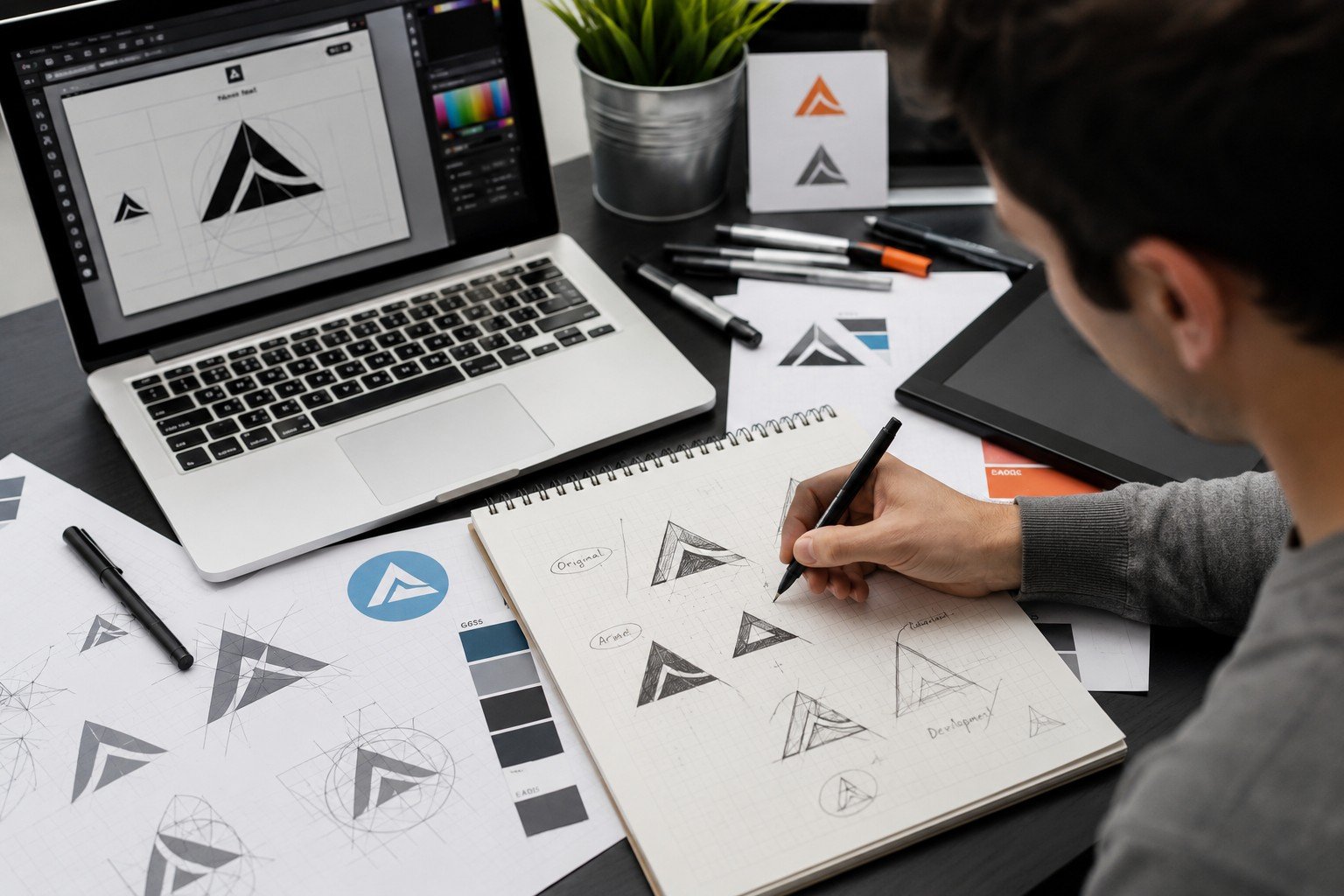
The process can involve research, concept development, typography selection, color exploration, revisions, and preparation of final files.
When evaluating custom logo design services, businesses should look at the entire process rather than judging a provider only by a gallery of previous designs. Communication, originality, technical knowledge, and understanding of the client’s goals all matter.
Design for Tomorrow, Not Just Today
A common branding mistake is creating a logo for one specific platform.
Perhaps the business currently operates only through Instagram. But what happens when it launches a website, opens a physical location, introduces packaging, or starts selling merchandise?
A strong identity should have room to grow.
Professional designers often prepare different logo variations for different situations. These may include horizontal, stacked, icon-only, monochrome, and reversed versions.
This flexibility allows a business to maintain a consistent identity while adapting the logo to different spaces.
Don’t Ignore File Quality
Even an excellent concept can become a problem if the business does not receive the right file formats.
Vector files such as AI, EPS, and SVG are particularly useful because they can be resized without losing quality. PNG files can be valuable when transparency is needed, while JPEG files can work for many standard digital applications.
Businesses should keep their original source files safe. You may not need them today, but a future printer, developer, marketing agency, or designer may request them.
A complete logo package saves time and prevents unnecessary recreation costs later.
Logo Outlets and the Bigger Branding Picture
Creating a memorable identity requires more than choosing an attractive icon. It requires understanding how every visual element supports the business.
Logo Outlets approaches branding with the idea that a logo should be useful across real business situations. A design needs to work on digital platforms, printed materials, marketing campaigns, packaging, and other customer touchpoints.
That broader perspective helps turn a logo into a practical business asset rather than simply a decorative graphic.
Logo Outlets also recognizes that businesses evolve. A strong identity should be flexible enough to support that growth without losing its recognizable core.
Avoid Designing for Yourself Alone
One of the biggest mistakes business owners can make is choosing a logo entirely based on personal taste.
Of course, you should like your branding. But your audience also needs to connect with it.
Ask yourself:
Who are we trying to attract?
What should customers feel when they see us?
What makes our company different?
What qualities should our visual identity communicate?
These questions can lead to better design decisions than simply choosing a color or symbol that happens to be your favorite.
Consistency Turns Recognition Into Trust
A logo becomes much more powerful when customers see it consistently.
Imagine seeing one color palette on a website, completely different colors on social media, and another visual style on packaging. Even if every individual design looks attractive, the overall brand can feel disconnected.
Consistency solves this problem.
Use the same core logo, colors, typography, and visual language across important customer touchpoints. Over time, these repeated signals create familiarity.
That familiarity can make it easier for customers to recognize your business in a crowded marketplace.
The Real Value of a Memorable Logo
The value of logo design is not measured by how impressive the design looks in isolation. Its real value appears when customers recognize it, remember it, and connect it with the business behind it.
A successful logo can support marketing, strengthen consistency, improve professionalism, and provide a recognizable foundation for future branding.
But it should never be expected to do all the work alone. Great products, excellent service, strong communication, and positive customer experiences must support the visual promise.
A logo opens the door. The business experience keeps people there.
Final Thoughts
Great branding is rarely accidental. It comes from understanding the audience, defining the brand personality, researching competitors, and creating a visual identity that is simple, distinctive, flexible, and memorable.
For businesses considering custom logo design services, the goal should be more than obtaining a beautiful graphic. The goal is to build an identity that can grow with the company and remain useful across years of marketing.
Logo Outlets believes a strong logo should work wherever your business needs it to appear. From a tiny mobile icon to a large storefront sign, your visual identity should remain recognizable and professional.
The next time someone sees your logo, you want them to do more than notice it.
You want them to remember you.