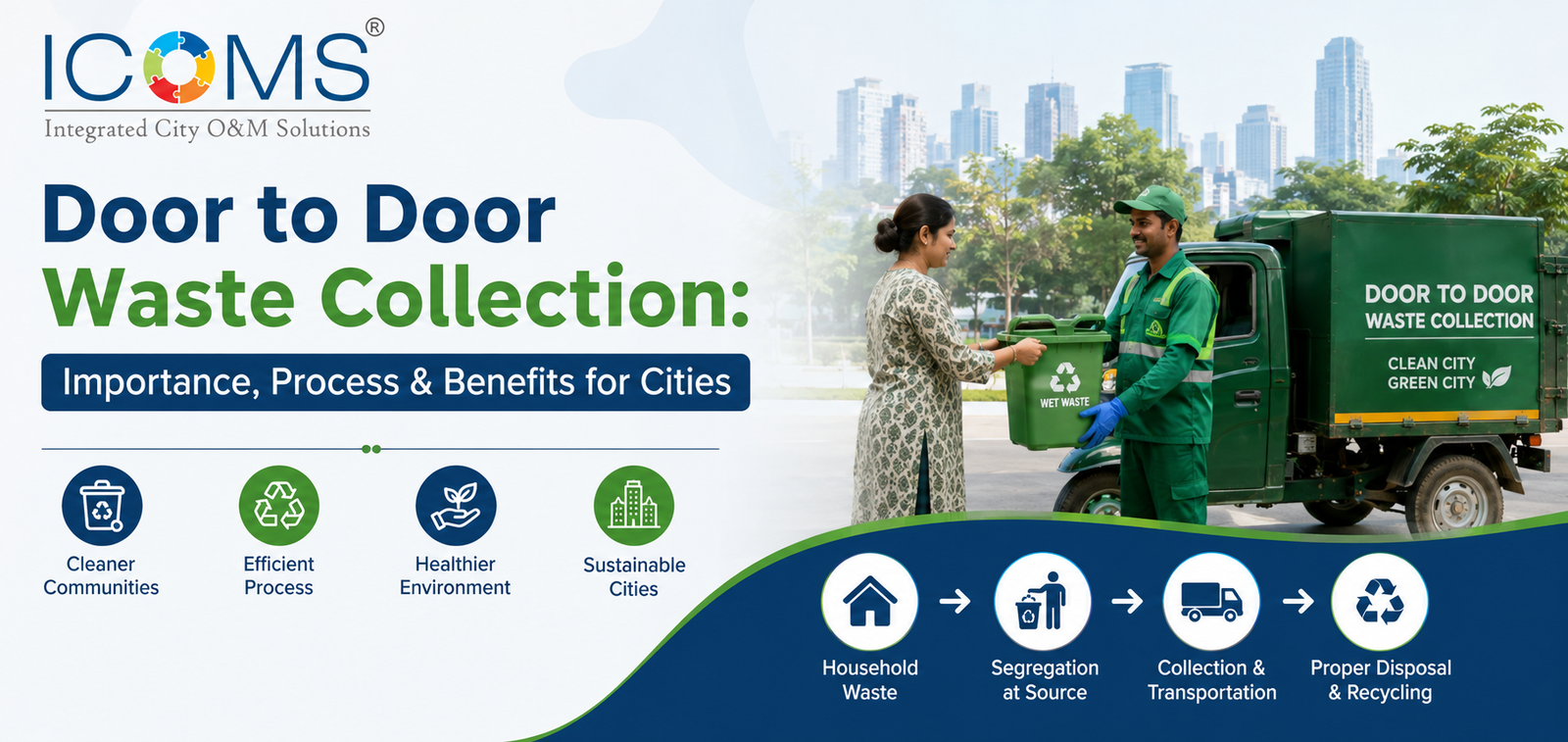
Let me tell you something that might surprise you. Door-to-door waste collection has become one of the biggest success stories in urban India. Nearly 97 per cent of municipal wards across the country are now covered under this system. That is a massive shift from where we were just a decade ago.
You know that feeling when you see garbage piling up on street corners. The smell. The flies. The stray animals are digging through it. It is not just unpleasant. It is a public health hazard. The good news? Cities are finally getting serious about fixing this. And door-to-door collection is at the heart of the solution.
Why Door to Door Collection Matters
Here is the thing. The old system of dumping waste in open spaces just does not work. Landfills grow larger. The air gets worse. Water becomes polluted. And the people living near these dumpsites suffer the most.
Indore showed us a better way. The city replaced the old collect-and-dump approach with a circular waste system. It is built on source segregation, daily door to door waste collection, composting, and dry waste recovery.
The results speak for themselves. Indore now handles more than 90 per cent of its waste. The city has consistently ranked among the cleanest in India. Clean streets are one outcome. But there is more. The system helps cut pollution. Protects workers. Improves neighbourhood health.
How the Process Actually Works
Let me break this down simply.
Source Segregation
This is where it all starts. Residents separate waste at home. Wet waste. Dry waste. Sanitary waste. Hazardous waste. In Chandigarh, for example, collection vehicles have four separate compartments. One for each type of waste. This makes recycling possible. The city now boasts 100 per cent door to door waste collection and over 90 per cent segregation at source.
Collection and Transportation
This is the waste collection system in action. Vehicles pick up waste daily from households.In Delhi, a new project covers around 4.5 lakh households. The fleet includes 225 e-rickshaws for narrow lanes, 550 mini tippers, 52 compactors, and more .Household waste is now collected twice a day. Once in the morning. Once in the evening .
Digital Monitoring
This is where things get smart. The entire operation is tracked through GPS-enabled control rooms. CCTV surveillance. Mobile apps .A dedicated helpline allows citizens to report issues. This means better transparency and accountability.
Processing and Recovery
Wet waste goes to composting plants. Dry materials go for recycling. Chandigarh now has multiple Material Recovery Facilities and composting plants .The goal is to keep resources in use. Not bury them in landfills.
Benefits You Can Actually See
Let me give you the real picture.Cleaner neighbourhoods. This is the most obvious benefit. No more garbage piles on street corners. No more foul odours.Better public health. Cleaner streets mean fewer diseases. In Indore, cleaner surroundings reduced the prevalence of vector-borne diseases .Dignified work for waste workers. In Chandigarh, over 900 informal waste pickers were integrated into the system. They now receive fixed monthly salaries. Health benefits. Stability .
One waste picker named Rita now sends her son to private school. She has an 8 AM to 4 PM duty with respect and dignity .Environmental protection. More recycling means less pressure on landfills. India still generates 62 million tonnes of waste annually . Better collection and processing can significantly reduce that burden.Reclaimed urban land. Across India, around 65 per cent of legacy waste from 2,482 dumpsites has been cleared. This has reclaimed about 9,000 acres of urban land .
Smart Technology Making It Better
Digital tools are transforming municipal waste management.The World Bank Group recently released a report on this. It shows that digital tools can help cities cut costs, improve services, and build circular economies
In Cambodia, a digital platform helped increase service coverage from 40 per cent of households to 75 to 80 per cent .In Seoul, smart bins helped reduce collection frequency by 66 per cent and lower costs by 83 per cent .
In Tunisia, route analytics helped reduce fuel use by up to 57 per cent and collection time by up to 48 per cent .These are not small improvements. They are game-changers.
Challenges That Still Exist
Look, the system is not perfect everywhere. Some cities still struggle with enforcement. Segregation at source is not always fully implemented. Some wards lack proper facilities.
Private contractors are sometimes paid by the volume they collect. This creates a perverse incentive. Mixed waste is heavier. Heavier waste fetches a higher fee. So contractors have less motivation to reduce waste.
Experts say the key is decentralisation. Managing waste locally rather than transporting it to central facilities. Kerala has developed a model where 80 per cent of biodegradable waste is managed at the source. The remaining 20 per cent goes to community processing sites.
The Role You Can Play
Here is the thing. Door to door waste collection only works when citizens cooperate. Segregate at home. Separate wet waste from dry waste. This is the most important step. If waste is not separated at source, it cannot be properly recycled.
Hand over waste to collectors. When the collection vehicle comes, give your waste directly to the workers. Do not dump it elsewhere. Pay your user fees. These fees fund the system. They pay for collection vehicles. They pay workers. They keep the system running. Report issues. If collection is missed, report it. Use the helpline. Use the app. The system only improves with feedback.
A Practical Starting Point
If your city does not yet have a proper smart waste collection system, here is what you can do:
- Ask your local municipal corporation about their collection schedule.
- Start segregating waste at home. Even if the system is not perfect, your effort matters.
- Connect with local waste workers. Understand their challenges.
- Join community efforts to push for better waste management.
The Bottom Line
Door to door waste collection is not just about keeping streets clean. It is about building healthier cities. Protecting the environment. Creating dignified work. Reclaiming land. India has made remarkable progress. From 16 per cent waste processing in 2014 to 81 per cent in 2026. That is real improvement.
But the work is not done. We all have a role to play. So next time you hear the collection vehicle coming, think about what you are throwing away. Could it be recycled? Could it be composted? Could it be avoided altogether? Small actions add up. And together, they make our cities cleaner. Healthier. More liveable. That is something worth working for.