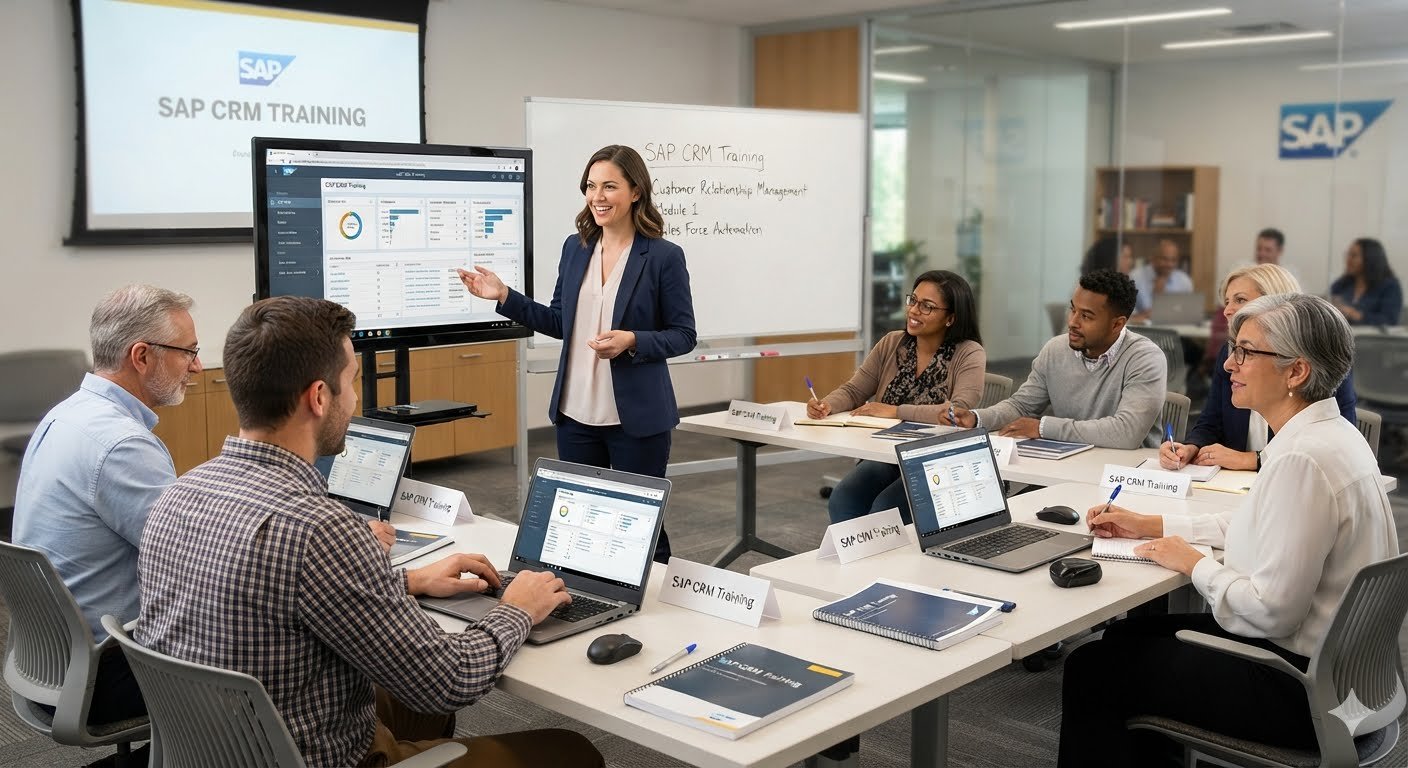
In today’s competitive job market, businesses are no longer looking for candidates who simply understand software theory. They want professionals who can walk into a role and immediately add value people who understand real business processes, know how to manage customer relationships efficiently, and can use enterprise tools to solve practical problems. This is exactly where online SAP CRM training proves its worth. It doesn’t just teach you how to click through menus; it builds the kind of job-ready business skills that employers actively search for.
Understanding the Real Value of SAP CRM
SAP Customer Relationship Management (CRM) is one of the most widely used enterprise systems for managing sales, marketing, service, and customer interaction data. Companies across industries retail, manufacturing, banking, telecom, and healthcare rely on SAP CRM to streamline how they engage with customers and manage business operations. Because of this widespread adoption, professionals trained in SAP CRM are consistently in demand.
Online SAP Training and Certification programs have made this expertise accessible to a much wider audience. Instead of relocating for a classroom course or waiting for a batch to start locally, learners can now enroll in structured, trainer-led sessions from anywhere. This flexibility is one reason online learning has become the preferred route for working professionals and fresh graduates alike.
Building Practical, Job-Ready Skills
The biggest advantage of a well-structured SAP CRM course isn’t just conceptual knowledge it’s the practical exposure to real-world business scenarios. A good training program typically covers:
- Sales and Marketing Management – Learning how organizations track leads, opportunities, and campaigns within the CRM system.
- Customer Service Processes – Understanding how service requests, complaints, and case management are handled.
- Master Data Management – Working with business partners, organizational structures, and data models that form the backbone of any CRM implementation.
- Interaction Center Concepts – Gaining insight into how customer-facing teams use SAP CRM in call centers and support environments.
- Integration Basics – Understanding how SAP CRM connects with other SAP modules like SD, MM, and ECC to create a unified business process.
By working through case studies, simulations, and guided exercises, learners don’t just memorize screens; they start thinking like business analysts and consultants. This hands-on approach is what transforms theoretical knowledge into applied, job-ready skills.
Why Certification Matters
Completing a Certified SAP CRM Training program adds a layer of credibility that self-study simply cannot match. Certification signals to employers that a candidate has been evaluated against industry standards and has demonstrated a working understanding of SAP CRM concepts and configurations. For recruiters scanning hundreds of resumes, that certification often becomes the deciding factor between shortlisting a candidate and passing them over.
Beyond the resume value, certification also gives learners a structured path to follow. Instead of randomly exploring features, they move through a curriculum designed around real project requirements covering configuration steps, transaction codes, and business logic in a logical sequence. This structured learning path reduces confusion and accelerates the transition from student to professional.
Developing Soft Skills Alongside Technical Ones
It’s worth noting that SAP CRM training isn’t purely technical. Because the software is built around customer relationships, learners naturally develop an understanding of business communication, process mapping, and problem-solving. They learn to see technology through a business lens asking not just “how do I configure this?” but “why does this process matter to the organization?”
This dual focus on technical and business thinking is precisely what makes SAP-trained professionals valuable across roles like CRM consultants, business analysts, functional consultants, and even project coordinators.
Flexibility That Fits Real Life
Online formats also allow learners to balance training with existing jobs, family responsibilities, or other commitments. Recorded sessions, flexible schedules, and access to trainers for doubt-clearing mean that professionals aren’t forced to choose between upskilling and their current responsibilities. This accessibility has made SAP CRM training a practical option for career switchers, IT professionals looking to specialize, and fresh graduates aiming to enter the SAP ecosystem.
Conclusion
Online SAP CRM training does more than teach software navigation it builds a foundation of business understanding, technical capability, and professional credibility. By combining practical, scenario-based learning with the recognition that comes from Certified SAP CRM Training, learners position themselves as genuinely job-ready candidates. In a market where employers value applied skills over theoretical knowledge, this kind of training offers a clear, structured path toward a successful career in the SAP ecosystem.