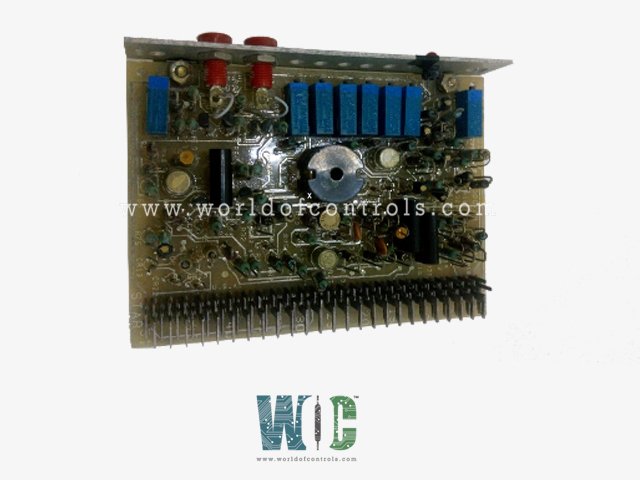
Introduction
Turbine systems rely on sophisticated control and automation technologies to maintain stable operation, optimize performance, and respond quickly to changing operating conditions. Within these systems, servo driver modules play an important role by helping convert electronic control commands into precise actuator movements.
In GE turbine control systems, servo-related modules form part of the control architecture responsible for managing critical functions such as fuel regulation, valve positioning, and other mechanical or hydraulic operations. Their ability to provide accurate and responsive control makes them important components in both gas and steam turbine applications.
What Is a Servo Driver Module?
A servo driver module is an electronic control component that interfaces between a turbine control system and a servo actuator or valve. The main controller generates a command based on parameters such as turbine speed, load, temperature, or pressure. The servo driver then processes this command and provides the appropriate electrical output to the actuator.
This process enables the turbine control system to make precise adjustments to equipment such as fuel control valves, inlet guide vanes, and other modulating devices. In many turbine applications, feedback from position sensors is also incorporated into the control loop, allowing the system to continuously compare the desired position with the actual position.
Role in GE Turbine Control Systems
GE’s SPEEDTRONIC control systems have been used across generations of industrial gas and steam turbines. These control systems combine sensors, electronic control logic, drivers, and output devices to manage turbine startup, operation, protection, and shutdown. GE documentation for the Mark II system, for example, describes control functions involving sensors and output servo valves.
Within this architecture, servo driver technology helps the control system achieve accurate actuation. When the turbine requires a change in fuel flow or valve position, the control system generates a command that is delivered through the appropriate driver circuitry to the servo mechanism.
Supporting Precision and Stability
Precision is essential in turbine operation. Even relatively small changes in fuel flow, valve position, or airflow can influence turbine speed, output, combustion conditions, and overall efficiency.
Servo driver modules support this precision by providing controlled outputs to the relevant actuators. When combined with feedback devices, they can contribute to closed-loop control, allowing the system to make continuous corrections as operating conditions change.
This is particularly valuable during turbine startup, acceleration, loading, load changes, and normal operation, when accurate actuator response is required to maintain stable operating conditions.
Importance for Turbine Maintenance
For facilities operating legacy GE turbine control systems, servo driver modules are also important from a maintenance perspective. Aging electronic components, wiring issues, environmental conditions, and degraded connections can affect the performance of control hardware.
Maintenance teams should therefore consider the condition of control cards and servo-related circuitry as part of a broader turbine control-system maintenance program. Proper inspection, testing, calibration, and documentation can help identify potential problems before they result in unexpected downtime.
When replacing a module, technicians should verify the exact system configuration, hardware revision, application, and compatibility with the turbine’s existing control architecture. This is especially important for older SPEEDTRONIC installations, where different generations of control hardware may have different designs and functions.
Supporting Reliable Turbine Automation
Reliable servo control contributes to the broader objective of turbine automation: maintaining safe, predictable, and efficient operation with minimal manual intervention. Accurate actuator control allows the turbine’s control system to respond to changing conditions while maintaining the required operating parameters.
For operators of industrial power-generation facilities, maintaining dependable control hardware can therefore contribute to equipment availability and long-term operational reliability.
Conclusion
GE servo driver modules are an important part of turbine control and automation architectures, providing the interface between electronic control commands and physical actuator movement. By supporting precise valve and actuator control, these modules contribute to stable turbine operation, responsive load management, and reliable automation.
For plants operating legacy GE turbine control systems, understanding the function and condition of servo-related control hardware is essential. Appropriate maintenance, accurate component identification, and compatibility verification can help extend the service life of established turbine control systems while supporting reliable power-generation operations.