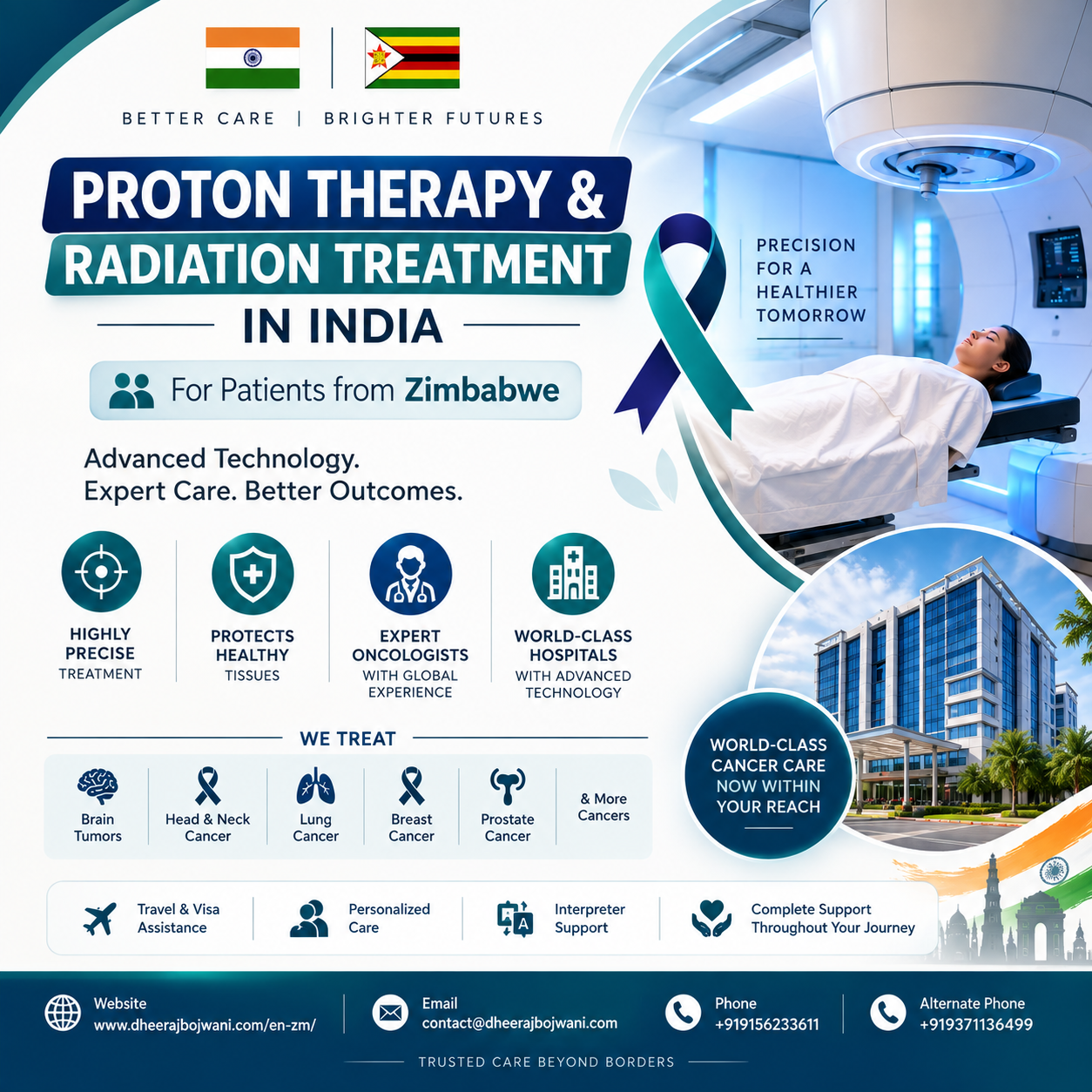
Receiving a cancer diagnosis can be overwhelming, and understanding the available treatment options is often one of the biggest challenges for patients and their families. Along with surgery and chemotherapy, radiation therapy plays a vital role in treating many types of cancer. In recent years, proton therapy has also emerged as an advanced form of radiation treatment for selected patients.
For many people from Zimbabwe, India has become a trusted destination for cancer care because of its experienced oncologists, advanced radiation technology, internationally accredited hospitals, and comprehensive treatment facilities. Patients benefit from personalised treatment plans, modern equipment, and multidisciplinary teams working together to deliver high-quality cancer care.
If you are considering treatment in India, understanding the difference between conventional radiation therapy and proton therapy can help you make informed decisions in consultation with your oncology team.
Also Read: Radiation Therapy for Patients from Zambia
Understanding Radiation Therapy
Radiation therapy uses high-energy beams to destroy cancer cells or prevent them from growing and dividing. It is one of the most commonly used cancer treatments worldwide and may be recommended:
- Before surgery to shrink a tumour
- After surgery to destroy remaining cancer cells
- Alongside chemotherapy
- As the primary treatment for certain cancers
- To relieve symptoms in advanced cancers
Treatment is carefully planned using advanced imaging so that the highest possible radiation dose reaches the tumour while protecting surrounding healthy tissues.
What Is Proton Therapy?
Proton therapy is an advanced form of radiation treatment that uses protons instead of traditional X-rays.
Unlike conventional radiation, proton beams can be programmed to release most of their energy directly within the tumour before stopping. This reduces unnecessary radiation exposure to nearby healthy organs and tissues.
Although proton therapy is not suitable for every patient, it may be considered for carefully selected cases after evaluation by a radiation oncologist.
Why Patients from Zimbabwe Choose India
India has become one of the leading destinations for advanced cancer treatment because of its combination of medical expertise and modern technology.
Many patients from Zimbabwe choose India because of:
- Experienced radiation and medical oncologists
- Advanced linear accelerators
- Access to proton therapy at specialised centres
- Comprehensive cancer hospitals
- Internationally accredited healthcare facilities
- Personalised treatment planning
- Minimal waiting time
- Affordable treatment costs
Patients also benefit from coordinated care involving surgeons, radiation oncologists, medical oncologists, radiologists, pathologists, and rehabilitation specialists.
Which Cancers Can Be Treated?
Radiation therapy and proton therapy may be used for many different cancers, including:
- Brain tumours
- Head and neck cancers
- Breast cancer
- Lung cancer
- Prostate cancer
- Liver cancer
- Cervical cancer
- Childhood cancers
- Bone and soft tissue tumours
- Certain gastrointestinal cancers
The most appropriate treatment depends on the type, location, stage, and behaviour of the cancer.
Radiation Therapy vs Proton Therapy
| Feature | Conventional Radiation Therapy | Proton Therapy |
| Radiation Source | High-energy X-rays | Proton beams |
| Treatment Precision | High | Very High |
| Radiation Beyond Tumour | Present | Significantly Reduced |
| Healthy Tissue Exposure | Greater | Lower in selected cases |
| Suitable for Every Patient | Yes, in many cancers | Selected patients only |
Your oncologist will recommend the treatment that offers the greatest benefit based on your individual diagnosis.
How Treatment Is Planned
Before starting radiation treatment, patients undergo a detailed planning process.
This usually includes:
- Medical consultation
- Review of biopsy reports
- CT simulation scan
- MRI or PET-CT when required
- Tumour mapping
- Individual treatment planning
Modern computer-based planning systems help ensure accurate targeting while protecting nearby healthy organs.
What Happens During Treatment?
Radiation therapy itself is painless.
Each treatment session generally lasts 15 to 30 minutes, although the actual radiation is delivered over only a few minutes.
Patients lie comfortably on the treatment table while the machine delivers precisely targeted radiation according to the treatment plan.
Depending on the cancer type, treatment may continue for several weeks with sessions given five days a week.
Possible Side Effects
Side effects vary depending on the area being treated, radiation dose, and individual response.
Some patients may experience:
- Fatigue
- Mild skin irritation
- Temporary hair loss in treated areas
- Difficulty swallowing (for head and neck cancers)
- Changes in appetite
- Temporary discomfort around the treatment site
Many side effects improve gradually after treatment ends, and supportive medications are available to help manage symptoms.
Recovery and Follow-Up
Unlike surgery, recovery from radiation therapy is usually gradual. Many patients continue their normal daily activities during treatment with appropriate rest.
After completing therapy, regular follow-up appointments help doctors:
- Assess treatment response
- Monitor recovery
- Detect any recurrence early
- Manage long-term side effects if they occur
Patients travelling from Zimbabwe receive detailed medical records and follow-up recommendations before returning home.
Is Proton Therapy Better Than Conventional Radiation?
Not necessarily. Proton therapy offers important advantages for certain cancers, particularly when protecting nearby healthy organs is a priority. However, conventional radiation therapy remains the standard and highly effective treatment for many cancers.
The choice between the two depends on several factors, including:
- Cancer type
- Tumour location
- Stage of disease
- Patient’s age
- Previous treatments
- Overall health
An experienced oncology team will recommend the approach that is most appropriate for each individual patient.
Final Thoughts
Advances in radiation oncology have significantly improved cancer treatment outcomes over the past decade. For patients from Zimbabwe, India offers access to both advanced radiation therapy and proton therapy delivered by experienced specialists using modern technology.
Whether conventional radiation or proton therapy is recommended, the goal remains the same—to provide effective cancer treatment while preserving quality of life. A personalised treatment plan, combined with expert medical care and ongoing follow-up, gives patients the best opportunity for successful outcomes.
Official Reference Links
- Ministry of Health & Family Welfare (Government of India)– https://www.mohfw.gov.in/
- National Health Authority (NHA), Government of India –https://nha.gov.in/
- National Medical Commission (NMC), Government of India– https://www.nmc.org.in/
- Indian Council of Medical Research (ICMR), Government of India –https://www.icmr.gov.in/
Dr. Dheeraj Bojwani
Medical Travel Advisor for International Patients Seeking Treatment in India
📍 New Delhi, India
🩺 25+ Years of Experience
🌍 5,000+ International Patients Assisted
🌐 Website: www.dheerajbojwani.com/en-zm/
📧 Email: contact@dheerajbojwani.com
📞 Phone: +919156233611
📧 Alternate Phone: +919371136499
Disclaimer: This article is intended for educational and informational purposes only and should not be considered medical, legal, or visa advice. Medical recommendations, treatment plans, and procedures may vary from one patient to another based on individual health conditions and circumstances. Readers are strongly advised to consult qualified healthcare professionals before making any medical-related decisions.