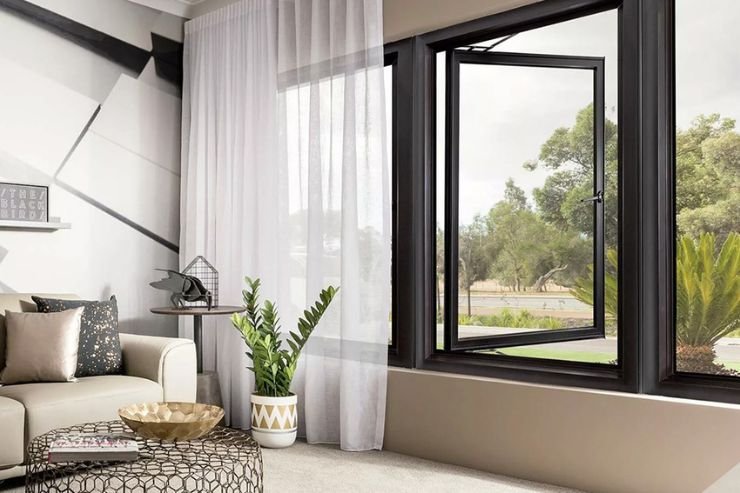
Old window frames can become a constant repair job. Timber may need repainting, moisture can cause swelling, and low-quality frames may crack, leak, or feel bulky. Poor locks and weak glazing can also affect comfort and security.
Aluminum windows offer a cleaner, stronger, and more flexible option for modern buildings. They suit homes, villas, apartments, offices, hotels, restaurants, shopping malls, and retail spaces. Slim sightlines, larger glass areas, and better thermal performance remain strong design themes in 2026. This guide covers styles, glazing, energy features, security, cost, installation, and maintenance.
What Are Aluminum Windows?
Aluminum windows are window systems made from shaped metal profiles that hold one or more glass panels. The main parts usually include the outer frame, opening sash, glass, rubber seals, handles, hinges, rollers, and locking hardware.
Standard frames use continuous aluminum profiles. Thermally broken systems place an insulating barrier between the inner and outer sections of the frame. This reduces direct heat transfer through the metal and can improve indoor comfort.
Buyers can customize the size, color, finish, opening style, handles, glass, and drainage details.
Major Benefits of Aluminium Windows
Property owners often choose aluminum windows because they combine strength with a slim, modern look.
Strong and Long-Lasting
Aluminum does not swell like timber and does not rust in the same way as untreated iron. A well-made frame can resist warping, cracking, and daily wear.
The final service life still depends on profile quality, coating, hardware, installation, and exposure to weather.
Low Maintenance
Powder-coated frames do not need regular painting or polishing. Mild soap, clean water, and occasional hardware care are normally enough.
This makes them practical for busy homes, offices, hotels, restaurants, and commercial buildings.
Slim and Modern Appearance
The material’s strength allows manufacturers to create narrow sightlines around larger glass areas. Slim-frame systems can bring in more daylight and give rooms a cleaner view.
Their neat appearance works well with modern, industrial, minimalist, and luxury property designs.
Weather Resistance
Correctly finished profiles perform well against rain, sunlight, humidity, and temperature changes.
Coastal projects need suitable pretreatment, high-quality coating, and regular cleaning because salt exposure places greater pressure on frames and hardware.
Customizable Designs
Buyers can choose matte, gloss, textured, metallic, wood-effect, or dual-color finishes. Frames can also be matched with different opening systems and glass specifications.
Recyclable Material
Aluminum can be recycled repeatedly. The Aluminum Association describes building-grade aluminum as durable, corrosion-resistant, and highly recyclable.
Popular Types of Aluminum Windows
Choose an opening style around space, airflow, cleaning access, and room use.
Aluminum Sliding Windows
Sliding panels move sideways, so they save space. They work well in bedrooms, apartments, balconies, and offices.
Quality rollers and clean tracks support smooth operation. Buyers should also check the locking system, brush seals, drainage holes, and track thickness.
Aluminium Casement Windows
Casement units open on side hinges. They offer strong ventilation, a tight closing seal, and space for multi-point locks.
They are suitable for bedrooms, living rooms, offices, villas, and properties where ventilation and weather protection are important.
Aluminum Tilt-and-Turn Windows
These units tilt at the top for light ventilation or swing inward for full opening and cleaning.
They need accurate hardware adjustment and enough indoor clearance. Their flexible operation makes them popular in apartments, hotels, and modern homes.
Aluminum Fixed Windows
A fixed unit does not open. It suits areas where daylight and views matter more than ventilation.
Its simpler design may also cost less than an operable window of the same size. Fixed panels are often combined with sliding or casement units.
Aluminum Awning Windows
Awning units are top-hinged and open outward. They suit kitchens, bathrooms, and higher wall positions where controlled ventilation is useful.
Their design may also allow some airflow during light rain, depending on wind direction and installation.
Aluminum Bay Windows
Bay systems project beyond the wall, widen the view, and add interior ledge space. They can make a room feel larger while improving the property’s exterior appearance.
Structural support and waterproofing need careful planning.
Aluminum Bi-Fold Windows
Bi-fold panels stack to one or both sides. They suit kitchen counters, patios, cafés, restaurants, and serving areas.
Their extra hinges and seals make hardware quality especially important.
Glass Options for Aluminum Window Frames
Glass affects heat, sound, privacy, safety, glare, and daylight.
Common choices include:
- Single-glazed glass
- Double-glazed glass
- Triple-glazed glass
- Tempered safety glass
- Laminated security glass
- Tinted solar-control glass
- Frosted privacy glass
- Low-E energy-efficient glass
- Acoustic glass
The best specification depends on the climate, window direction, local noise, safety risks, privacy needs, and available budget.
Double-glazed aluminum windows are widely selected when buyers want better insulation and sound control than standard single glazing. Low-E coatings can reduce unwanted heat movement while still allowing useful daylight.
Glass thickness, spacer design, and edge sealing also matter. Two quotations that both mention double glazing may provide very different performance levels.
Are Aluminum Windows Energy Efficient?
Standard aluminum conducts heat, so the cheapest frame is not always the best choice for an air-conditioned or heated building. Modern aluminum windows can perform far better when the whole system is designed correctly.
A thermal break separates the inner and outer metal sections with an insulating material. Pair it with insulated glazing, Low-E glass, quality seals, and correct installation.
U.S. Department of Energy research also identifies thermal-break technology as an important way to improve frame performance and indoor comfort.
Do not judge performance by the words “double-glazed” alone. Compare certified ratings where available.
NFRC labels report measurements such as
- U-factor
- Solar heat gain coefficient
- Visible transmittance
- Air leakage
ENERGY STAR window criteria also vary according to climate zone.
A lower U-factor indicates better resistance to heat flow. In hotter climates, a suitable lower solar heat gain coefficient may help limit unwanted solar heat, especially on heavily exposed elevations.
Security Features to Consider
Secure aluminum windows depend on the frame, glass, locking system, and installation working together.
Look for:
- Multi-point locking systems
- Strong aluminum profiles
- Lockable handles
- Reinforced hinges
- Secure rollers
- Internal glazing beads
- Laminated or tempered glass
- Child-safety restrictors
- Strong installation fasteners
Laminated glass can remain held together after impact. Tempered glass is designed to break into smaller pieces instead of large, sharp shards.
Ground-floor, isolated, and easily reached windows may need extra protection. Safety restrictors must still meet local escape and ventilation rules.
Aluminium Windows Price and Cost Factors
There is no reliable universal price because labor, metal, glass, transport, taxes, building rules, and supplier margins vary by country and project.
The main factors affecting aluminum windows’ price include:
- Window width and height
- Aluminium profile series
- Frame thickness and strength
- Fixed, sliding, casement, tilt-and-turn, or folding operation
- Standard or thermal-break construction
- Single, double, or triple glazing
- Glass thickness
- Low-E or solar-control coatings
- Powder-coated color
- Custom shapes
- Locks, handles, and restrictors
- Access and installation difficulty
- Number of units ordered
Fixed panels are usually simpler, while large sliders, tilt-and-turn hardware, acoustic glass, and custom shapes cost more.
Ask for an itemized quotation covering frames, glass, hardware, delivery, removal, installation, sealants, and taxes. Avoid comparing quotations based only on the final total.
A lower quotation may use thinner profiles, basic locks, ordinary glass, or weaker coating. Request product specifications in writing before making a decision.
How to Choose the Right Aluminum Windows
The buying process should start with the room and climate, not the catalogue photo.
Select the Right Opening Style
Check ventilation needs, available wall space, curtains, furniture, cleaning access, and safety limits.
A sliding system may suit a small balcony, while a casement unit may provide better ventilation in a bedroom.
Check Frame Quality
Compare profile depth, wall thickness, corner joints, drainage paths, reinforcement, gaskets, and coating consistency.
Ask to inspect a sample corner, working showroom unit, or completed project when possible.
Choose Suitable Glass
Match the glass to heat, glare, noise, privacy, impact risk, and window direction.
A roadside bedroom may need a different glass build-up from a quiet internal courtyard. Bathrooms may need privacy glass, while exposed commercial areas may require laminated safety glass.
Compare Energy Performance
For conditioned spaces, consider thermally broken frames, insulated glazing, Low-E coatings, and verified whole-window ratings.
Current certification and building guidance looks at heat gain and loss through the complete installed element, not just one component.
Review Locks and Hardware
Open and close the sample before ordering. Handles should feel firm, rollers should move smoothly, and locks should engage without forcing the frame.
Hardware must also be suitable for the weight and size of the glass panel.
Check the Warranty
Ask what is covered for:
- Aluminum profiles
- Powder coating
- Glass seals
- Locks and handles
- Rollers and hinges
- Installation labor
- Air or water leakage
Read the exclusions and claim process as well. A long warranty has little value when key components are excluded.
Choose an Experienced Installer
A premium system can still fail if it is measured or fitted badly.
Review completed work, installation details, customer feedback, warranty support, and after-sales service before signing a contract.
Installation and Maintenance Tips
Accurate measurement must happen before manufacturing. Professional installation helps prevent air gaps, water entry, frame movement, difficult operation, broken glass, and poor insulation.
After installation, clean the frames with mild soap and water. Avoid steel wool, harsh acids, and abrasive chemicals.
For smooth operation:
- Vacuum sliding tracks
- Clear drainage holes
- Inspect weather seals
- Lubricate approved hinges and locks
- Replace damaged rollers
- Tighten loose handles
- Arrange professional glass repairs
For coastal or heavily polluted locations, clean exposed frames more often.
Architectural coating standards such as QUALICOAT focus on controlled pretreatment, coating materials, and finished-product quality. Buyers can ask suppliers whether their coating process follows a recognized specification.
Frequently Asked Questions
How long do aluminium frames last?
High-quality frames can remain serviceable for decades. Their lifespan depends on coating quality, hardware, weather exposure, drainage, installation, and regular maintenance.
Is aluminium better than uPVC?
Aluminium is stronger, slimmer, and better suited to large openings. uPVC may provide good insulation at a lower initial cost in some markets. Compare whole-window ratings, design, strength, warranty, and budget.
Do aluminium frames rust?
Aluminium does not produce red rust like iron. It develops a protective oxide layer, but poor finishing, salt, trapped moisture, incompatible metals, or harsh chemicals can still damage its surface.
Can these window systems be customized?
Yes. Buyers can select custom sizes, colours, textures, glass, handles, opening styles, mullion layouts, and security hardware. Custom work may require more production time and a higher budget.
Are aluminium frames suitable for coastal areas?
Yes, when the system uses suitable alloy, pretreatment, coating, seals, fasteners, and maintenance. Ask for a coastal-grade finish and choose a supplier that can clearly explain its corrosion-protection process.
Final Buying Advice
Aluminium Windows bring strength, slim design, low maintenance, and broad customization to residential and commercial projects. Compare frame construction, glazing, security, tested energy performance, coating, warranties, and installation quality before buying.
Request a professional site survey and itemized quotations from trusted suppliers. Measure carefully, compare like for like, and choose a system that fits your climate, building use, security needs, and long-term maintenance budget.