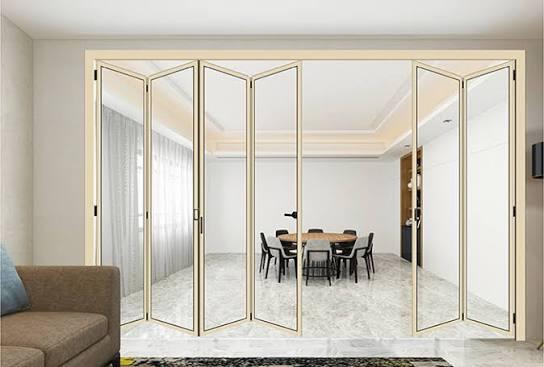
Traditional doors can limit usable space when they are open or closed. Aluminum Folding Doors solve this problem with connected panels that fold neatly to one or both sides. They create a broad opening without using the floor space required by a swing door.
These systems are increasingly used in homes, offices, restaurants, hotels, malls, and retail properties. That matches a clear 2026 design direction. The National Association of Home Builders lists bifold and large glass doors among notable door trends, while current design research continues to highlight larger openings and stronger indoor-outdoor connections.
This guide covers the benefits, designs, applications, costs, installation requirements, and important buying checks for folding-door systems.
What Are Aluminum Folding Doors?
Aluminum Folding Doors contain several panels joined by hinges. Rollers guide the panels along a track, allowing them to fold and stack on the left, right, or both sides.
A complete system usually includes frames, tracks, rollers, hinges, handles, locks, seals, and glass or solid panels. Common layouts include three, four, five, or six panels, although larger commercial entrances may need more.
Unlike sliding doors, which move one panel behind another, folding systems can expose most of the doorway. Sliding doors may provide a cleaner closed view, but one section normally remains covered.
How the Folding Mechanism Works
When the handle is pulled, the rollers move along the track and the hinged panels fold together. A well-made aluminum bi-fold door system should move smoothly without scraping, shaking, or requiring heavy force.
Why Aluminum Folding Doors Are Becoming Popular
Aluminum Folding Doors fit the way many properties are planned in 2026. Buyers want brighter rooms, open layouts, flexible spaces, and easier access to patios, gardens, terraces, and outdoor seating.
A folding glass wall system can connect a kitchen to a garden, open a café toward outside tables, or turn a narrow retail entrance into a wide frontage. When closed, the glass still brings in daylight. When open, people can move freely between areas.
Aluminum also suits modern architecture. It supports slim-looking frames, large glass panels, and finishes such as black, white, grey, bronze, and wood effect. The Aluminum Association describes construction aluminum as lightweight, strong, durable, corrosion-resistant, and recyclable.
Benefits of Aluminum Folding Doors
The best Aluminum Folding Doors combine a strong frame, dependable hardware, suitable glass, accurate fabrication, and skilled installation. A premium frame cannot compensate for weak rollers or poor alignment.
Strong and Durable Frames
Aluminum does not swell like untreated timber and is not damaged by termites. With proper surface preparation and finishing, it can handle demanding residential and commercial use.
For exterior projects, ask about the coating specification and warranty, not only the color. FGIA publishes performance requirements for coatings used on architectural aluminum.
Slim Frames and Larger Glass Panels
Slim profiles allow wider views and more daylight. The correct profile size depends on panel height, glass weight, wind exposure, and system engineering.
A slim frame can make a small room feel more open without changing its actual floor area. It is especially useful in restaurants, retail stores, offices, and homes where daylight and outdoor views are important.
Low Maintenance
Frames usually need mild soap, water, and a soft cloth. Tracks should remain clean, while rollers, seals, locks, and hinges need occasional checks.
Powder-coated frames do not normally require regular repainting or polishing. Quick routine cleaning can help protect both their appearance and operation.
Space-Saving Design
Swing doors need clear floor space. Folding panels move along a track and stack at the edge, helping preserve space near furniture, counters, shop displays, and patio seating.
This design can be useful where every square foot matters, including cafés, compact homes, retail units, and office meeting areas.
Flexible Opening Options
Many systems include a traffic door for everyday access. Users can open one panel for quick entry or fold the entire system back for events, deliveries, ventilation, or busy trading hours.
This flexibility gives property owners more control over how an area is used during different times of the day.
Better Property Appearance
A professionally fitted system can make a building feel brighter, larger, and more modern. For shops and restaurants, it can also improve visibility and create a more welcoming entrance.
Popular Aluminum Folding Door Designs
Choosing the right Aluminum Folding Doors depends on the opening size, building style, privacy needs, climate, and daily use.
Full-Glass Folding Doors
Aluminum folding glass doors are ideal for patios, gardens, balconies, showrooms, cafés, offices, and pool areas. They provide wide views and suit modern buildings.
Clear glass maximizes visibility, while tinted, frosted, or reflective options can provide more privacy and glare control.
Framed Panel Designs
Partly solid or fully solid panels provide more privacy and may suit offices, storage areas, service zones, or traditional properties.
They can also be useful where owners want to reduce the amount of exposed glass near the bottom of the door.
Corner Folding Doors
Corner systems open two connected walls. Some retain a fixed corner post, while advanced designs allow the post to move with the panels.
These systems can create an impressive open corner, but structural planning is essential. The roof and surrounding walls must be properly supported.
Internal Folding Partitions
Internal systems can divide meeting rooms, restaurants, halls, and open-plan homes. They allow one large area to be converted into two smaller spaces when required.
Buyers should discuss acoustic performance when sound privacy matters because basic glazed partitions may not block as much noise as a permanent wall.
Powder-Coated Aluminum Doors
Popular finishes include matte black, white, charcoal, bronze, metallic shades, and wood-look coatings. Dark frames and quiet matte finishes remain strong design choices in 2026.
The selected finish should match the windows, exterior cladding, interior colors, and overall building style.
Residential and Commercial Applications
Aluminum Folding Doors work in private homes and busy commercial properties.
Residential uses include:
- Patios and gardens
- Balconies
- Living rooms
- Kitchens
- Pool areas
- Home extensions
- Entertainment spaces
Folding doors for patio openings are especially useful where owners want one connected area for family gatherings, dining, or entertaining guests.
Commercial uses include:
- Shopping malls
- Restaurants and cafés
- Hotels
- Offices
- Showrooms
- Retail stores
- Event venues
- Customer waiting areas
Exterior folding doors can create an open entrance during business hours and a secure glazed wall after closing.
For businesses, flexibility is the main advantage. Staff can widen the entrance, improve product visibility, or adjust the layout for events and seasonal demand.
Aluminum Folding Doors vs. Sliding Doors
The key difference is usable opening width. Aluminum Folding Doors stack at the edge and can expose most of the doorway. Sliding panels overlap, leaving part of the opening closed.
| Feature | Folding Doors | Sliding Doors | Ideal Choice |
| Opening width | Most of the span opens | Part stays closed | Folding for maximum access |
| Closed view | More frame lines | Larger uninterrupted panes | Sliding for cleaner views |
| Ventilation | Highly adjustable | Limited by panel overlap | Folding for wider airflow |
| Operation | Panels fold and stack | Panels slide in parallel | Depends on daily use |
| Space | Requires stacking space | Requires overlapping tracks | Both save floor space |
| Cost | Often higher | Often simpler | Sliding for tighter budgets |
| Best use | Patios, cafés, and wide entrances | Balconies and view-focused rooms | Choose according to the main priority |
Neither option is always better. Folding doors suit projects where opening width matters most. Sliding doors suit buyers who prefer fewer vertical frames and larger uninterrupted panes.
The decision should be based on how the entrance will be used rather than appearance alone.
How Much Do Aluminum Folding Doors Cost?
The price of Aluminum Folding Doors depends on the project. A small internal partition cannot be priced like a tall exterior system exposed to wind and rain.
Main cost factors include:
- Opening width and height
- Number of folding panels
- Aluminum profile quality
- Glass type and thickness
- Thermal breaks and insulation
- Locks, hinges, and roller quality
- Powder-coated finish
- Drainage and threshold design
- Custom corners or unusual shapes
- Structural preparation
- Installation access
- Supplier and project location
Energy performance may also affect the quotation. NFRC explains that U-factor measures heat transfer, while Solar Heat Gain Coefficient shows how much solar heat passes through glazing. The best values depend on the local climate and building use.
Avoid choosing a supplier based only on the lowest total. Request a detailed quotation after an on-site survey. It should clearly separate the frame, glass, hardware, finish, installation, and warranty.
How to Choose the Right Folding Door System
Before ordering a folding door system, decide how the opening will be used. When we assess a proposal, we review the complete setup rather than judging the frame alone.
Measure the structural opening accurately. Choose a practical panel count and stacking direction. Too many narrow panels add frame lines and hardware, while very large panels may become heavy.
Check whether furniture, columns, counters, curtains, or outside walls will block the stacked panels. Decide whether a traffic door is needed for daily access.
Select glass according to:
- Safety requirements
- Privacy needs
- Heat insulation
- Sound control
- Glare reduction
- Wind conditions
- Local building regulations
Exterior systems may need safety glass, double glazing, low-emissivity coatings, effective seals, drainage, and a weather-resistant threshold.
Ask the supplier for the profile specification, hardware brand, roller capacity, lock type, finish standard, test information, previous project photographs, installation method, and written warranty.
Good hardware and professional installation are as important as the aluminum frame.
Installation and Maintenance Tips
Professional installation protects the whole system. The opening must be level, square, and properly prepared. Tracks require accurate alignment, and drainage paths must remain clear.
Keep the tracks free from dirt, sand, stones, and other debris. Clean glass with a suitable non-abrasive product and wash frames with mild soap and water.
Avoid harsh chemicals, metal brushes, and rough cleaning pads. These may damage the frame finish or scratch the glass.
Check locks, handles, hinges, rollers, seals, and drainage holes regularly. Lubricate moving parts only when the manufacturer recommends it.
Arrange professional servicing if panels:
- Drag along the track
- Shake during movement
- Become difficult to close
- Allow water to enter
- Develop gaps between seals
- Stop locking correctly
Small alignment problems are normally easier to correct before they damage the rollers or locking system.
Common Mistakes to Avoid
Poor choices can shorten the life of folding doors. Common mistakes include buying the cheapest hardware, ignoring drainage, ordering from rough measurements, choosing unsuitable glass, using too many narrow panels, and hiring an inexperienced installer.
Wind exposure, rain direction, threshold height, and warranty coverage also matter. Ignoring them may cause leakage, noise, air gaps, stiff movement, damaged rollers, or early wear.
Never approve production until the final measurements, panel direction, glass specification, finish, handle position, and threshold details have been confirmed in writing.
Frequently Asked Questions
Are Aluminum Folding Doors Secure?
Quality folding doors can provide reliable security when they include strong frames, multi-point locks, safety glass, sturdy hinges, and correct installation. Ask how the panels lock to the outer frame and to one another.
Are Folding Doors Suitable for Outdoor Use?
Yes. Choose a weather-rated exterior system with effective seals, drainage, corrosion-resistant hardware, suitable glass, and a threshold designed for the location.
Do Aluminum Folding Doors Require Much Maintenance?
They generally need basic cleaning and periodic inspection. Keep the tracks clear and repair loose handles, worn seals, or difficult movement early.
Can Folding Doors Be Customized?
Yes. Custom aluminum doors can be produced in different sizes, panel counts, stacking directions, glass types, finishes, handles, locks, and threshold options.
Are They Better Than Sliding Doors?
They are often better when the goal is to open almost the full doorway. Sliding doors may be better when the priority is larger uninterrupted glass panes and fewer frame lines.
Conclusion
These doors offer a practical balance of modern design, durability, daylight, ventilation, and flexible access. They suit homes, offices, shops, restaurants, hotels, malls, and other commercial properties.
Compare the frame quality, glass, rollers, hinges, locks, drainage, finish, installer experience, test information, and warranty before making a decision.
Contact a professional aluminum-door supplier for an on-site measurement, design advice, and a customized quotation. A careful survey before ordering can prevent costly changes and help the finished system operate smoothly for years.