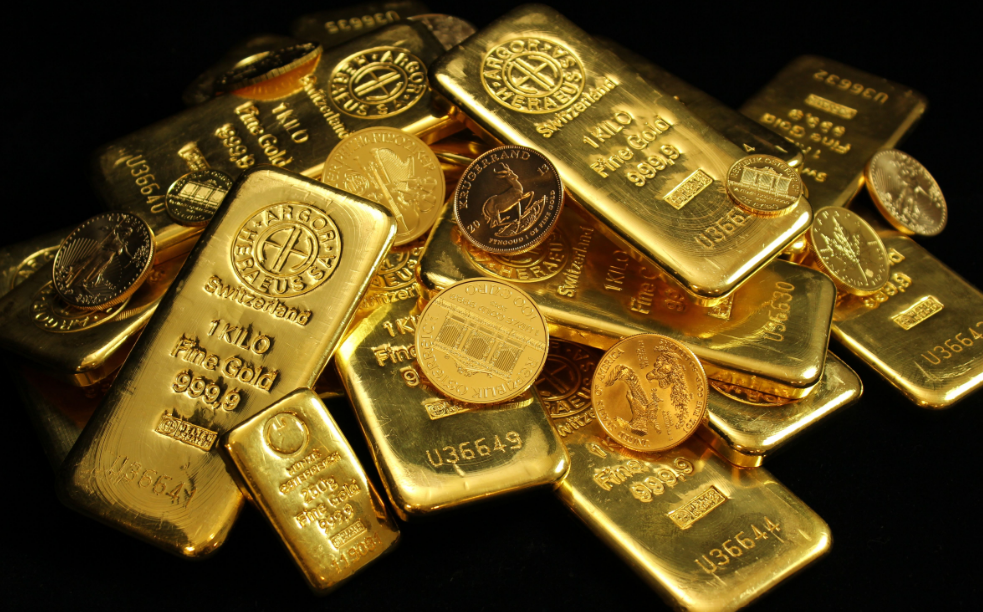
In the fast-paced financial world of July 2026, the landscape has shifted dramatically from the predictions we saw at the start of the decade. As we navigate the mid-year mark, the global economy is caught in a tug-of-war between technological revolution and geopolitical fragmentation. For the seasoned investor, the primary question isn’t just about which AI stock will lead the next rally, but how to protect capital as traditional structures show signs of strain. This is precisely why long-term investors are keeping a laser focus on gold during economic uncertainty in 2026.
The Year of Extremes: From $5,600 to the “Correction of 2026”
The year 2026 will likely be remembered for its “Janus-faced” performance in the precious metals market. We began the year with a historic surge, where gold prices shattered all previous records to hit an intraday high of approximately $5,595 per ounce in late January.This rally was fueled by a “perfect storm” of a weakening US dollar and escalating tensions in the Middle East. However, as we sit in the second half of the year, the price has stabilized around the $4,100 mark—a significant correction that has left short-term speculators reeling but has provided a strategic “entry floor” for those with a five-to-ten-year horizon.
Sifting Through the Finance Gossips: The “Warsh Fed” and Central Bank Secrets
To understand why the smart money is moving now, one must look at the current finance gossips circulating through the halls of Wall Street and the digital forums of the City of London. The biggest rumor currently driving market volatility is the transition at the Federal Reserve. With expectations mounting that Kevin Warsh may succeed Jerome Powell, the “gossip” isn’t just about a change in leadership, but a fundamental shift toward “strict monetary discipline.”
Speculation is rife that the “Warsh Fed” will be less likely to bail out markets with liquidity injections, favoring instead a lean balance sheet. This has created a “buy the rumor, sell the fact” environment that contributed to the spring sell-off.Furthermore, whisperings of “hidden” central bank purchases continue to surface. While official data from the World Gold Council shows a cooling of demand from some traditional giants, alternative data from Swiss refineries and the London OTC market suggests that “silent buyers”—including emerging players like Indonesia, Malaysia, and even top-tier Chinese insurance companies—are accumulating bullion at record rates. When the gossip suggests that the world’s most powerful institutions are “buying the dip” while publicly preaching caution, long-term investors take note.
Why Economic Uncertainty is the “New Normal” in 2026
The term “uncertainty” has become a buzzword, but in 2026, it is backed by cold, hard geopolitical reality. The ongoing conflict involving the US and Iran has fundamentally altered global trade routes. The Bab-el-Mandeb and the Strait of Hormuz are no longer just points on a map; they are active chokepoints where Houthi-led disruptions have sent oil prices spiraling.
When energy costs rise, inflation follows.US inflation is currently “sticky,” hovering near 3.9% to 4.3%, fueled largely by energy shocks and massive AI-driven capital expenditures. In this environment, the traditional “60/40” portfolio is struggling. Fixed-income assets are being battered by the prospect of “higher-for-longer” interest rates, leaving a vacuum that only a non-yielding, hard asset can fill.
The Strategic Case for Gold During Economic Uncertainty
For the long-term investor, the appeal of gold during economic uncertainty isn’t about chasing a daily price tick. It’s about three core pillars:
- Hedge Against Fiat Debasement: With global debt hitting a staggering $353 trillion at the start of 2026—more than triple the world’s GDP—the long-term viability of paper currencies is being questioned.Gold remains the only asset that cannot be printed into oblivion by a central bank facing a deficit crisis.
- Portfolio Diversification in a High-Correlation World: In 2026, we’ve seen that when tech stocks fall, bonds often follow suit due to interest rate pressures. Gold has maintained a low correlation with these assets, serving as a “portfolio insurance” policy that pays out when the broader market is in flames.
- The Rise of “God’s Money” in the Digital Age: Despite the ubiquity of digital currencies and AI-driven trading bots, physical gold has seen a resurgence. The “democratization of investing” through gold ETFs and digital bullion platforms has made it easier than ever for retail investors to hold the asset, creating a “sticky” demand base that didn’t exist twenty years ago.
The AI Paradox: How Tech is Helping Gold
Ironically, the same AI boom that has dominated the headlines is providing a structural tailwind for gold. The massive energy requirements for AI data centers have contributed to the “energy-driven inflation” mentioned earlier. Additionally, gold’s industrial application in high-end electronics and AI infrastructure is a small but growing component of its demand profile. More importantly, as AI makes financial markets faster and more prone to “flash crashes,” the slow, steady reliability of gold becomes more attractive to human fund managers looking for a “sanity check” in their portfolios.
Conclusion: Watching the Horizon
As we look toward the end of 2026 and into 2027, the consensus among analysts at firms like J.P. Morgan and the World Gold Council is that while the path will be volatile, the structural bull market for gold remains intact. Forecasts suggesting a return to $5,000 or even $6,000 per ounce by late 2027 are gaining traction as the “economic uncertainty” of today becomes the “established reality” of tomorrow.
Long-term investors aren’t watching gold because they expect a quick win. They are watching it because, in a world of finance gossips, shifting Fed policies, and Red Sea blockades, gold is the only asset that has survived every crisis for five millennia. In 2026, it is doing exactly what it was designed to do: preserve wealth when everything else is in question.
FAQs: Gold and Economic Uncertainty in 2026
1. Why did gold prices drop so much after the January 2026 peak?
The drop from the $5,595 peak was a classic “market correction.” The January surge was driven by extreme geopolitical panic and speculative “buying the rumor” regarding Fed leadership. When the panic stabilized and interest rate hike expectations returned, speculators exited, leaving the price at a more sustainable “structural” level around $4,100.
2. Is gold still a good hedge against inflation in 2026?
Yes. While interest rate hikes can temporarily suppress gold prices, the “sticky” inflation of 2026—driven by energy costs and supply chain disruptions—erodes the purchasing power of the dollar. Gold acts as a store of value that historically maintains its “real” value when fiat currencies decline.
3. How do the “finance gossips” about the Federal Reserve affect gold?
Markets hate uncertainty. Gossips about Kevin Warsh potentially taking a hawkish stance have caused volatility.If the Fed moves toward “monetary discipline,” it could strengthen the dollar (a headwind for gold), but it also increases the risk of a recession, which usually drives investors back to gold as a safe haven.
4. Should I buy physical gold or gold ETFs?
It depends on your goals. Physical gold offers “zero counterparty risk” and is ideal for long-term “doomsday” insurance. Gold ETFs offer better liquidity and are easier to trade in a standard brokerage account, making them better for tactical portfolio adjustments.
5. What role do central banks play in the 2026 gold market?
Central banks are “foundational” buyers.Even if their buying slows down, they aren’t selling. In 2026, nations like India, China, and Poland continue to accumulate gold to diversify away from the US dollar, providing a “price floor” for the market.
6. Does the conflict in the Middle East still impact gold prices?
Absolutely. Any escalation that threatens oil transit through the Strait of Hormuz immediately spikes oil prices, which leads to inflation and a “flight to safety” in gold.
7. Can AI predict gold price movements?
While AI is used for high-frequency trading, gold is often moved by “macro” events—wars, elections, and human emotions—that are notoriously difficult for algorithms to predict accurately over the long term.
8. What is the “market risk premium,” and why is it important for gold?
In mid-2026, the market risk premium hit its highest level since 1999. This means investors are demanding higher returns for taking on the risk of stocks. When this premium is high, investors often move a portion of their wealth into “risk-off” assets like gold to balance their portfolios.
9. Is 2026 a good year for “dip-buying” gold?
Many long-term strategists believe so. With prices having corrected 20-30% from the January highs, the current levels are seen as a “value entry” before the next potential cycle of geopolitical or economic shocks.
10. How much of my portfolio should be in gold?
While it varies, most financial advisors in 2026 recommend a “strategic allocation” of 5% to 10%. This is enough to provide a meaningful hedge against a market crash without missing out on the growth potential of equities.